
When I was a child, my mom was very careful about my television exposure. That’s comical by today’s standards. After all, I grew up in the 70s, pre everything. There was no streaming, no internet, no continuous assault of foul language and uncensored imagery. There were only 6 television stations. Four of them were watchable without a coat hanger and ample amounts of aluminum foil. Still, “that’s too adult,” was her battle cry. “I’ll need to talk to your father,” was a close second. Only children are maniacal masterminds at psychological warfare. I soon found the key to television freedom. Read the book first.
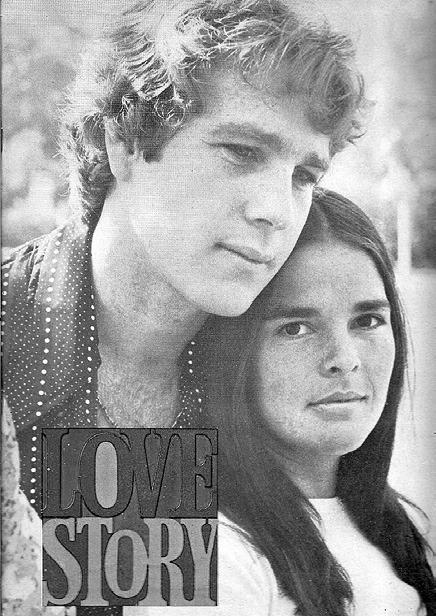
Momma would sometimes drop me off at the public library while she ran errands. The librarian, Danny Sue Yates, was a family friend who lived close by in Combine. I was good at shelving books. By the age of 8, my middle name was practically Dewey. Once the returned books were back in circulation, I could do whatever I wanted. That meant sneaking out of the children’s section and diving into any adult book I desired. That’s how a young girl wound up talking her parents into allowing her to watch the mid 70s televised version of the 1970 movie Love Story, starring Ali MacGraw and Ryan O’Neal, despite my father’s reservations. “Oh, Ted, she already read the book,” momma told him. What’s a strict parent to do?
In the movie, Ali’s character, Jenny, dies of leukemia. She gets sick, hides it, tells everyone, and languishes away in the hospital as her words (love means never having to say you’re sorry) hang over the moment like the darkest cloud. I was obsessed. Still am. I often think about Jenny, her long hair, her predilection for berets and plaid skirts, and her courageous disposition toward death. It begs the question – is it better to know ahead of time? If the answer is yes, for whom? Better for the person in question? Better for the ones left in the wake? God is very specific in his Word. We are not to know. Still, there are angles. I have seen some obtuse ones. I have seen some acutes ones, too.
The worst way to die is while you’re still alive. I’m sorry, momma. Alzheimer’s slays you like a thief. You forget words. You forget to eat. You forget your daughter. You forget how to straighten out your legs. You forget to breathe. Everything that made you you is stolen in a slow motion armed robbery. The hardest thing you’ll ever do is to grieve someone who isn’t gone yet.
The worst way to die is when you’re a child. I’m sorry, Chynna. There is a basic rule of humanity that says children must grow up and take care of their old, feeble parents. The one who brought you into this world, the one who didn’t sleep for years on end, the one who paced floors and changed diapers and watched Barney the dinosaur for years on end finally gets to rest while you, child, pace the floor, change the diapers, and watch an endless loop of Days of Our Lives. They see you in. You see them out. When that child dies before the parent, that most precious business is left unfinished. It’s a tether ball that disappears before it rounds the pole. It’s a boomerang that never comes back. It’s a heart that cracks in half and never, ever heals. It is the thing that scars you and weighs your chest down so that you can never take a complete inhale or exhale again. The hardest thing you’ll ever do is say good-bye to your child.
The worst way to die is when you defy all odds and then sit down to eat peaches for breakfast, collapsing in a small squeak. I’m sorry, daddy. The juxtaposition of a man who turns 91, drives solo to Midland, TX for his own birthday party, returns home to move a toilet outside so he can replumb his bathroom after he sweeps off the roof of his motorcoach, then dons a new plaid shirt before dying of a probable heart attack…is crazy. The ridiculousness of me feeling cheated of more time with him defies even my warped logic. Unexpected death as a nonagenarian? Absolutely. The hardest thing you’ll ever do is lose your father.
The worst way to die is with advance notice, your loved onesgatheredaroundyou.I’m sorry, Larry. A cancer death is devastating in all aspects. It ravages the body. It angers the family, left to witness the unraveling. It suspends all time and space. There is tiptoeing and whispering and, when the days drag on, light snacking and jokes that leave the teller with guilty tears. As you gather around, hold the hands, stroke the hair, make the apologies, say the prayers, it’s that image of the long good-bye that stays with you for the rest of your days. The hardest thing you’ll ever do is watch your husband lose his father.
The Welsh have a beautiful word they use for homesickness. Hiraeth. It means a deep longing for a place of familiarity. Perhaps that is why we abhor death. As believers, maybe we’re a little jealous. We recognize this world as a place we don’t belong. We want to go home. Perhaps there is no good way to die. Perhaps it really doesn’t matter at all. Hiraeth.
- Log in or Subscribe to post comments.