
Through my career of almost forty years as an outdoors writer, I have fished with and written about countless fishing guides. How many? Well, I can only guess but I’d estimate in excess of one hundred. I’ve fished with veterans with decades of guiding under their belts, and I’ve fished with great fishermen that were just beginning their guiding career. Most were very experienced fishermen but new to the art of putting paying clients on their boats with the express intent of not only catching fish but enjoying the company of what is hoped to become a new friend and repeat fishing companion.
I believe I have learned what it takes to be a successful fishing guide. As with any career, personality and people skills play a big part, but when someone hires a fishing guide, catching fish is usually at the top of the list. Learning new fish-catching skills is often important as well. I’ve fished with guides that were natural entertainers, some could have been stand up comedians, but others were introspective thinkers that let their skills do their talking.
Veteran guides learn to ‘read’ their clients quickly. When guiding experienced fishermen, it’s important for a guide not to over-instruct with too much emphasis put on basic fishing skills. A seasoned guide can quickly appraise a client’s skill level. On the other hand, a novice fisherman can benefit greatly by learning the basics from a veteran guide with the patience to teach.
I’ve learned to ‘read’ the guide’s personality quickly through the years and enjoy spending time on the water with someone that is a funny ‘showboater’ just as much as the quiet but proficient guy or gal.
Getting started as a guide is a challenging endeavor that should only be undertaken
by someone with a true passion for both catching fish and the skills to do so on a very regular basis but who also enjoys meeting new people and bonding quickly with new clients they are about to spend a few hours with making memories and, hopefully, catching fish.
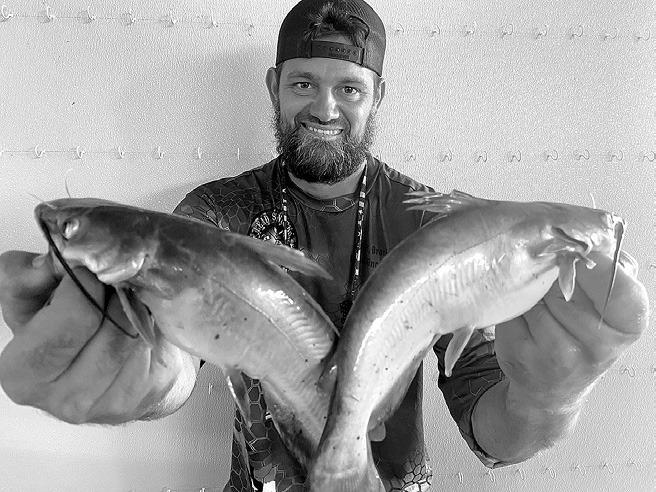
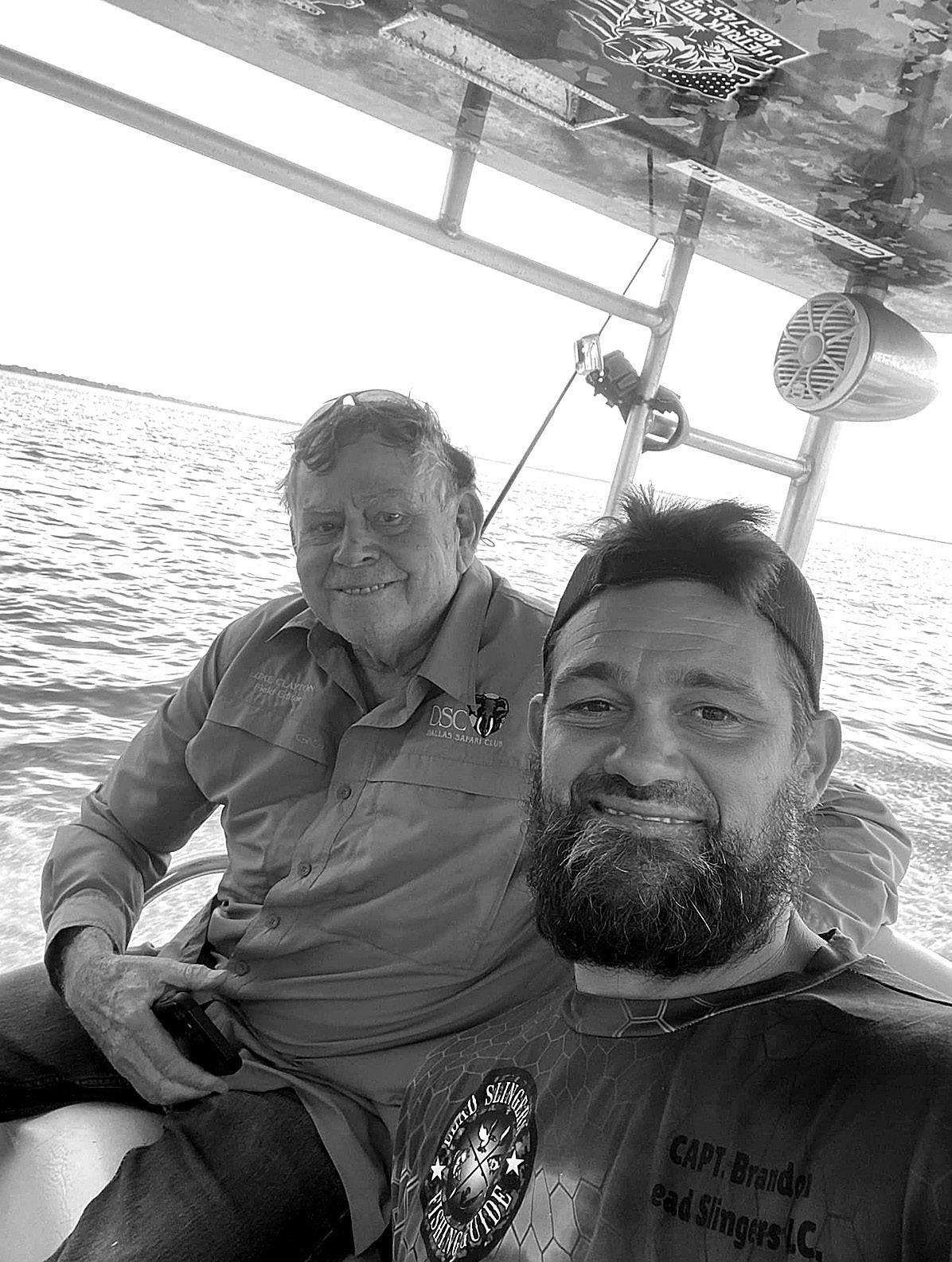
This past week, I spent a morning catching catfish with a young man that I began writing about several years ago when he first began his guiding career on Lake Ray Hubbard, Brandon Sargent. Brandon cut his fishing roots in Florida fishing saltwater, but he took to freshwater fishing quickly and learned the patterns of the white bass and hybrid stripers on Ray Hubbard.
“A good understanding of the bottom structure on a lake is key to consistently catching open water schooling species such as the white bass”, says Brandon. “Triangulation with structures on land was the only way to ‘get close’ to a known piece of fish-holding structure back in the day. Anglers would get close to humps, ridges, or submerged trees by lining up water towers and other structures on land and then turning on their flasher (old sonar units) or paper graph to pinpoint the structure. Today’s navionics maps with GPS make finding topography below the surface easy. With today’s technology, an entire lake is mapped out for you, and finding a particular piece of bottom structure is as simple as the touch of a button.”
For the past few months, Brandon has spent time learning about catching catfish on Ray Hubbard. Many of his clients are only interested in catching crappie, white bass, and hybrids, but he began getting requests for catfish trips. In true Brandon fashion, the guide began quizzing experienced catfish anglers and spending a great deal of his ‘off time’ experimenting with the different techniques. When he called early last week and informed me he was on a couple of very dependable channel catfish patterns, I was all in and joined him early the next morning on the dock of Sapphire Bay Marina, where he headquarters. We had the option of fishing deeper water and catching bigger catfish or going for the nonstop action of a shallow water bite he had discovered. I love catching and eating catfish in the one- to two-pound range, especially when they are in shallow water, and I can catch them under a cork.
Brandon had baited an area with cattle range cubes a few yards out from a shoreline lined with rocks placed there as protection from erosion. The water was 4 feet deep with several dead trees along the shoreline, a perfect spot for catching channel catfish with the boat positioned about 25 yards from the rock-lined shoreline. We baited #6 treble hooks with the guide’s homemade bait that had no rank smell like most cheese-based baits. I’m not sure what secret ingredients Brandon uses but the bait looked more like dense bread dough with a pleasant smell than catfish bait. When I first baited the treble hook, I noted it formed a dense ball and looked like it would stay on the hook well, but I was a bit dubious. This didn’t smell at all like the dough type or “punch baits” I am accustomed to using.
We were using spinning rigs, with the baits set about 3 feet below the cork floaters which kept them just above bottom. Our trip occurred last Thursday and there was an approaching front with scattered thunderstorms approaching from our north. The cloud cover and gentle breeze made it feel almost like fall. Catching was just as predicted. Toss the bait out and watch the cork closely the instant it hit the water, and within a few seconds, one of the aggressive little catfish would make the cork disappear. Keeping a close eye on the sky and radar on the cell phone, we enjoyed about 1.5 hours of nonstop action and limits of what I consider to be some of the tastiest of fish in fresh water. Just in the nick of time ahead of the approaching squall, we made it back to the marina where we filleted our catch. Brandon’s dock is well-appointed with a cleaning table, couch, freezer, cooking equipment, etc. We were both hungry, so we fired up an electric hot plate, heated some cooking oil in a skillet, and soon had a big skillet of very fresh catfish fillets sizzling.
Brandon has now added catfish to the species he guides for. He’s now studying the patterns of the lake’s plentiful big blue catfish, and I expect him to have these fish patterned by fall and cooler weather when the big blue bite gets really good.
If you are interested in a fishing trip with Brandon, he can be reached at 469-9891010 or at www.texasleadslingers. com.
Check out Luke’s weekly outdoor radio show which is now a weekly podcast wherever podcasts are found, “Catfish Radio with Luke Clayton and Friends.”
- Log in or Subscribe to post comments.