
One of my favorite ways to spend an early spring morning is tossing small Roadrunners or Beetle Spins into the slow-moving current of a stream feeding a lake with a healthy population of white bass. When conditions are just right, catching can be nonstop. The fish often stack up in the deeper holes below creek bends and provided action that keeps anglers coming back year after year. Current, water temperature, and clarity trigger the annual white bass spawn and conditions have to be just right to cause the mass movement out of the lakes and reservoirs. Finding concentrations of fish is the key to success, and this often requires walking the creek bank to locate a hotspot.
With cold fronts moving into and out of the state the past couple weeks, there has been a sporadic white bass spawn, red hot one day and slow the next. After a few days warm up, good reports were coming in widespread from heralded white bass waters such as the Trinity River above Lake Livingston, the Sabine below Toledo Bend and the Sabine above Tawakoni. Other hotspots include the Neches River and feeder creeks above Lake Fork where I often fish. The beautiful and iconic Llano River in the Hill Country is also host to some great springtime white bass action. Regardless whether you are pulling white bass from a beautiful Hill Country stream with bluebonnets along the shore and a big turkey gobbler sounding off just over the hill or a creek above an east Texas stream when dogwoods buds are just beginning to pop, there is nothing like catching ‘whites’ during the spring run.
But not all white bass make a spawning run! I truly believe the vast majority of white bass in lakes or reservoirs never travel up feeder creeks but rather spawn along main lake points and submerged humps and ridges where wind causes moving water and the current necessary to trigger the spawn.
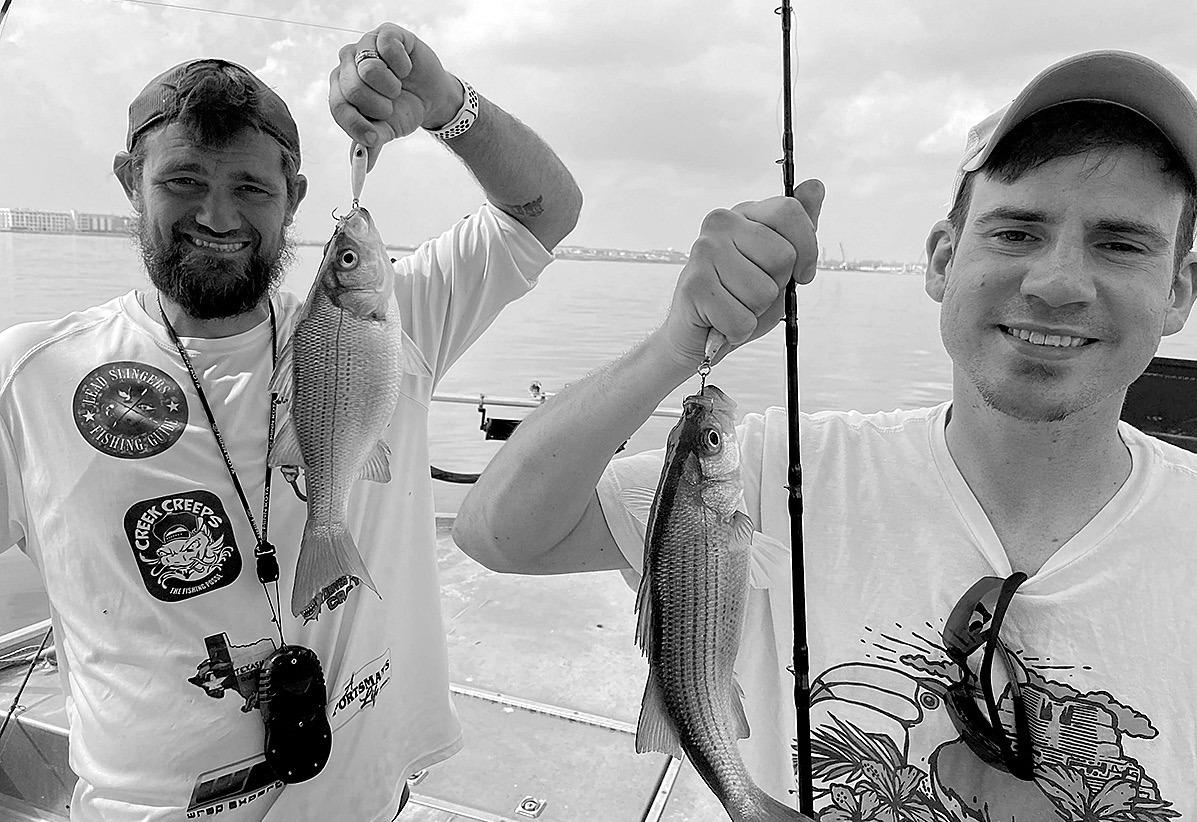
One day last week, the temperature was approaching eighty degrees, the wind was blowing a gentle 5 mph out of the south, and I had just wrapped up a magazine article. I was more than ready to get out and enjoy the sunshine and contemplating getting into my camo, grabbing my box call, turkey decoy, and video camera, and heading out to attempt to film a strutting gobbler near the house. But my plans changed with a phone call from my friend, guide Brandon Sargeant with Lead Slinger’s Guide Service. I fish with Brandon several times during the year for Lake Ray Hubbard’s plentiful white bass. The guy thinks like a fish, and we always catch a bunch. Even on days when the fish are not on an aggressive bite, his knowledge of the Live Scope sonar on his boat ensures a good ‘mess’ of white bass!
The phone call went something like this, “Luke, I’m off this afternoon. You want to come out and restock your supply of white bass fillets? I know where we can catch our limits in short order.” I was thinking Brandon was fishing up the East Fork Creek or one of the many drainages that feed the lake and my reply was something like, “You bet. What do I need to bring? Soft plastic minnow imitations or Roadrunners?“ “Neither,” he replied. “We will use my half-ounce LS lead slabs.” Lead slabs for creek fishing? We would stay hung up all the time if we used those ‘open water’ baits in a creek! But when he detailed our plan of attack, using his slabs made perfect sense.
“No need to make the run up the creeks right now. I’m catching lots of big white bass fishing along the ends of submerged levees and ridges in the lower lake, right out from the marina. We should be able to limit out without moving the boat.” The outing he detailed was not the iconic walk along the creek bank usually associated with a spring white bass fishing trip, but who can complain when catching one big white bass after another in the comfort of a big guide boat? I’ve enjoyed this type of catching of white bass many times in the past. The fish relate to the current created by wind and wave action, and the end of submerged points are great places to ambush the fish.
Think of standing on the sheltered edge of a building on a windy day and stepping out into the wind. Current works the same way and game fish stack up in the calm water to ambush baitfish moving along with the current. It is a deadly early spring technique that is an almost surefire way of putting together the makings of a mega fish fry.
So if you don’t have access to a close by feeder creek or river to fish, don’t rule out fishing the main lake for spawning ‘whites’. A large percentage of the fish we caught were egg laden females that had absolutely no idea there was a creek or river to lay their eggs.
WHITE BASS EXCELLENT EATING Some fishermen snub their nose at eating white bass, and I am the first to agree that fillets without the red meat trimmed and frozen for a year are less than prime eating. But properly prepared fresh or frozen in water fillets are as tasty as any fish in freshwater. I begin by filleting the white bass just as I’d do any fish, but then I take a very sharp thin blade fillet knife and skim all the ‘red meat’ or bloodline off the outside side of each fillet. This takes only a few seconds and greatly improves the flavor of the fillet. The strong or ‘off’ flavor of white bass comes from the blood line and once removed, I will stack a platter of crunchy fried white bass fillets up with any other species and that includes catfish and yes…. crappie! Yellow bass, the smaller cousin of white bass, often run with or below schools of white bass, and these little battlers are not only great fun to catch on light spinning tackle but excellent eating as well. They have no blood line or red meat, and the fillets require no trimming. Even picky fish eaters choose these firm texture little fillets over crappie, and as we all know, crappie is the fish that even non fish eaters go for!
Email outdoors writer Luke Clayton through www.catfishradio.org.
- Log in or Subscribe to post comments.