
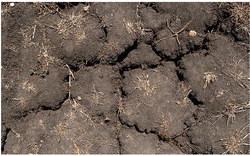
Drought continues to linger in patches of the state, but Texas agricultural producers face much better cropping outlooks going into spring, according to Texas A&M AgriLife Extension Service experts.
AgriLife Extension agronomists Jourdan Bell, Ph.D., Amarillo; Reagan Noland, Ph.D., San Angelo; and Ronnie Schnell, Ph.D., Bryan-College Station, agreed that soil moisture conditions have improved compared to last year. However, they are still concerned that cropping conditions could decline without additional timely moisture, especially in drier areas.
Around 97% of the state was experiencing some level of drought on Sept. 26, 2023, with around two-thirds of Texas mired in severe to exceptional drought, according to the U.S. Drought Monitor. As of Jan. 16, 2024, that figure had dropped to 58% of the state experiencing levels of drought with about 13% experiencing severe to extreme drought and zero areas reporting exceptional drought.
Exceptional drought is indicative of significant widespread crop and pasture losses and emergency-level water shortages in reservoirs, streams and wells.
“Ask me in a week or so after these rain systems move through,” Bell said. “Our area is projected to get 1 inch, and that would be an ideal amount to get some dry-sown wheat up and to help established fields. But we’ll definitely need more to keep the positive trend going.”
Short- and long-term weather outlook John Nielsen-Gammon, Ph.D., Texas state climatologist and Regents Professor in the Texas A&M Department of Atmospheric Sciences, Bryan-College Station, said most of the state will receive a “good amount” of rain over the next week.
Nielsen-Gammon expects multiple storm systems could deliver drought ending moisture in areas like Central and East Texas that remain abnormally dry.
“About half the state has decent moisture, another 20% that is abnormally dry, so that leaves about onethird of the state, like Far West Texas, southern parts of the state and pockets in North and East Texas dealing with drought,” he said. “Drought in much of South Texas is related to longterm rain deficits, so for parts of the state these rains could be enough to knock that drought out, because there are a couple separate systems in the forecast. It’s just a matter of who catches conditions-altering amounts.”
The long-term outlook is not as promising, said Nielsen-Gammon. All six climate models, run by weather agencies like the National Oceanic and Atmospheric Administration, show Texas will be drier than normal in late spring, which is the peak rainy season for most of the state.
“Having all six models forecasting the same outcome tells me there is a strong likelihood it plays out that way,” he said. “It doesn’t mean bone dry. It just means less rain than we receive during the months that rainfall typically peaks.”
Additionally, seasonal forecasts suggest summer weather patterns will be hotter and drier on average, he said.
- Log in or Subscribe to post comments.