
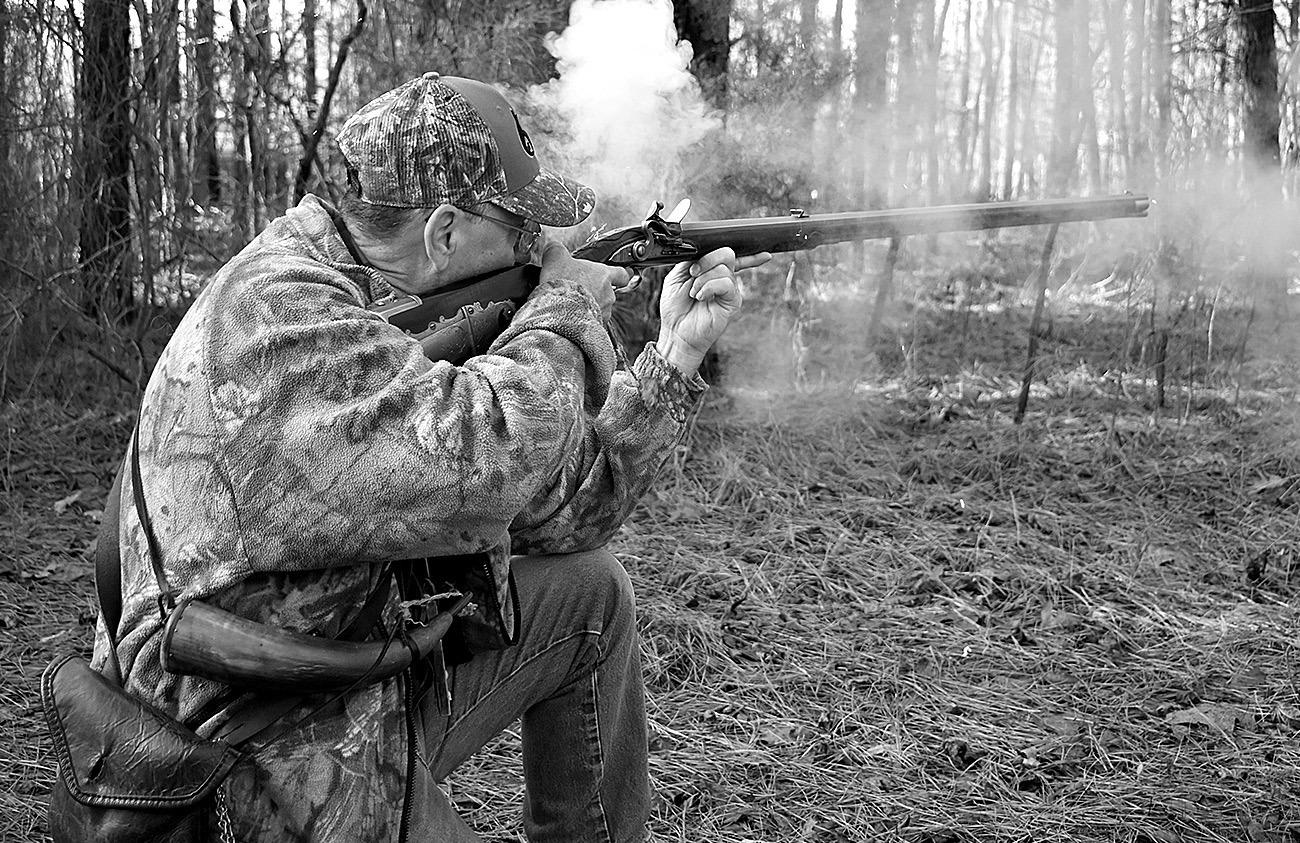
When I was in my early thirties, I had a good friend that was a devout muzzleloader hunter. Once he allowed me to use one of his 50 caliber Hawken rifles on a doe hunt, I was hooked. Pardon the pun but you might say he “sparked” my interest in shooting and hunting with rifles that load from the muzzle. Through my many years as an avid hunter and outdoors writer, I’ve hunted with everything from longbows to big bore air rifles but each year, about this time, I break out my inline fifty caliber rifle and spend some time at the range in preparation for the special late season muzzleloader season that runs January 8-21 in ninety Texas counties. Granted, the whitetail rut or breeding season is largely over in the northern part of Texas, but late-season deer hunting can be very productive, especially when hunting around food sources such as food plots or feeders. For those that haven’t connected with a trophy buck or fat doe for the freezer, it’s time to seriously think about a muzzleloader hunt!
There are basically two styles of muzzleloader rifles, the flintlock and percussion, and the two are vastly different in skill level necessary to become competent. The spark that ignites the powder charge in a flintlock comes from an angled piece of flint attached to the hammer of the rifle that strikes a frizzen and throws a shower of spark into a pan which then, through a small ‘tough hole’, carries the fire to the main charge and sends the bullet on its way. Percussion muzzleloaders get the spark from a primer that is attached to a nipple. Modern inline rifles use a 209 shotshell primer, and most Hawken replicas use a smaller #11 cap. When the hammer falls, the cap explodes and sends a shower of sparks directly to the main powder charge.
Flintlock shooters must spend much more time cleaning their rifles because of the corrosiveness of black powder. Percussion rifles can use either black powder or a black powder substitute, but most modern- day inline muzzleloader shooters prefer the much cleaner burning black powder substitutes. My friend Gary Ables is a very experienced flintlock hunter who relishes the challenge of hunting with his primitive rifles that have iron sights, burn black powder, and shoot patched round balls. Modern inline muzzleloaders, when scoped and properly maintained and loaded, can achieve accuracy that rivals that of centerfire rifles at 100 yards. The twist in the rifling of modern inline muzzleloaders is much faster than that of the long rifle replicas which facilitates the use of longer and more aerodynamic projectiles.
Powder charges (black powder substitutes) for modern inline rifles are available in loose granular form or pellets. Many hunters today shoot the 50-grain pellets, and most rifles are built to handle a maximum charge of 150 grains of loose powder or 3 fifty-grain pellets. Make sure and consult the owner’s manual that comes with your particular muzzleloader when determining powder charges.
While some hunters sight in for long-range shots at deer, using maximum 150-grain powder charges and sighting in two or three inches high at 100 yards, I prefer to keep my shots at deer when muzzleloader hunting inside about 125 yards. I charge my inline rifles with two pellets or 100 grains and have found my groups are tighter with the lighter charge than when shooting the maximum charge of 150 grains. Flintlocks or Hawken-style rifles shooting patched round balls can be very accurate, but the lighter projectiles lack the foot pounds of energy generated by heavier bullets used in inline rifles. Most shooters of patched round ball rifles concentrate on making a very accurate shot at deer at closer ranges.
Through the years, I’ve taken deer with everything from patched round balls to conical, and for many years I shot sabots which are actually bullets encased in a plastic sleeve. Last season I discovered Hornady’s Bore Driver bullets which are not sabots but do have a polymer base. I’ve found these bullets in both 240 grains and 290 grains. I’ve shot 3 of these rounds without swabbing the barrel, and the third round loaded as easily as the first. My particular inline muzzleloader shoots the 290 grains at 100 yards very accurately, and I’ve used it so far to take three whitetails at ranges out to just around 100 yards. I have ultimate confidence in this combination of 100 grains (2 fifty-grain pellets) and these Hornady 290-grain bullets.
Even when shooting black powder substitutes, fouling and possible rust are something every muzzleloader hunter must learn to deal with. Black powder is extremely corrosive, but the black powder substitutes also cause corrosion, just not nearly as bad. When on multiple-day hunts, I never worry about leaving a charge in the barrel but certainly never place the percussion cap on until I am ready to shoot. After the hunt or shooting session is over, a thorough cleaning of both the outside and especially the inside of the barrel and breech plug is necessary. During offseason, I leave the breech plug out of my rifle (most modern inlines have removable breech plugs) and every few months check the inside of the barrel for corrosion and swab the barrel with a lightly greased patch to prevent corrosion.
Muzzleloaders do not develop the pressures or power of modern centerfire rifles that burn progressive powder. A good ‘for instance’ is a comparison of a .270 caliber centerfire and a 50 caliber muzzleloader charged with 100 grains of powder. The .270 factory round develops about 3,100 foot pounds of energy at the muzzle while the muzzleloader produces about 1,700 foot pounds. At 100 yards, that 1,700 reduces to between 800 and 900 foot pounds.
Make no mistake, muzzleloaders have for many years been efficient gamegetters and, with today’s advancements in powder and bullets, they have become even better. But keep in mind the numbers I quoted pertaining to energy. Keep your muzzleloader shots at game within reasonable distances, and chances are very good you will be putting venison in the freezer during this last late-season opportunity.
Email outdoors writer Luke Clayton through his website www.catfishradio. org.
- Log in or Subscribe to post comments.