
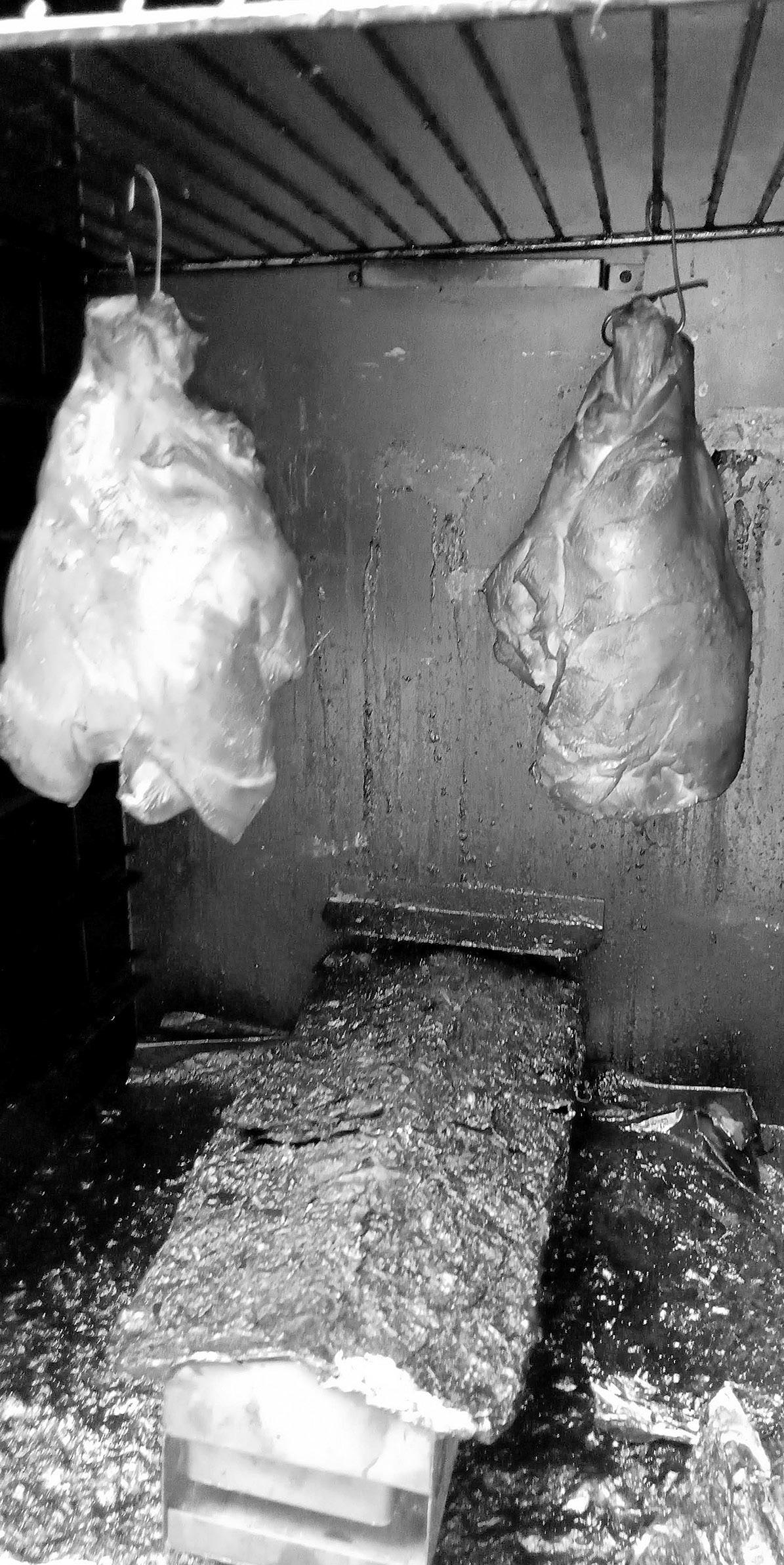
I guess I can blame it on my roots, my desire to procure fresh pork when the weather gets cold and the sky clear. Back in the late fifties when I was a youngster growing up in very rural Red River County in northeast Texas, my dad would pick a cold, clear day and designate it ‘Hog Killin’ day. I don’t remember us having a freezer in those days but rather he rented freezer space from an establishment in Clarksville. The cold weather ensured safe handling of the meat, some of which he cured in what we called our little ‘smoke house’. He would assemble a couple of neighbor friends, get up very early and build a hardwood fire under a 55-gallon oil drum that he had sitting on a slant near the hog pen. My job was toting water from our ‘pool’ which was about fifty yards away. The hot water was used to scald the hogs in order to remove the hair. This all might sound a bit backwoodsy to many today, but back six decades ago, it was a part of rural life. Back then, neighbors worked together and helped each other when it was time to butcher their winter’s supply of pork.
When the feral hog population began to explode 40 or so years ago, I thought I was in ‘hog heaven’. With all that wild pork roaming the landscape, I became very picky in the hogs I harvested. After all, my dad didn’t butcher old, tough boars. While many of my buddies were out after the biggest hog in the woods, it’s always been those younger, fatter hogs that I set my sights on.
Like many hunters, I have been hunting deer the past few weeks but that cold snap a week or so ago reminded me it was time to put some pork in the freezer. I had been thinking about making some tamales from smoked pork. When I noticed a sounder of sixty- to one-hundred- pound pigs had been hitting one of my corn feeders a half mile from home, I started seriously making plans for some fresh pork Christmas tamales! Then my neighbor texted me one night after I had gone to bed with a note that read something like this, “Luke if you are up, bring that 50 caliber Seneca Dragon Claw air rifle topped with your AGM Global ‘Rattler’ thermal scope! There are at least 30 hogs eating acorns about 50 yards from where I’m sitting by my campfire.”
The sounder of hogs had been hitting my feeder about an hour after dark the past few days. These hogs were keeping my schedule! I used to stay out till midnight waiting for hogs but, because hunting is so good close to home, I have become very picky. The next day I settled into my campstool on the fence row, watching my feeder which was hanging from the limb of a giant pecan tree 25 yards away. I had used cedar limbs to form a makeshift blind and when the wind direction is right, the hogs never know I am there. The hog wire fence I am hunting behind makes a perfect rifle rest for those close shots. This is not runand- gun hog shooting with AR rifles in open fields but rather a planned strategy to harvest what I consider the prefect eating hog at very close range. After an hour’s wait on the fence row, I heard pigs squealing back in the woods and soon, through the AGM Taipan thermal monocular, I spotted several coming to the corn. A fat 80-pound gilt (young sow) was the first to the corn, and then my hunt was quickly over. TAMALE MEAT on the ground!
TAMALE TIME I’ve helped some of my Mexican friends make Christmas tamales in past years and found it to be an all-day affair. They made dozens of tamales and employed the help of the entire family. The task was lots of work and very time consuming, but the finished product was authentic Mexican tamales. I learned a few things while helping on these all-day affairs; I didn’t want to spend all day working that hard cooking anything, and there had to be an easier way!
The method I am about to describe to you requires a fraction of preparation time and results in some very tasty tamales. Are they as tasty as those I made with my friends? The finished product is a bit dryer than conventional tamales with a different texture, but everyone that has tried them has given them a thumbs up.
I’ve given a rough outline on my method in previous columns but, through the years, I think I’ve developed a simpler guide to making tasty tamales. First, I smoke some prime cut of pork using the back straps and chunks of ham meat. Next, put the chunked up pork in a big skillet with lid and add fresh garlic, salt, cumin, a can of Rotel, and chopped cilantro. Allow the meat to simmer until fork tender, and then remove lid and reduce moisture until you have a thick meaty paste. This is your tamale filler.
Soak corn shucks in warm water a couple hours and apply the masa paste. There are many good You-Tube videos depicting this procedure but, in a couple weeks, I will have this detailed in a segment of “A Sportsmans Life”, our weekly TV show in Carbon TV and YouTube. After your tamales are assembled, place them in an aluminum pan and add some warm water, not a lot but enough to create steam. This method doesn’t require the use of a double boiler which greatly simplifies tamale making. Cover the pan tightly with aluminum foil and place in the oven at 325 degrees for about an hour and check to see if the masa is well done. You will find the water is evaporated and the tamales still somewhat moist, not quite as moist as those cooked in the traditional fashion but very tasty.
Contact outdoors writer Luke Clayton through his website www.catfishradio. org.
It’s the time of year old timers used to refer to as ‘hog killin weather’. In this week’s column Luke talks about how important pork was to rural folks years ago and shares a quick and easy method of making tamales from pork (wild or otherwise).
- Log in or Subscribe to post comments.