
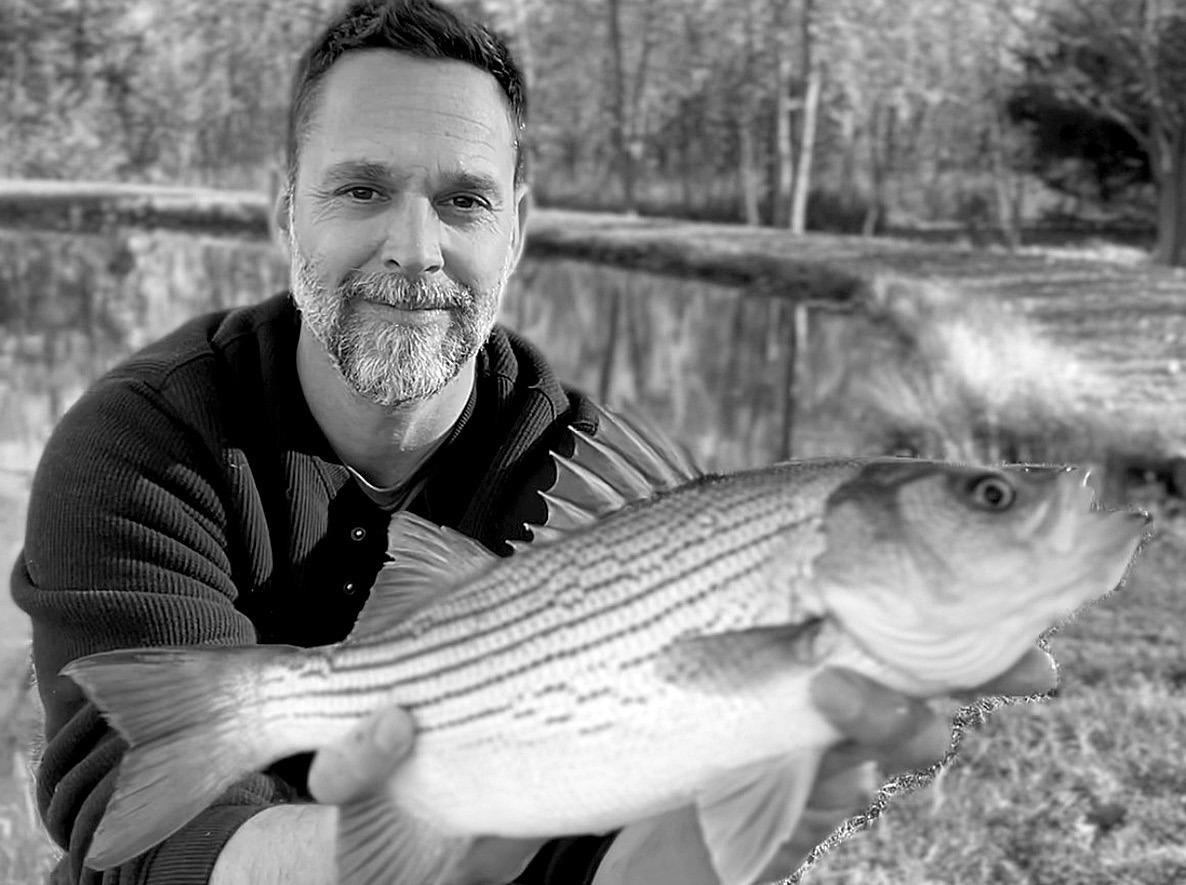
What’s the hardest fighting fish you’ve caught in fresh water? Big catfish pull hard and long, largemouth bass battle hard but for a relatively short time, striped bass are noted for fighting right up until they are netted, but have you ever connected with a good size hybrid striper? Hybrid stripers, like the hybrid “cross” of any two species, take on the attributes of both species. Hybrid stripers are the offspring of striped bass female and male white bass. Thus, they are usually relatively easy to catch like a white, bass but they also inherit the brute strength and fighting ability of the striped bass.
Hybrids, often nicknamed “Wipers” in states to our north, are stocked in lakes such as Tawakoni and Ray Hubbard as well as several others across Texas. They are referred to as an “open water schooling species”, and they are known for running in big schools and for their voracious feeding habits.
I understand catching hybrid stripers in the big lakes. I’ve fished for them for decades, and they are one of my favorite fish to catch. But until I spent some time with Brenton Kernes with Newalla Fish Company, I had little knowledge of how well these fish do in smaller ponds and lakes. Kernes raises thousands of hybrid stripers at his facility in Oklahoma and has developed a delivery system to ponds and lake owners in several states (Texas included) that is costeffective and designed to ensure the fish arrive healthy and ready for ponds ranging from an eighth-acre all the way to larger private lakes.
The fish are not delivered ‘old school’ in a big truck that requires a solid road and dry conditions but rather they come to your door in a box designed to ensure the fish are in perfect condition. The box is simply carried down to the pond and the fingerlings released. The fish are ‘conditioned’ at the hatchery for the waters they are to be stocked in, and survival rate is near 100 percent.
When I first began learning about hybrids stocked in ponds, my first question to Brenton was, “Won’t they eat everything in the lake? I’ve caught them in the big lakes and, when they are feeding, they appear to be very aggressive, often clearing the water’s surface by a foot as they pursue shad.” Brenton explained that because the hybrids run in huge schools in big reservoirs, they are in high competition for food and they are extremely aggressive feeders. But in smaller impoundments, they tend to blend in with the other fish, including largemouth bass and crappie, and they feed a couple times each day.
Because even a big hybrid striper has a relatively small mouth, they simply are not equipped to feed on large fish. Will they eat the fry of bass, crappie and catfish? Yes, but so will every other fish in the pond, and studies have proven they don’t eat any more than any other species.
Brenton pointed out that hybrid stripers are actually good for smaller fisheries because they help keep the fish populations in balance by removing excess smaller fish. Sunfish species have been known to spawn up to three times or more during the warm weather months, and their populations can quickly get out of control.
I’ve fished smaller ponds stocked with hybrids in past years and always enjoyed the strong fight and later the tasty fillets when exposed to a hot skillet, butter, and blackening seasoning. But I never actually learned much about stocking them. Honestly, I always thought they were pretty much a solo fish when stocked in private waters. I just assumed they would devour every other species in the pond/small lake.
I inquired about the best time of year to stock fingerlings and learned that, in north or east Texas, fingerlings are usually stocked into December and later into winter in more southern counties. Many pond owners order their fish during the winter months and opt for stockings to take place in early spring. Either way, Brenton says the survival rate is very high.
Growth rate on any fish depends upon habitat and diet, but hybrids are fast growers. Three- to five-inch fingerlings grow to more than a foot in length during the first year, and even more if fed a special high-protein fish food the company also offers.
In this column about 25 years ago, I remember referring to hybrid stripers as genetically altered brutes of the fish world, and to this day, I still have a couple of friends that are devout hybrid angers who tease me about my definition of this hard-fighting species. Hybrid stripers are definitely a “put and take” species. They are known for their hard fight on the end of a fishing line as well as their flavor in the skillet.
I was curious just how well the fish would fare in small waters during the heat of summer, and Brenton assured me they do just fine. He has a small pond near his house that is stocked with some jumbo-size hybrids, and he says he didn’t lose a single fish during this very dry and hot Oklahoma summer.
So if you have a private pond, large or small, you might wish to consider stocking with some hybrid stripers. A harder fighting fish in fresh water you won’t find. They are very hardy and make excellent table fare. To learn more, you can visit www.newallafishcompany. com or give Brenton a call at 580-919-5110.
- Log in or Subscribe to post comments.