
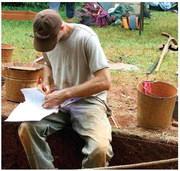

This one “probably serves dried fish, hard bread, dates, and maybe some figs and fowl. Maybe there are some types of beer and certainly some aged wines.” You will have to be willing and able to travel quite a distance to find this long-established public eatery, but it will be an experience to remember and about which to tell folks in Forney!
Be sure to ask for a seat in the open courtyard—but not too close to the 10-feet-wide mud-brick oven unless you are cold-natured! And be sure to arrive early, because at one time (I am not sure how long ago.) 50,000 people or so lived relatively close by.
Guess what some archeologists have found in IRAQ? According to many “posts” and articles. The Tigris & Euphrates Rivers and the city of Lagash in Mesopotamia may have had a public eating place or what we might call an outdoor tavern or brewpub. The site dates to somewhere around 2700 B. C. and contained long ago a multi-room building, a “benches-for-seating” courtyard, and a large brick/clay oven. And there was even a refrigerator, well, sort of!
The device used an evaporation process to cool things, and near this was a room with cone-shaped jars that contained “ready-to-eats,” or so they think! Scientists are trying to discover just what is/was in the jars and bowls that still contain fish and food residue and bones.
Many of the larger vessels have clay stoppers with letters and numberings on them, leading the discoverers to think they were notations to aid in collecting taxes and fees, which also leads the “historians” to think some of the contents may have been alcoholic! In fact, some “unearthers” said they specifically thought the contents of many of the jars had been beer—and this remains to be proven as various methods of analyzing take place. *Maybe this will spawn a resurgence of an old, or the makings of a new, CRAFT BEER called “Lagash Lager!”
Many of the dishes appear to have not been cleaned or washed, and this makes the historians think that maybe some disaster, war, or cataclysmic event occurred to cause the “users” to desert the area quickly.
LAGASH was at one time a very bustling and growing and thriving community in the area we call the “cradle of civilization”—about 2900 B. C. to 2300 B. C.—researchers from the University of Pennsylvania and the University of Pisa surmise. One of the main researchers thinks the 5,000-years-old tavern site has the remains of a public eatery from one of the first cities of Southern Mesopotamia and that it could date back as far as 2700 B. C., and the exact area is Tell al Hiba, southeastern Iraq, approximately 150 miles from the modern-day city of Basra, a port city.
And, if you are still reading now, you might be interested to know that the “primitive” refrigerator was called by the Arabic name of a “ZEER” and employed two clay jars with no bottoms. The device used evaporation to cool items that could not take the heat!
This digging team says they have been working on this specific site since 2019— and that other excavations have been in the area since the’70s. Interesting to me was a notation that this structure “find” was only 19 inches below the surface of the excavation site!
One detail also said that “uncovering a tavern supports the idea of more and more historians that society at that time was not just divided into the ‘rich’ and the ‘slaves’ but that there was a ‘middle class’ that took part in daily life.” (paraphrase) In closing, I found it interesting that “beer was the most common beverage for the Sumerians and that a tablet with a recipe for early beer-making was found at an earlier excavation in the area,” but the person relating this information said that “there would not have been pretzels, because they were not invented until more than 3,000 years later!”
- Log in or Subscribe to post comments.