
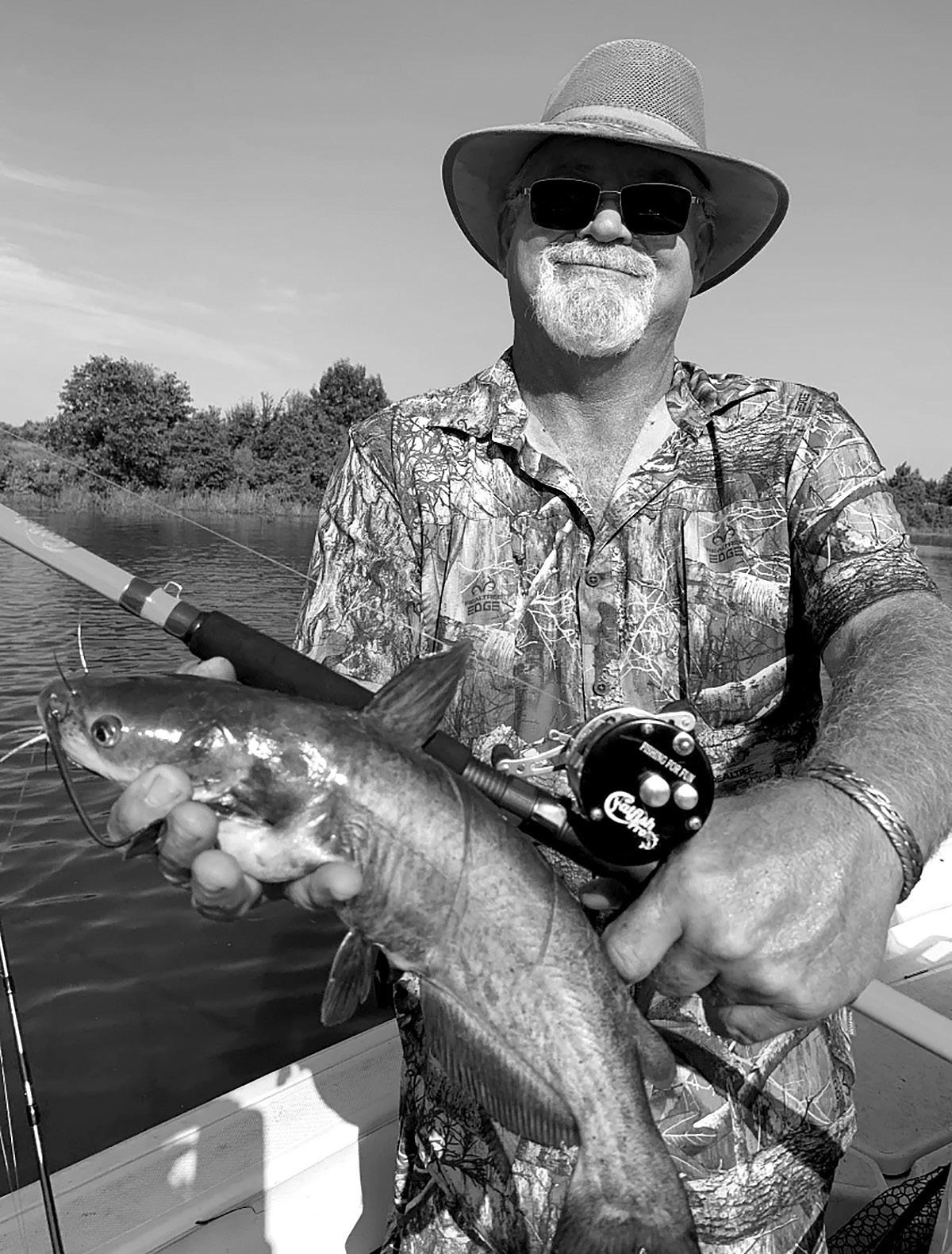
More than forty years ago, I penned my first newspaper column and the topic was bass fishing at a brand new trophy largemouth bass reservoir. Lake Fork had just opened, and guide Rex Bridges invited me to spend the morning fishing this red-hot new bass fishery with him. Rex phoned late the evening before and informed me that he couldn’t make it but had set me up to fish with guide C.C. Oswald. C.C. and I became instant friends, and I remember him telling me that Fork was strictly all about bass fishing, none of those pesky sand bass or catfish to worry with.
There were no sand bass in Fork in those days. I’m sure there were plenty of catfish, but because of the big bass craze, few people targeted them. If my old friend C.C. Oswald was around today, I bet he would be surprised to learn that Fork is now a hotspot for catching big channel catfish, and the white bass population has exploded in the past decade.
Fast forward to another much more recent fishing trip I enjoyed on Fork last week with another longtime fishing guide buddy, David Hanson. David grew up targeting catfish on Lake Tawakoni, and when TPWD began the heavy blue catfish stocking there, he became well known for putting his clients on trophy blue catfish as well as lots of eater size catfish of both species. David now does much of his channel catfishing on Lake Fork.
“The average size of channel catfish on Fork is bigger than any Texas Lake I’ve fished,” says Hanson. “It’s common to catch fish in the 3- to 6-pound range with the very real possibility of one over 10 pounds. I’ve seen a big interest in targeting the larger channel catfish on Fork and now run the majority of my channel catfish trips here.”
Catfish are now in the midst of their spawn, and as we motored into the back of a big cove, David eased back on the throttle and lowered the trolling motor. With the boat positioned so that we could fish some shoreline weeds and green willows, rods with slip corks and #6 treble hooks were passed out to Jeff Rice, David’s son Daniel, and myself. There are few things in the sport of fishing I enjoy more than watching a cork disappear below the surface, and with all the catfish spawning cover a short cast away, we were all eager with anticipation! Slip corks make casting much easier compared to a standard cork that fixes the hook/bait at one depth. It’s hard to beat a good cheese punch bait for attracting and catching catfish. David had a couple big cans of Tony P’s Punch Bait handy, and we were soon baited up and casting close to the heavy cover.
As a rule, fishing gets better the longer the scent from a punch bait stays in the water, but Hanson had positioned us within casting range of a prime spawning area. The fish were there in numbers in the 4-foot-deep water and began biting the moment our baits hit the water. The fast-paced catching didn’t stop until David fired up the big engine and began slowly motoring us back to the fish cleaning station. I glanced at my watch and noted it was 10 am.
I like getting on the water early and fishing during the ‘cooler’ period of the day. Eighty-five degrees might not be deemed as exactly ‘cool’, but it is comfortable fishing compared to later in the day when the Texas sun is overhead. David has years of experience filleting catfish – and he’s fast – but it took a good 30 minutes back at the dock to transform that big pile of fish into four-gallon bags of trimmed fillets, enough for several big fish fries for Jeff and I.
If you’re looking to stock your freezer with some tasty channel catfish fillets from those fertile Lake Fork waters, the next few weeks should continue to provide excellent shallow water action. Hanson suggests looking for the heaviest cover you can find, and right now, it’s pretty easy at Fork to locate shoreline vegetation thanks to the reduced lake level at Fork while the dam was being repaired. During the months the water was lowered, willows and weeds such as Sennabean grew rampant in the moist soil along shorelines. These plants grew to heights of five feet or more, and the dead stalks and branches are now flooded and provide prime spawning waters for channel catfish as well as cover for baitfish.
In a few weeks, the majority of catfish will move to deeper water, and then Hanson suggests baiting holes in water 15 to 20 feet deep with soured grain or cattle range cubes to help concentrate catfish. The guide tips that channel catfish can be caught on a wide variety of baits, ranging from earth worms to chicken liver, but he relies heavily on the scent from the cheese punch bait to concentrate fish and put them in feeding mode. On our recent trip, the fish were already concentrated in the spawning area and biting well from when we tossed our first baits in the water. But later when the fish move deeper, the longer the bait is in the water and the more scent dispersed, the better the bite usually gets.
Treble hooks are necessary when fishing most prepared catfish baits, and while some anglers prefer #6 trebles, I like to use #4s which are a bit bigger and hold a little more bait. I also find them easier to remove from the fish’s mouth.
One last tip from Mr. Hanson: the moment you bring your catfish into the boat, snip the sharp tip off the fish’s fins. This is a lesson learned from much practice handling the fish at the cleaning stations. If the barbs are left intact, sooner or later one will wind up in your finger or hand, and that is not a pleasant experience!
Contact guide David Hanson at 903-268-7391. A video of this fishing trip is now on Carbon TV, A Sportsman’s Life. Email outdoors writer Luke Clayton through his website www.catfishradio. org.
- Log in or Subscribe to post comments.