
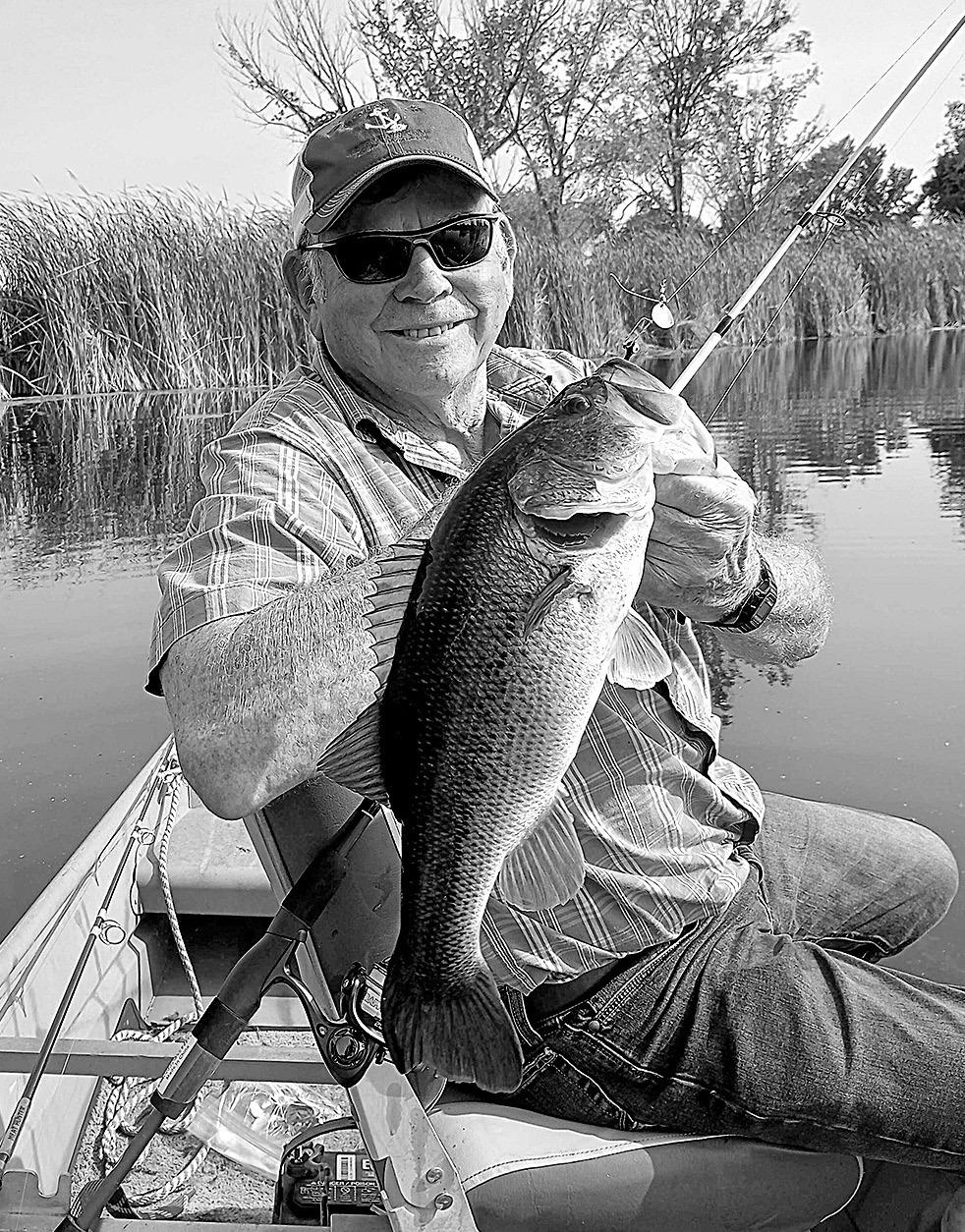
My love affair with the largemouth bass goes back well over sixty years. The largemouth, or ‘black bass’ as we called them back in the day, was the targeted species of my mother and dad. We were also serious trot liners for channel catfish, but bass fishing was excellent close to home and provided fun and food for our family. My parents were accomplished bass fishers and had access to most of the good farm ponds in northern Red River County. Most of our fishing was done with bamboo poles and live shiners, but my mom did treasure her steel Pflueger rod and reel and her Baby Lucky 13 and Jitterbug plugs. This was way before the introduction of the Florida strain bass into Texas waters, and an honest five-pound bass was a big one. It was also before the term ‘catch and release’ became the mantra of bass anglers. We caught and cooked the bass we caught. Looking back, that was probably a pretty good management plan for the smaller ponds we fished. If a certain amount of bass aren’t removed from small waters it’s easy for them to overpopulate and become stunted.
Back in the seventies and eighties, I fished bass tournaments with a couple of buddies that owned bass boats. These were amateur events, but I did get caught up in the competition and we managed to do pretty well in several of the tournaments. As a budding outdoors writer, I fished with several of the bass pros of the day but later in my outdoor writing career, I gravitated to my roots, fishing for species that ultimately wound up in a skillet with hot cooking oil! In the past 30 or so years, the majority of my fishing has been for catfish, white bass, crappie, stripers, and even freshwater drum and yellow bass, all abundant in Texas waters and great food fish.
There is one exception, and that is pond fishing for largemouth bass. I live a few
WITH LUKE CLAYTON
minutes from some very good farm pond fishing in ponds and small ‘lakes’ that range from 8 to 30 acres. I think the definition of a ‘pond’ is an impoundment of less than 10 acres, while more than about 10 acres qualifies as a small ‘lake’. Tactics and baits used for successful pond fishing vary a bit from fishing on big lakes and reservoirs. As a rule, smaller baits are more productive on smaller waters, and lures that mimic sunfish usually catch more fish.
When asked my favorite bait for pond fishing, I rank small spinner baits at the top of my list. I much prefer dark rubber skirts over white which is a popular color on big lakes because of the bass’ favorite forage fish: shad. I’ve found a combination of yellow/black or any dark color such as chartreuse or even blue to produce well, depending upon time of day and sunlight. Spinner baits are inherently somewhat weedless and most ponds have an abundance of shoreline weeds that attract baitfish and bass. The trick when fishing any subsurface bait is to fish the edge of vegetation, but it’s impossible to keep baits in the strike zone and avoid vegetation. A spinner bait and my second choice, the Texas rigged worm, both do a good job of repelling vegetation. In past years, I have also become fond of fishing with a Senko or ‘do nothing’ soft plastic. There are many variations of the Senko out there, and I’ve found them all to produce fish. These baits will often catch bass when nothing else will, and fishing them requires little skill. These baits can be rigged Texas style with a slip bullet weight or hooked through the middle. I really enjoy rigging them weightless with the hook in the middle. Presentation is very basic. Simply cast the bait out and allow it to slowly sink, keeping a tight line so the strike can be detected and an occasional twitch with the rod causes the bait to move in a manner that triggers strikes. Bass simply cannot resist the action of the free falling worm, and it usually works on tough days when other lures are not productive.
Topwater plugs such as Tiny Torpedoes, Pencil Poppers, or even the old Jitterbug often produce action during early morning or during periods of cloud cover when bass are shallow chasing bream. Getting baits into the strike zone while fishing from the bank can be challenging, especially if the there is vegetation growing along the bank.
Fishing is usually much more productive in ponds or small lakes when fishing from a boat. It’s nice to be able to position the boat out from shoreline vegetation and use the trolling motor to keep in position to cast parallel to the bank. Through the years, I’ve fished from all sorts of small boats, everything from the two man “Bass Busters” to kayaks designed for fishing, but I’ve learned that a flat nose Jon Boat is hard to beat. The little 10 foot boat I use is pretty Spartan with boat cushions on the aluminum bench seats to add a bit of comfort. Thanks to its light weight and portability (I haul it in the bed of my pickup), my little boat rigged with a trolling motor is ready to go when I am, no trailer to worry with. I simply slide it into the truck, and once at the pond launching is as easy as sliding it into the water. I often fish with a good friend that has his Jon Boat rigged with elevated cushioned bass boat type seats, aluminum rod holders and a portable graph. It’s nice to be able to locate the deeper channels and drop offs when fishing small waters, and I’ve found bass relate to bottom contour changed in ponds just like they do in big waters. You might not have access to private ponds, but if you do a bit of scouting, you can find municipal ponds and small lakes that are regularly stocked by Texas Parks and Wildlife with trout in the winter and catfish through the warm weather months. To be completely honest, pond fishing has spoiled me. I like being able to launch anywhere I like, rather than waiting at a crowded boat ramp at a major reservoir. It’s also nice for a ‘fish eater’ like me to catch and cook the smaller bass we catch and know that by doing so we are actually helping these ‘mini’ fisheries.
Contact Outdoors writer Luke Clayton by email through his website www. catfishradio.org.
- Log in or Subscribe to post comments.