
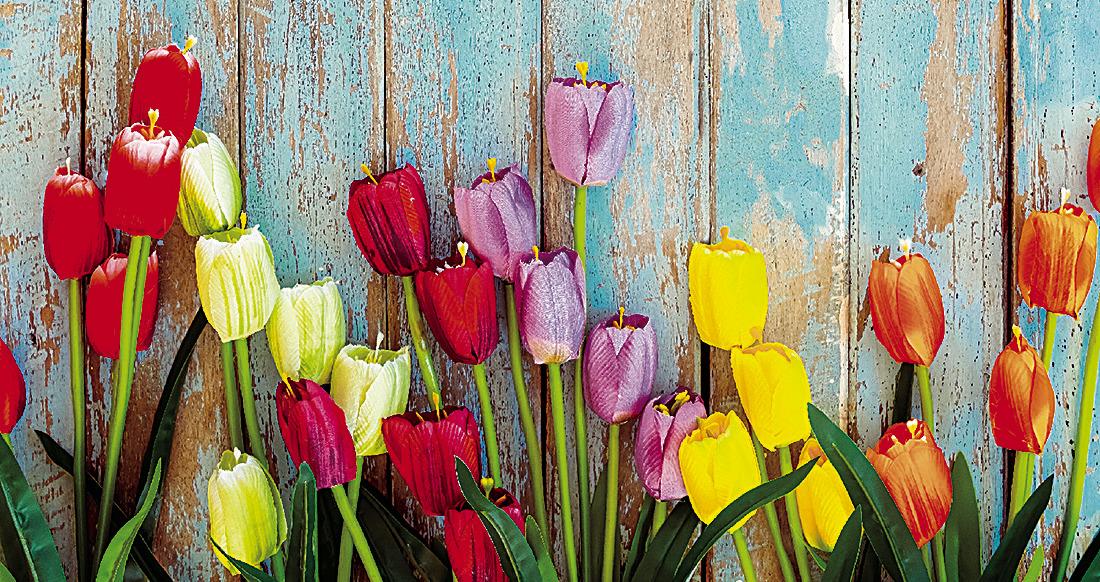
TULIPS Defined: a genus (“TULIPA”) of herbaceous, bulbiferous geophytes (They form “bulbs” as storage organs and return yearafter-year from “life” stored in the bulbs.) and are perennial and spring-blooming plants. Their flowers are nearly always bright and showy and predominate with colors of yellow, red, pink, white or some combination, and even to browns, purples, and “close to blacks.” Some are even “streaked.” Often, the colors are different at the bases of the blooms. There are long, medium, and short stemmed varieties.
The name of “tulip” has long been thought to have been derived from a Persian word for “turban,” which many folks feel the tulip flower resembles.
There are approximately 100 different species, are in the “LILY” family (“Liliaceae,”) and had their beginnings in Persia (10th Century), Turkey, and parts of Central Asia. Slowly-butsurely, tulips were stolen and taken to other countries and also later became part of a thriving “tulip trade,” since they were so beautiful. And bulbs can be left in the ground to re-bloom each year, or they can be harvested and stored in cool, dry places to save for spring or to sell in nurseries and stores.
Tulip stems have few leaves, and they do produce SEEDS or fruit capsules, usually ellipsoid or globe in shape with a “leathery” covering. These capsules usually contain numerous flat, disc-in-shape seeds in two rows per chamber.
Tulips mostly have little noticeable scent, but some varieties can produce enough so that you will notice it as you enter a room with the flowers in bloom. My wife does not consider it a fragrance but a funny or irritating scent. And, some tulip juices cause dermatitis among florists who handle the flowers daily. And, some tulip juices are somewhat toxic to animals, especially cats, dogs, and horses!
A good thing about tulips is that they have few insects or other garden enemies that attack the above-ground plants and “in-ground” or “cool-storage” saved bulbs. They also vary in height from about 4” to 28” and can, therefore, be used in many types of flower arrangements. And, most importantly, tulips are considered “Easter Flowers” and “Romantic Flowers” for the HONEYS of all you men who wish to be hugged and kissed!
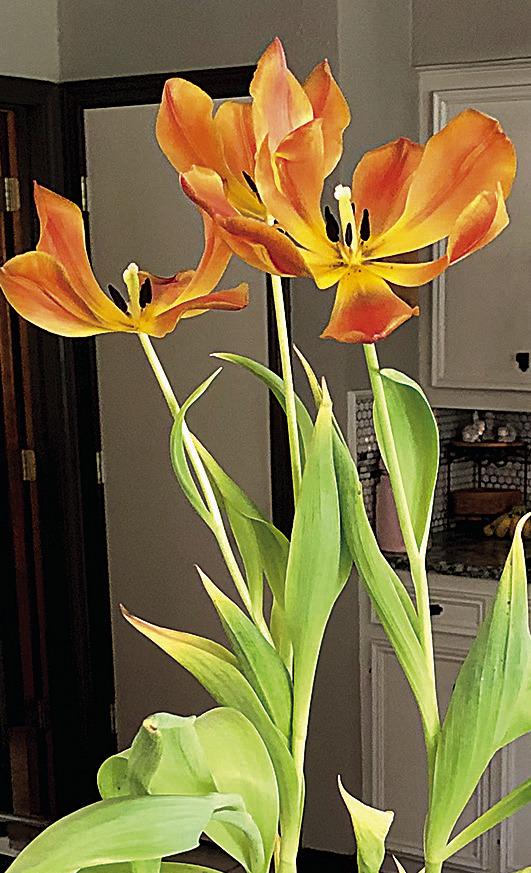
Last, notice in the photos the differences of the closed to semi-closed blooms and those that are wide open (some from Katie and Weston that we kept until total maturity, exposing petals, sepals, tepals, stamens, stigmas, ovaries, and the “works”).
TULIPS—the flowers of spring and love!
- Log in or Subscribe to post comments.