
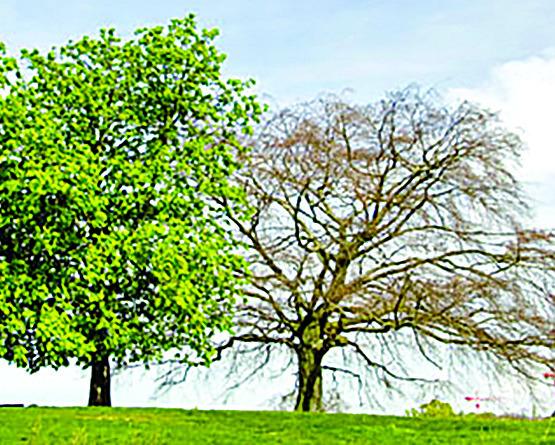
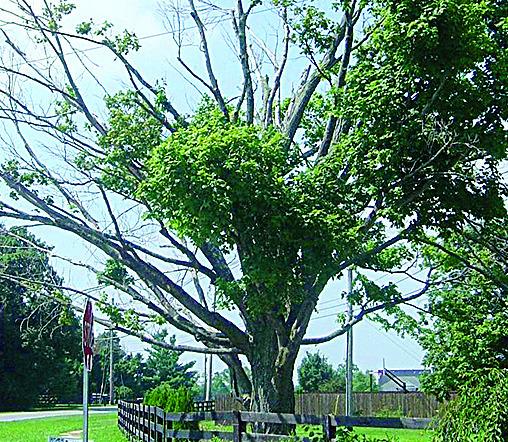
The rains have returned, and we have had above average rainfall during the fall and winter, so why are all my trees dying?
In September 2011, most of Texas was in a drought the most severe drought in Texas history. Across the state, trees - particularly mature oaks, elms, pines and junipers - were dying simply from the lack of water. Last summer, we experienced similar conditions as large portions of the state are under extreme or exceptional drought. Thankfully, we started getting much needed rain in August.
With the return of seasonal rains to most parts of Texas in 2012, pastures and agricultural fields turned green once again. Trees that weren’t killed directly by the drought began to leaf out or put on new needles.
Why, then, are some trees continuing to die months after the drought has ended?
The best answer is that severe drought may have a long-term impact on trees, and the stress may linger for years, long after soil moisture returns. In many cases, drought kills the fine feeder roots that trees use to take up water and nutrients. Until these feeder roots can be fully replaced, the tree remains under stress and cannot support a full complement of leaves.
Prolonged stress renders the tree vulnerable to primary and secondary pests. Wood borers, root rots and canker-causing pathogens are particularly common in many tree species after drought. Of course, trees also may be stressed by human activities, such as construction or other actions that disturb or compact soil or damage roots.
Although scattered trees are likely to die for several years following a drought, the good news is that the number of dying trees on the Texas landscape was far less in 2012 than in the previous year. The healthier trees are re-growing their fine root systems and recovering from the previous year’s drought. Trees also fared better as temperatures dropped to lower levels with the arrival of fall and winter.
Landowners should keep a close watch on their valuable shade trees and take measures to maintain tree health throughout the year. Supplemental watering of trees near residences may be needed if several weeks pass without significant rainfall. Adding a 2- to 4-inch thick layer of mulch around mature trees also reduces soil moisture loss and helps prevent damage from low winter temperatures. Be sure to keep the mulch away from direct contact with the tree’s trunk.
Dead trees should be felled and removed as soon as possible if they pose a hazard. Bare spaces in the landscape can be restored by planting additional trees and properly caring for them with adequate mulch and water. Tree planting should take place during winter months when temperatures are cool and the saplings’ root systems have stopped growing.
In the case of hardwoods such as oaks and elms, stressed trees may be colonized and killed by hypoxylon canker even after the drought has ended. Symptoms of hypoxylon canker include the browning of leaves and sloughing of bark, which exposes a gray, brown or black fungus on the sapwood of the stem or major limbs. The dead leaves may remain on trees killed by hypoxylon long after the tree has died.
For more information on declining trees, contact the Kaufman County Extension office at (469) 376-4520.
- Log in or Subscribe to post comments.