
in
Forney Herald
Staff Writer The Farmers National Bank always looked to me like a bank from the “Westerns” I so liked to watch on television— Wyatt Earp, Gunsmoke, Have Gun Will Travel, The Rifleman, Bonanza, Wagon Train, Bat Masterson, The Lawman— your appetite for “Westerns” whetted yet?
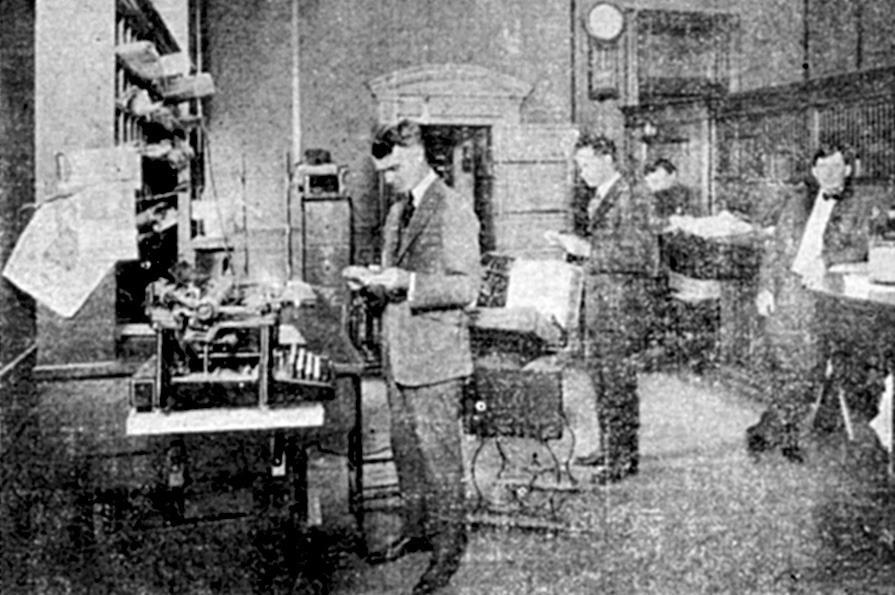
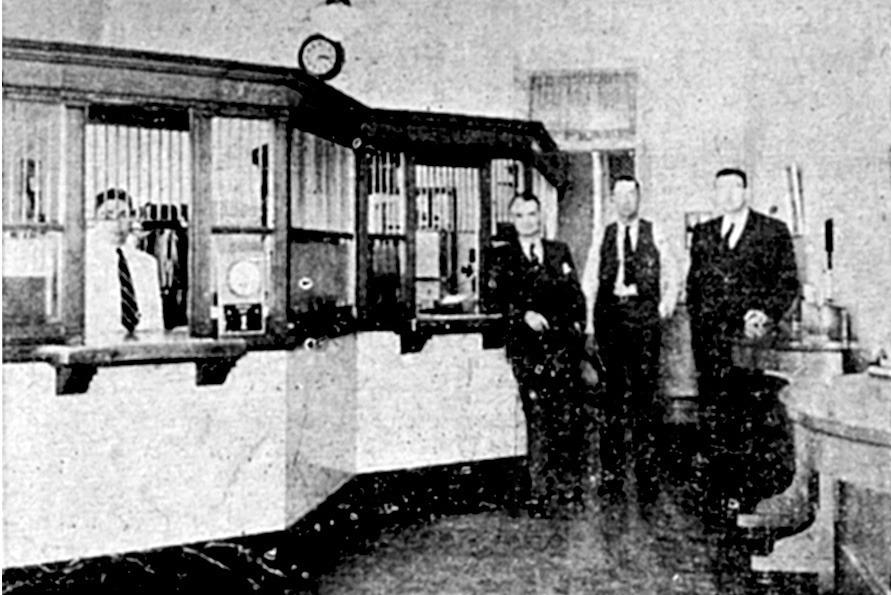
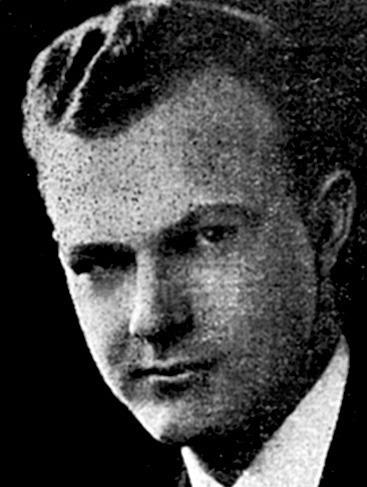
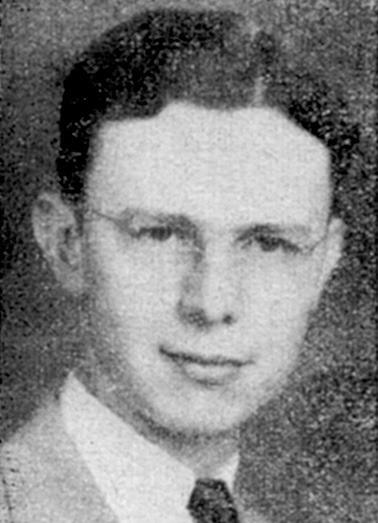
Mrs. Lynn Senter and later Mr. Conway Senter in charge, Mr. Ray Adams at his desk to the right, Mrs. Martha Kasper and Mrs. Mamie Dell Tune at the teller windows, and of course others through the years……I loved going there and putting a dollar or two of my earnings from lawn mowings and odd jobs into the passbook savings account at a measly 4% interest. (Sounds pretty good today, does it not?) Let’s go back a few many years from my earlier days to about 1939, when two (2) young Forney men were still “wet behind the ears” and employed by Farmers National Bank and described as “two of the popular employees….. both born and reared in Forney, with ‘contrasting natures and personalities,’ but both eager to serve efficiently and cheerfully.” Richard G. Pinson, son of the first cashier of Farmers Bank (T. J. Pinson), graduate of F. H. S. in 1931, and with the bank since 1933, and Perry N. Whittemore, son of Mr. and Mrs. Clarence Whittemore, graduate of F. H. S. in 1934, and with the bank since 1936, are known as courteous, sincere, and jovial.
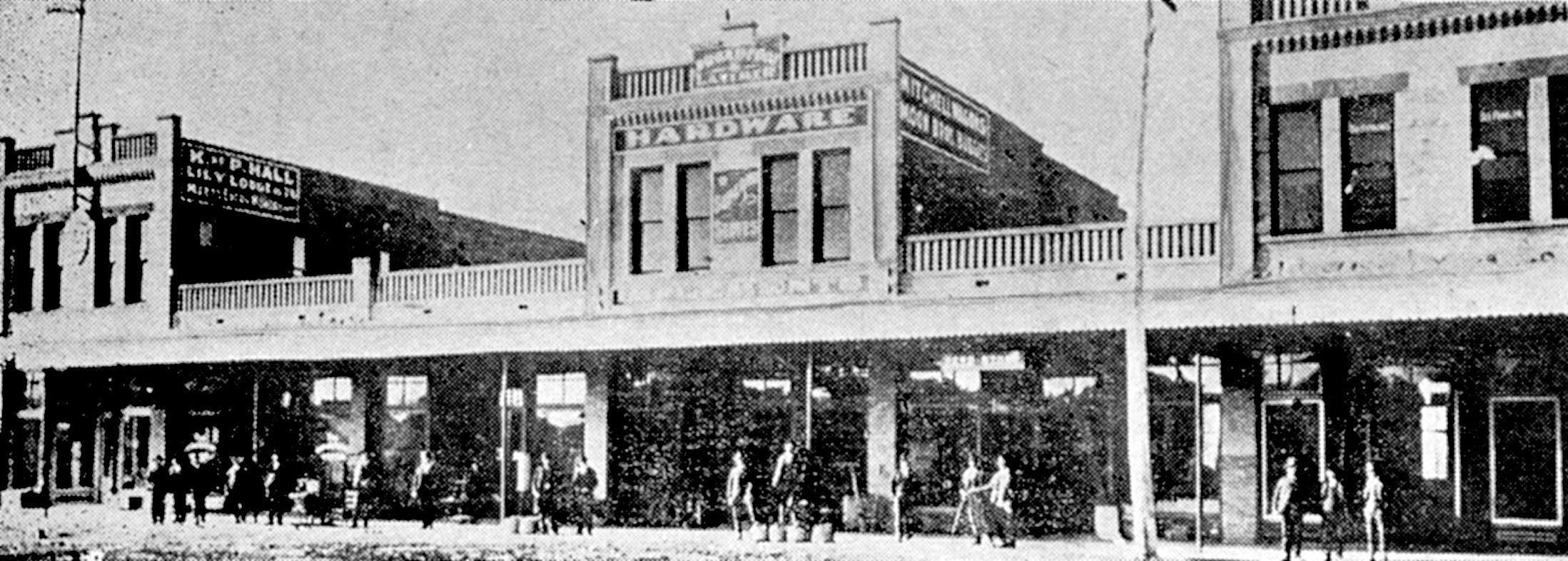
The bank site was a DEER TRAIL in early days. Around 1865—1869, it was common to view groups of five to fifteen deer sprinting during the daytime from Mustang Creek and over the ground where the Farmers National Bank and the T&P Depot now (1939) stand as they returned to the heavy timber of the East Fork of Trinity River as the “overflowing areas” had subsided. And sometimes, a number of wolves made the same return trip to the lowwater areas. But it was not long until in 1873 the T&P Railroad passed through the Forney prairies and on into the Dallas area with the Union Central Depot. Forney was then called Brooklyn, probably named this by John C. McKellar, soon after establishing his store in about 1870—and right before one man established a saloon and another a blacksmith shop. And though “Forney” was at first a small village, it soon “blossomed and boomed with businesses.”
According to John H. Cullom, there was just a “small frame depot on the T&P Railway, a Shands and Company General Merchandise store, a small grocery store (Tom Ayers), a blacksmith shop, a cotton gin, and just a few residences when he first stepped off the train in February of 1877. By 1939, though, the population stood at about 1200, had some thirty thriving businesses, and many hard-surfaced streets had replaced the gooey black-mud gumbo.
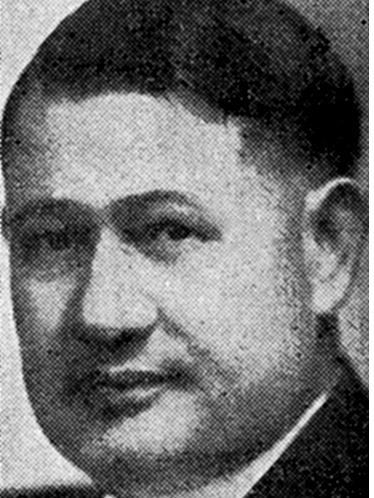
James K. Brooks: Born in Forney in 1900, entered the Terrell School for Boys in Dallas in 1911 and after six years attending spent one year in Bingham Military Institute in Asheville, North Carolina, where he graduated in 1918 and then entered Virginia Military Institute but transferred in 1919 to the University of Illinois after the signing of the WWII Armistice. He graduated with a B. S. Degree in 1922 and married Birdie Perry that same year. He began managing his father’s estate and his own business and was elected President of Citizens National Bank in Crandall in 1932 to fill the gap opened by the death of his father. In addition to the above, Brooks was continually active in civic, political, religious, and business affairs.
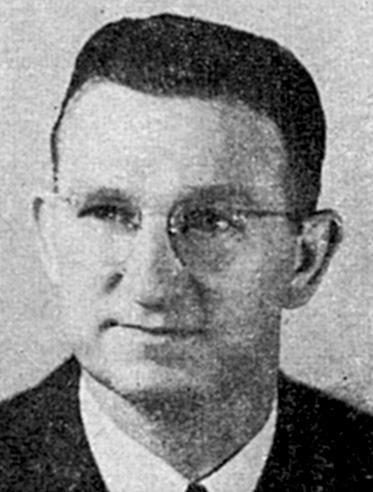
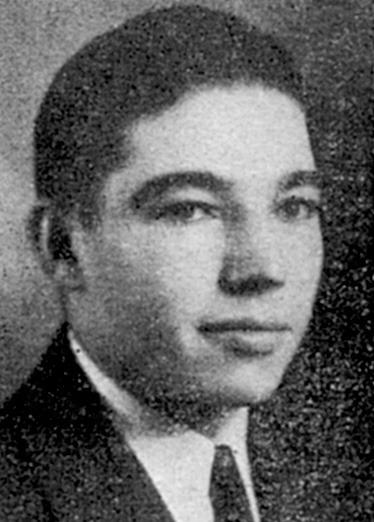
Louis I. Dietz graduated from F. H. S. in 1924 and attended the SMU School of Engineering. Miss Linn Griffin became his bride in 1935. He is the Assistant Cashier and Auditor of the Farmers National Bank, where he has been employed since 1926. He is very active in the Lions Club (has held several offices), “Little Theater,” Presbyterian Church, Boy Scouts (Scoutmaster and Committeeman), is close to eligibility for National Scout Executive work, and has been on the County PWA Planning Board. Joe M. Hughes, born 1881 in Springville, Alabama, and without high school or college training has become a successful and profitable farmer. He became a member of the Farmers National Bank Board of Directors in 1920 and has provided much sound advice, especially concerning farms/farming. In 1931, Hughes and Christine Walker were married, and she has helped him with his business of being a “proud American farmer.”
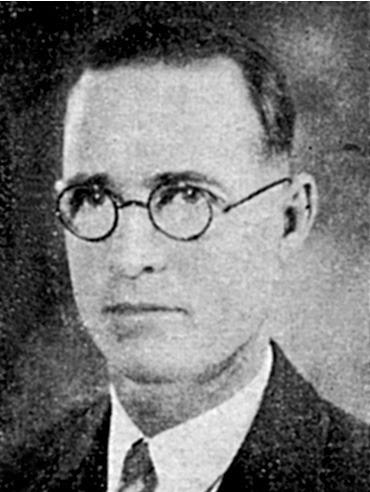
George R. Gordon was born in Kemp but spent most of his early life in Forney and at one time was connected with Riggs Hardware and Furniture Company. He was a graduate of Forney High and attended Austin College, Sherman, before becoming a representative of Southland Life Insurance Company and later a Manager. He married Lucille Hailey in 1917, was later a Vice-President of International Travelers Assurance Company, and lived in Forney until 1933.
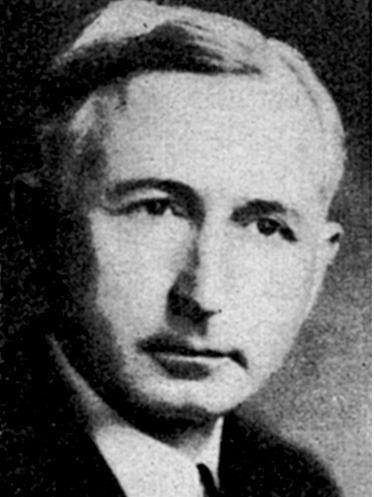
M. M. Layden, Vice-President of Farmers National Bank and son of the third President, was born and reared on IRISH RIDGE and received his education at Lewis Academy, St. Mary’s in Kansas, and Eastman College in New York. Mr. Layden and wife (married in 1912), Burnette, lived in Dallas, and he worked for the “old” National Bank of Commerce.
32 Years in Search of WATER: After two unsuccessful attempts to drill a deep water well, and thirtytwo years after the first try, a third venture proved successful! A celebration was staged at Thanksgiving, 1909, as a climax to the long and anx-ious waiting, as the drill bit passed through different strata below 2,000 feet in search of water, and a 40,000 gallon gusher sprayed into the air just at twilight; the people went wild with joy! Men shot anvils and tolled bells to announce the discovery. *Interesting to note, at one time during the drilling process, a “show of oil” indicated there might be an oil well instead of water—to cries of, “We don’t want oil; we want water!”* Forney was the first town in the county to have an artesian well with health-giving properties. In due time, this mineral water became famous and was shipped to other towns. Financed by public subscription, the artesian well was later sold to the Forney Ice and Water Company, of which A. A. Hinton is now manager.
Statement of Condition of The National Bank of Forney, July 12, 1889: $61,906.72…..
Statement of Condition of The Farmers National Bank, March 29, 1939: $299,197.14…..
For those of you new to Forney, The Farmers National Bank is now CITY BANK (with a “Y” and not an “I”)
and is located in the general area of Jack-in-the Box, CVS Pharmacy, and the Wal-Mart overpass (as some folks call it).
One more week from this source—much interesting information to read—and then we will move on to “new” old adventures!
- Log in or Subscribe to post comments.