
WITH LUKE CLAYTON
TRIP TO SASKATCHEWAN
As a young boy, I read about fishing up in remote lakes up in northern Saskatchewan for big northern pike, walleye and arctic grayling. I’d read all about the shore lunches, the cry of the loon, and battles with big northern pike. Several years ago, I experienced Canadian wilderness fishing for the first time and since have made several return trips. I also think many folks get “boggled” down with what they perceive to be a complex travel itinerary and deem the trip “up north” to fish too expensive and complicated. Just like fishing in the states, there is a wide assortment of options, everything from camps that offer fully guided fishing in a lodge with chef to do-ityourself operations.
I’ve always been a do-ityourselfer, regardless of what outdoor endeavor I am partaking in but a trip up to the wilds of Canada requires a bit of help. I guess it’s possible for someone in top physical condition to actually spend a month or so and reach these isolated fishing lakes, but few have the physical conditioning, skills or time for a completely DIY fishing trip up in the north country. But I’ve found an economical way to gain access to a fun filled 5 days of fishing without having to take a second mortgage!
Saskatoon is the primary hub for travelers to Saskatchewan flying in from the States. Towns such as Prince Albert and La Ronge offer float plane flights to more remote settlements where anglers head out to one of a zillion remote lakes where outfitters have camps set up that cater to the traveling angler.
There are many fishing lodges scattered across the providence. When I first began learning about fishing at Iskwatikan Lake Lodge, I felt this was the perfect place for my second fishing trip to Canada. Lodge owner Bryce Liddell offers affordable 5 day fishing trips that include round trip float plane, a very comfortable cabin, boat with motor, gasoline and fish cleaning. Traveling anglers need only furnish their fishing gear and food.
The flight into one of these remote camps is almost as exciting as the fishing, especially for the ‘first timer’ to this wilderness country. I remember looking down and wondering if a human had every set foot on the many isolated islands or fished the lakes that dot the landscape. The sight of Iskwatikan Lake from the air was breathtaking. I spotted “Airplane Falls” on the lower end of the lake. Once we settled into our cabins, we were given some fishing tips and were soon out on the water. The first day of our trip followed a series of stormy days and the plentiful walleye were on a “soft” bottom-hugging bite. We struggled a bit because of lack of experience fishing these gin clear waters but, by the second day, we had learned to use a “bottom bumping” rig that consisted of a piece of lead molded onto a bent wire with a swivel attached. We snapped on a drift rig that consisted of a spinner with primary and stinger hooks and a light floater that gave the bait just enough buoyancy to keep it drifting a foot or so up from bottom. This technique proved lethal for catching the lake’s plentiful “jumbo” size walleye. The fish averaged 3 pounds up to about 6, and we caught and released a ton of them. Of course, we kept a few for our shore lunches and evening meals each day.
Shoreline lunches are a highlight of fishing in Canada. Fish never tastes as good as when filleted minutes before it hits the grease. This coming June, we have a return trip scheduled and are already planning evening meals of walleye and pike cooked a variety of ways. Fresh walleye is one of the tastiest of fish, and we plan to fry, blacken, and bake it on a daily basis. Being from Texas, we knew all about bacon wrapped steaks, but we had never tasted bacon wrapped walleye until we tried it for lunch one day; it is the stuff culinary dreams are made of!
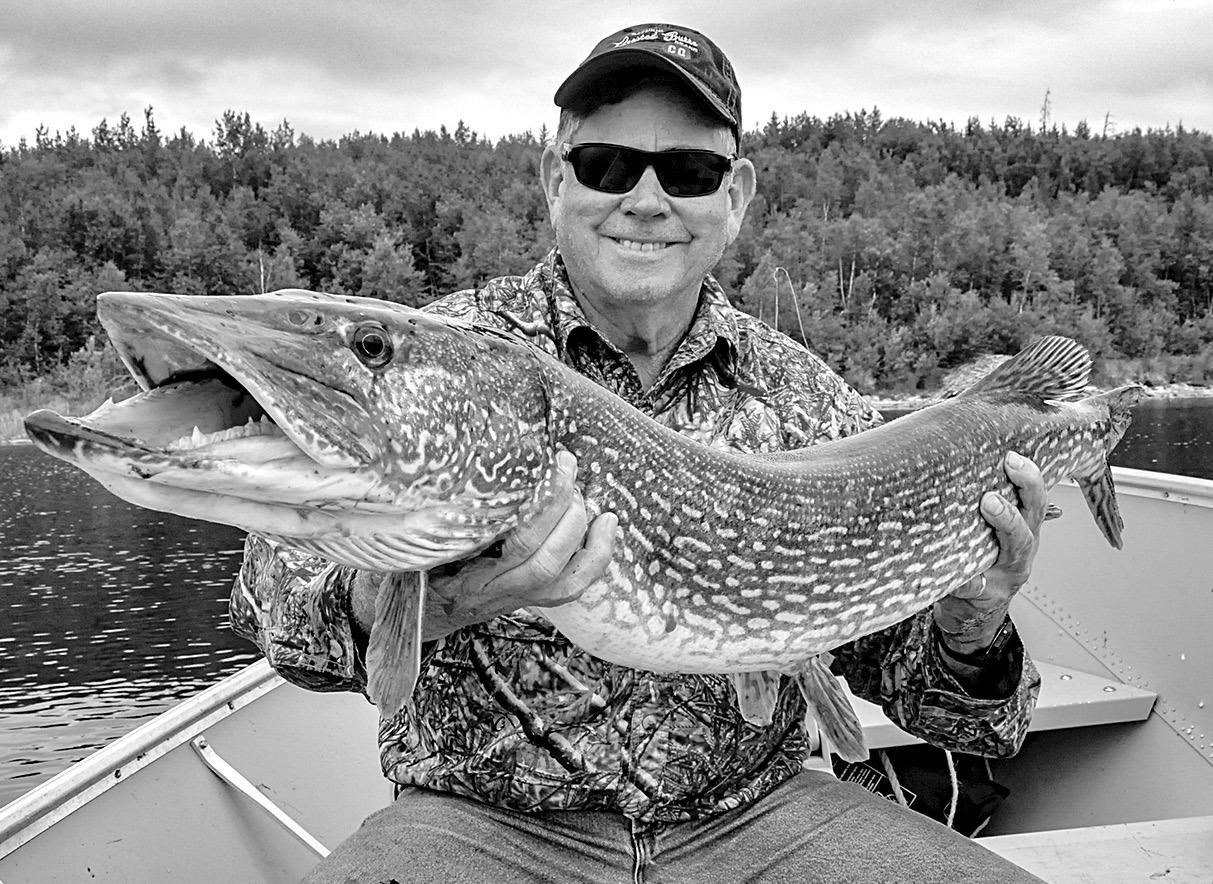
We packed several large spoons and big flashy spinners for catching Pike, and the baits proved absolutely lethal. In retrospect, I truly believe the only baits we needed were the trolling rigs for the walleye and the big spinners and spoons for the pike. Color combinations didn’t really seem to matter. Keep the trolling rigs a foot or so up from bottom, and we caught walleye. Throw the big flashy baits in areas with pike, and we caught pike. These “do it yourself” fishing trips are tailored for guys and gals that know at least the basics of catching fish, and at least one in the group needs to be proficient at running a small tiller steered outboard. Bryce gives a tour of the lake and points out hotspots for catching the various species. There is also a healthy population of lake trout, and several were landed but our crew just couldn’t get enough of the fast-paced walleye catching and the battles with the pike.
If you are contemplating your first trip up north, visit Bryce’s website and give him a call. You will find the folks at Tourism Saskatchewan extremely helpful as well. They are anxious to share their wilderness wonderland with traveling sportsmen from the states. Begin by visiting the website for Iskwatikan Lake Lodge (www. iskwatikanlake.com), and make sure and visit the Saskatchewan Department of Tourism site (www.tourismsaskatchewan. com).
- Log in or Subscribe to post comments.