

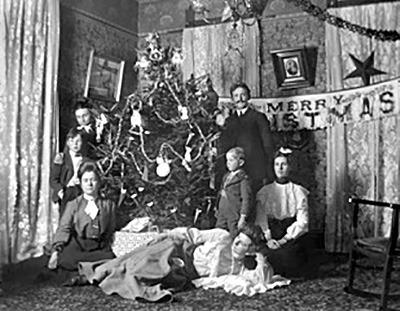
“Maybe Christmas doesn’t come from a store. Maybe Christmas, perhaps, means a little bit more.” That’s the glimpse of cheer we get from Dr. Suess, courtesy of The Grinch, as he makes amends for his predispositions of eating everyone’s roast beast and acting as the anti-Claus. I tend to get out of whack during the holidays. Based on social media laments and the blank stares of overwhelmed moms in the toy aisles of Walmart, I surmise I am not alone. This time of year is so, well…. more. Bake more. Buy more. Eat more. Merry more. It’s also so….faster. Bake faster. Buy faster. Eat faster. Merry faster. I feel like a 33 album being played at the wrong speed. You, too? I understand. We love you, Christmas. You’re a never-ending party of our own creation, born of the desire to celebrate the birth of our salvation and the birth of free enterprise & capitalism, unfortunately. Speaking for myself, alone, I often feel like my Christmas has become as comically frenzied and scripted as a Hallmark movie. Is it supposed to be this way? I am behind the seasonal 8 ball, always. Yet, from my vantage point in my kitchen at this very moment, I see a trio of pictures on my wall – framed letters, in fact. They were written by Frances Jones who was born here in my house. She writes about this house being built by her father to satisfy her mother’s only wish – to be in this home in time for Christmas. Like a modern-day Dickens, let us harken back to a simpler time. I bring you Christmas in 1910.
The first Dutch settlers in New York brought with them many rituals, but none so great as the recognition of their patron Saint, Nicholas. They celebrated something called St. Nicholas Eve in early December, where they hung stockings for presents. Washington Irving got ahold of that tale. Faster than you could say “Katrina Van Tassel,” Irving had concocted a wagon that could span the treetops for “Sinterklaas” to deliver his gifts. Soon, an NYC printer jumped on the clausewagon and translated the Dutch word into Santa Claus. But, none of this happened until 1821. The tradition of modern Christmas hadn’t been in effect that long when the young Jones family moved to Forney and built this first little bungalow in what was then known as Brooklyn. They stayed with Forney through thick and thin, managing to keep this home in their family for almost 90 years. Frances writes of their mother’s joy at celebrating that first Christmas here with daughter, Carolyn Elizabeth, their first child. But, what would Mother Jones have done in 1910 without the benefit of same day Amazon delivery or a Walmart store nearby? Turns out, a lot less.
The first recorded indoor Christmas tree comes to us circa Queen Victoria and Prince Albert in 1848. Illustrations of said tree finally trickled over to the states in the 1850s where the upper class was instantly enamored, though the Civil War would put Christmas trees on the back burner until the turn of the century. Even in 1910, only 1 in 5 American households had Christmas trees. These were not the several hundred dollar Balsam Hill flocked 9 footers you can order today. They probably looked like the Charlie Brown tree, in fact, as they were more like evergreen scrubs from a nearby pasture. If you had excess provisions to burn, you might decorate your tree with nuts, popcorn, or dried fruits. Cotton batting was often used to emulate snow. There was no post-Thanksgiving decorating binge, either. In 1910, the trees were brought inside on Christmas Eve only. The average home didn’t necessarily have electricity in 1910. If you were affluent, you might have gaslights. In fact, the custom was to have small candles dispersed throughout your Christmas tree. The candles were only lit for a short time on Christmas Eve, since both the tree and the cotton batting were highly flammable. And, the stockings were not hung by the chimney with care. That fireplace was needed for heat. It was more likely for the children to wake up to one of their own socks tied to the end of their bed, filled to the brim with fruit and nuts. If the family had a good financial year, there might even be store bought candy in the bottom. What did Santa leave under the tree, you may be wondering? The top toys of 1910 included Raggedy Ann dolls, die-cast metal toys, wooden carved toys, and the crowd favorite: socks, gloves, and mittens. Just when you cannot handle the excitement of new socks, it’s time for the Christmas feast.
There was no turkey dinner in 1910. There was no Honeybaked Ham store with a line that wrapped a city block. In fact, smaller birds were all the rage, since those were more prevalent, and you were likely procuring the meat on your own. Roasted chicken was popular, as was pheasant and even duck, a hunter’s choice if you will. Accompanying vegetables would include whatever was in your root cellar in good shape. Potatoes were usually a given. Stuffing, that heavenly substance we know as dressing in the south, was born of the habit of saving stale bread. The ends and heels and bits of leftover loaves, biscuits, or even crackers could be torn into tiny pieces and covered/ baked in a broth. And, the turn of the century dessert du jour was FRUITCAKE, that brick loaf of spice flavor with the dried fruit tucked into every bite. They were big on fruitcake. That stuff keeps forever.
Christmas was for the wealthy in 1910. I don’t know if the Jones family had a tree. I’d like to think they did, if just to witness the wonder in baby Carolyn’s eyes. I hope she enjoyed a momentary glimpse of those tiny candles burning bright amid the cotton batting. I hope she got her first taste of fruitcake, a sock of nuts near her crib, and a feast in this very dining room. This year, when my record starts playing at the wrong speed, I’m going to remember Mother Jones, the joy of having just enough, and the privilege of buying tiny electric lights for trees.
- Log in or Subscribe to post comments.