

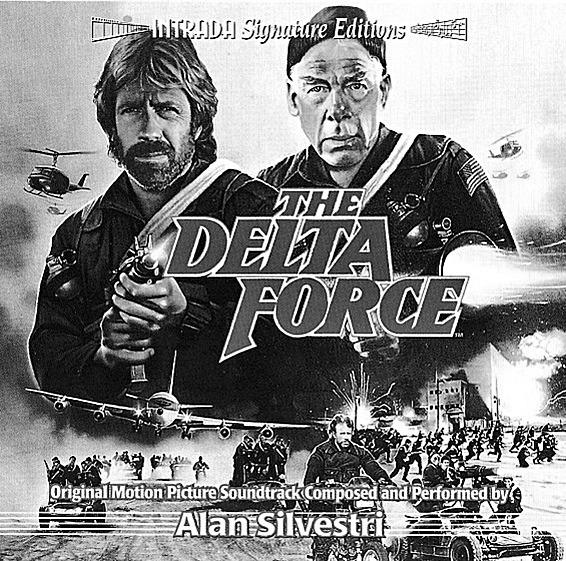
It was the mid 80s. I was a Junior at Seagoville High School, where a night out on the town meant a slushie at the brand-new Sonic and a nice cruise through the Minyard’s parking lot. We didn’t have a movie theater. We didn’t have a bowling alley. There was no country club, no arcade. When the night fell, we just drove. We cruised. One afternoon, as the school day was ending, I sensed excitement in the air. “Are you going?” a friend asked. “Wanna ride with us?” she said. I answered, “Go where? To Sonic?” “Eww, as if,” was her response. “Don’t you even know? They’re filming a movie. We’re all gonna go watch. It’s Chuck Freaking Norris.” Yes, Chuck was filming right outside of town, smack dab in the gravel pits. Have you ever seen a gravel pit? The pits of my childhood still exist. Right on Malloy Bridge Road, as you’re leaving Seagoville and heading toward Wilmer, massive mountains of gravel stand, ready to be loaded into dump trucks and taken hither and yon. From river rock to road base to crushed limestone to rip rap to pea gravel, these Grand Canyon wannabes stand tall and proud, lining this industrial area for miles on both sides of the road. Heck, most of us learned how to swim in the deep basins of water that gather in between the tall stacks of rocks. Pits are excavated in aquifers, like these gravel pits next to the Trinity River, where groundwater quickly fills them, creating ponds up to 400 ft deep. Sounds heavenly until the first time you spot a den of water moccasins or take a misstep from a 4 ft depth into a neverending hole. You’re probably wondering what drew Chuck Norris to the Seagoville gravel pits. The answer is, duh, the Middle East. As best I can tell, the movie was Delta Force. The plot shows a Lebanon setting, released in 1986, which would line up with production/filming around ’84 or ’85. Though this 5-movie dynasty would earn millions, this first installment was anything but a sure deal. And, why go to the Middle East when you can just come to a gravel pit in a rural Southeast Dallas area that has lots of sand and things that look like pyramids? We sat in a ditch at the edge of the road and watched people stand around all night long. There was a man running around with a kaffiyeh on his head that everyone said was Chuck Norris. Eventually, they blew up some gravel and we all went home. But, they weren’t in the Middle East. They were fooling the audience. And here’s the deal, it happens all the time.
When celebrity chef, author, and television host Anthony Bourdain left this world, I was one of the devastated. I have read Kitchen Confidential more times than I care to admit. So, when friends of Anthony’s made a movie about his life, I was thrilled. Yet, the criticisms were sharp. The director had access to all of Bourdain’s writings, including some postproduction items he’d penned and many things he’d written that were edited out of the episodes of his shows on travel and food. Some were even described as journal or diary entries. Sounds like good insider info. Except, they went a step further. They used artificial intelligence to replicate his voice. The audience is led to believe these prolific lines were spoken by Anthony himself, but we don’t know if he ever wanted them heard. A pull of the heartstrings? Yes. A slight of hand? Also, yes. But, isn’t that the world today? ET, the adorable alien, was an actual robotic machine created with intricate features. Today, such a marvel would be done completely with computer generated imagery, like the Jurassic Park dinos. No need for hours of artistry to create a puppet when you can push a button on a computer. Even social media sites are in on the game. I’m not smart enough to create an Instagram transition reel where a flash of my hand is enough for me to go from haggard to glam in 2 seconds, but it seems to be easily created by the masses. And, why put make up on at all when I can slide a filter over my face that nips, tucks, slims, and contours me into oblivion? While these seem like innocent transformations, don’t you wonder what could be done if powers were used for evil instead of good?
Three weeks ago, YouTuber/ Podcaster Joe Rogan interviewed Steve Jobs. Except, Jobs, founder of Apple, died of pancreatic cancer in 2011. This interview is both mesmerizing and, frankly, terrifying. Rogan grills Jobs with questions about his life, which are answered smoothly and succinctly with no lapses or awkward syntax. It is a seamless conversation. This technology, the brainchild of a company called Play.ht, was developed via text to speech software using an artificial intelligence voice generator. People lost their minds, especially when it was revealed that Joe Rogan’s voice was also generated with the same technology. Neither party was present for this interview. One party is deceased. The Dubai based developers explained that they were able to train the software to emulate cadence and wording by analyzing old recordings of Steve Jobs and Joe Rogan, succeeding in pushing the boundaries of what is possible in speech synthesis. Computer programmers hailed the accomplishment as a breakthrough, but many tech enthusiasts disagreed, wondering how long it will take for extremist groups around the world to generate propaganda showcasing other world leaders in agreement with their radical theories. I’m just waiting on the full package. I mean, they brought Tupac back to Coachella with a hologram. How long until Elvis is headlining Vegas again? Maybe it’s my suspicious mind.
- Log in or Subscribe to post comments.