
By DON THEMER,
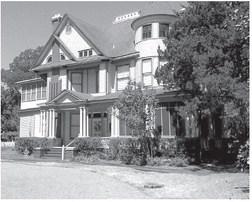
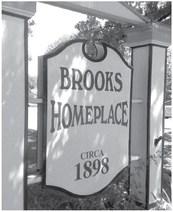
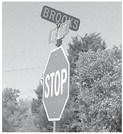
FHPL Board Member Brooks Street runs between College Avenue and Church Street and intersects with Bois d’Arc and Center Streets. Museum workers and other Forney historians are not at this time sure for which BROOKS the street is named, but the family can be traced back to 1861, when it joined the Mustang Rangers #1, which fought in the American Civil War. The list includes G. W. Brooks, J. G. Brooks, and B. F. Brooks. Also, the 1870 Census record includes Elijah Brooks. Madison B. Brooks was Justice of the Peace for Precinct #2 in 1940. He was earlier County Commissioner from 1908—1914 and also an Alderman (City Council), 1921—1922. Benjamin Brooks was Mayor of Forney, 1957—1958. Cleve Brooks was Alderman, 1966—1973. According to our Museum “searcher,” you can find an historical marker at 500 South Center Street, once the home of William A. and Blanche Brooks. *Thanks to Nathan and Kendall at the Museum for help with the above history.* A little more research uncovered the following: G. W. Brooks was a 4th Corporal; B. F. Brooks was a Private, as was J. G. Brooks.
Madison B. Brooks’s 1908 Rambler is believed to have been Forney’s first automobile. It bore Kaufman County auto registration #11.
Elijah Brooks was listed in the 1870 Census as a “carpenter.”
James K. Brooks was known as an early hay dealart— er. In 1892, this well-to-do bachelor land owner and farmer, had gone to Dallas and withdrawn $2800.00 from a bank and departed from the Texas Trunk Railroad Train at the Crandall station, then reached home, did some farm work, and was working at his house about 8:00 p. m., when a knock at his door brought him a surprise visit from not the expected farm tenants but two masked men, one with a pistol and one with a club, demanding his roll of money, his watch, and his “pocket book.” Brooks lunged for the pistol that he thought was not pointed his way and struggled with the gunman. The robber with the club beat Brooks almost insensible, and the other joined in until their victim was incapacitated; then they went through his pockets and took everything he had on him. When he was partially recovered, Brooks sent word to authorities in Kaufman and Terrell and telegraph messages to the Dallas County Sheriff and the Dallas Chief-of-Police. A warrant for the arrest of Will R. Causbie (Cosby) and Dan Foreman, who had earlier been charged with stealing a mule from Brooks, was issued—and a month or two later, they were arrested. As far as I can ascertain, neither man ever was convicted or served time. James K. Brooks was a member of the 1911 City Baseball Team and served as the bat boy!
James K. Brooks donated the one acre tract on Fm. Rd. 741 near Fm. Rd. 2757 for the site of the Blackland School.
James K. Brooks, II, was the largest shipper of onions in the Forney area around 1935. By the early 1940s, onion producing in Forney was no longer profitable!
John C. Brooks, 1847, was assigned a First Class Land Certificate that had been first issued to James S. Ramsey. Brooks patented it and soon conveyed it to investor, Sidney A. Sweet, who died and left it to his wife, Julia, and thus began the complexities and troubles surrounding this tract of land that others thought was unclaimed and so claimed it for themselves. (One of you “likes a challenge” type persons, should look all this up in books and documents and write a treatise that brings you thousands of royalty dollars!)
Madison B. Brooks was a charter member of the Forney Lions Club, established in 1925.
1940, Madison Brooks was Justice of the Peace of Forney.
W. P. Brooks was the last known burial in the Sheltman Cemetery that also served the East Fork neighborhood, Brooklyn, and early Forney prior to the opening of the Hillcrest Cemetery.
William A. Brooks, Sr., was a prosperous landowner, investor, and member of the Forney Commercial Club, early 20th Century.
I could go on about the Brooks family (and continue out of order), but I am not sure for which one the Street was named. I vote for James K. Brooks, but I am just going on what I remember from my days walking by his house on Center Street as a little boy on the way to town with my Grandpa. Some old-timers on the street some- times mentioned the “old man,” William A., as the “man of Forney.” But with so many important Brooks men, I like to think it was named for all of them—even the ones (and the women) I did not specifically mention in this article! See you next week!
- Log in or Subscribe to post comments.