
The drill for catching channel catfish in numbers this time of year is pretty basic-feed them and they will come! I’ve written enough words about catching catfish to fill a very large book through the years, and I’ve caught and cooked my share. But just a few sentences can pretty well sum up the ease of catching lots of channel catfish during the summer months.
Step one is to locate standing timber in water 12-20 feet deep. Isolated trees are often good structures to target. Liberally bait the water around the tree with a couple coffee cans of soured grain or cattle range cubes, then give the ‘chum’ a bit of time for the scent to permeate the water. Catfish will soon find your feed trough, and the makings of your summer fish fry will begin to fill your live-well.
Best baits? Well, the sky is the limit but cheese or punch bait on a #4 or #6 treble hook with a split shot to keep it down is a simple ticket to success. Cubed liver will also get the job done, as will everything from nightcrawlers to catalpa worms. Once attracted to the grain, catfish usually aren’t picky about what they eat. It’s very common to catch catfish that have gorged themselves on the chum but continue to feed.
At Lake Tawakoni, I join my friend, guide Tony Pennebaker, several times each year and can honestly say we have never returned to dock without lots of catfish. In the fall, winter, and spring he targets the lake’s plentiful blue catfish. But when the water heats up, it’s time to bait holes and start fishing cheese baits for channel cats. Because he guides just about every day, Tony keeps several ‘trees’ baited and often rotates fishing spots. When he pulls up to a baited hole, he doesn’t have to wait for the action to begin. The fish are already there, and a little fresh chum usually puts them in the biting mode. Although the average fisherman like me can’t expect this nonstop kind of action on every trip, simply because we can’t keep a spot baited on a daily basis, we can expect to start catching fish from a spot we bait within a few minutes. It’s a good idea to bait two or three spots upon arriving at the lake then moving from one to the other if needed to find actively feeding fish. It shouldn’t take long to find receptive fish.
This past week, I joined Tony and my friend, Jeff Rice, for an early morning two hours of nonstop catching. We returned to dock with limits of fish weighing between 1.5 and 3 pounds, nothing really big but lots of fine eating. Jeff filmed the trip, and you can watch the action now on A Sportsman’s Life on CarbonTV. com or YouTube.
With plenty of tasty fillets on hand, I’m planning several catfish meals including, of course, fried fish. But I have a few other methods of cooking catfish I want to share with you.
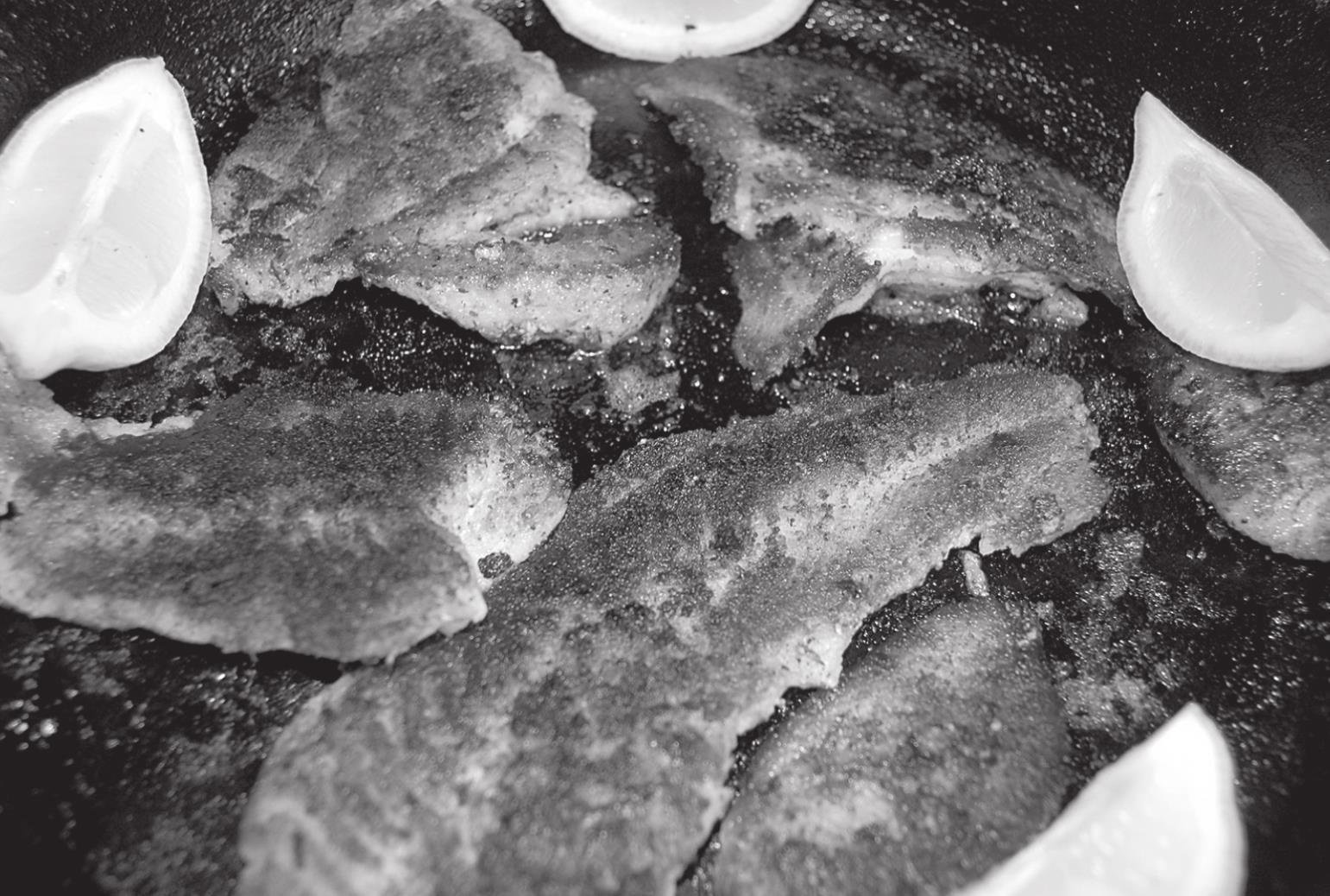
SOFT BLACKENED I first cooked walleye up in Saskatchewan using this method, and it’s one of my favorites. Rather than heating a cast iron skillet to whitehot, I cook on medium high. Place a bit of unsalted butter in the skillet and sprinkle a heavy amount of blackening seasoning on one side of a fillet. Place it seasoned side down into the skillet, then season the top of the fillet. This is best done outside because even on medium high there will be smoke. Allow the fillets to cook about 5 minutes, and then flip them and brown the other side for about the same length of time. Just before removing the fillets, turn the heat up a bit and brown the outside of the fillets. This forms a tasty crust, and the heat adds a bit of flavor to the seasonings. Squeeze a bit of lemon on the fillets and dig in!
CATFISH TACOS For years, I was slow to warm up to the idea of fish tacos, but once I started cooking them, they have become a staple. Fish tacos can be made from just about any fish, either blackened or fried. Regardless of which you choose, the end result will be chunks of fish rather than large pieces. Fresh shredded cabbage goes well with fish tacos, and I always serve either style with a generous amount of pico with a little fresh lime juice. Most folks prefer corn tortillas for fish tacos. Just make sure and buy the good ones that hold together and keep the ingredients intact.
CATFISH STEW My friend, Danny Hood, lives in South Carolina where catfish stew is big. I haven’t tried Danny’s recipe yet, but it’s on the agenda soon. There are many variations to this recipe, but Danny is an excellent cook and I’m trying his recipe first!
INGREDIENTS: 1 1/2 to 2 pounds catfish fillets, 4 cups water, 3 slices lean bacon, 1 chopped onion, 2 large potatoes cut into ½ inch cubes, 3 tomatoes or canned diced tomatoes, 8 oz. can tomato sauce, 1 tbs. minced basil, 1 tbs. thyme, bay leaf, 2 teaspoons red wine vinegar, ½ cup spicy catsup or regular catsup with hot sauce added, salt and pepper to taste.
Put catfish in water in a large pot. Slowly bring to a boil, and then reduce heat to medium-low. Partially cover pot and simmer until meat is tender and opaque, about 20 minutes. Remove pot from heat, and lift fish from broth to cool, reserve the broth. After it’s cooled, break fish into small pieces. In a large pot or saucepan, sauté the bacon until crispy. Remove, drain on paper towel, and break into small pieces. Add onion to the pan drippings and sauté three minutes. Add reserved broth and bacon, potatoes, tomatoes, tomato sauce, herbs, vinegar, and bay leaf. Cover pot and simmer until potatoes are just tender. Mix in cooked catfish, ketchup, salt & pepper. Then heat and eat!
Contact Lake Tawakoni catfish guide Tony Pennebaker at 903-474 3078. Email Luke through his website: www.catfishradio. org.
- Log in or Subscribe to post comments.