
With Memorial Day and summertime quickly approaching, and Texans will be getting out on the water. Now more than ever, Texas Parks and Wildlife Department (TPWD) urges boaters and paddlers who enjoy water recreation this summer to do their part to fight back against aquatic invasive species that threaten Texas lakes.
Zebra mussels and giant salvinia continue to spread to new areas in Texas. Yet while they remain some of the biggest threats to Texas lakes, other highly invasive species can also be spread or be introduced by boaters, including water hyacinth, crested floating heart and quagga mussels.
“There’s no doubt that Texans love their lakes,” said John Findeisen, TPWD Brookeland Aquatic Habitat Enhancement Team Lead. “We also need Texans to take action to help protect their lakes. It only takes a tiny fragment of an invasive plant to create a new infestation and preventing aquatic invasive species introductions avoids costly, long-term efforts to manage these species once they infest a lake.”
Giant salvinia, a highly invasive, free-floating aquatic fern that can double its coverage area in a week, is one of the major threats to our lakes. The invasive plant can produce thick surface mats that make fishing, boating, swimming and other water recreation nearly impossible.
Giant salvinia is currently present on 23 East Texas lakes and numerous rivers, creeks and marshes between Houston and Beaumont. While TPWD efforts have kept giant salvinia from limiting angling or boating access in Texas public waters, they could still hitchhike from one lake to another on a boat, trailer or other equipment.
Zebra mussels, a non-native shellfish that attaches to hard surfaces, also pose a significant threat to our lakes. These invasive mussels damage boats and infrastructure for water supply and control, alter lake ecosystems and cause harm to native species. They also litter shorelines with hazardous, sharp shells that impact lakefront recreation.
“Zebra mussels and quagga mussels can be attached to boats or even carried by anchors or attached to plants clinging to boats,” said Monica McGarrity, TPWD Senior Scientist for Aquatic Invasive Species Management. “Microscopic zebra mussel larvae can be transported in residual water in the boat. Taking just a few minutes to clean, drain, and dry boats can make a huge difference in our efforts to prevent further spread of this highly damaging species and harm to Texas lakes.”
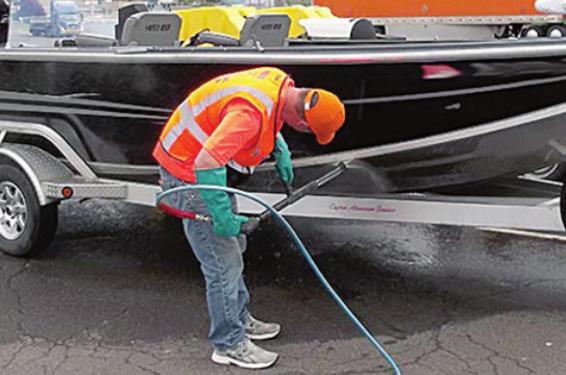
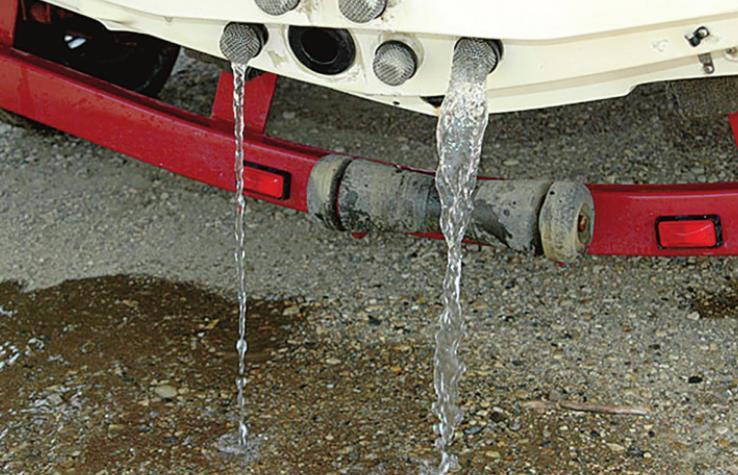
Boaters need to remove all plants, mud and debris from boats, trailers, vehicles and gear and drain the water from the boat, all equipment and on-board receptacles before leaving the lake. In addition, boats should be dried completely before visiting another lake, preferably for at least a week. If drying isn’t possible, washing the boat and compartments using a carwash or spray nozzle on a water hose before visiting another lake can help reduce the risk of spreading aquatic invasive species.
If you have stored your boat in the water at a lake with invasive mussels, it is likely infested and poses an extremely high risk for moving these invasive species to a new lake. Before moving your boat, call TPWD at (512) 389-4848 for guidance on decontamination.
On top of the harm aquatic invasive species can cause to aquatic ecosystems, water infrastructure, and the recreational experience at lakes, the transport of these organisms can result in legal trouble for boaters. Transporting prohibited aquatic invasive species in Texas is illegal and punishable with a fine of up to $500 per violation. Boaters are also required to drain all water from their boat and onboard receptacles, including bait buckets, before leaving or approaching a body of fresh water and to immediately remove all invasive plants from the boat, trailer, and tow vehicle before leaving a lake.
For more information on how to properly clean, drain and dry boats and equipment, visit the TPWD YouTube channel for a short instructional video. To learn more about giant salvinia, zebra mussels and other invasive species in Texas, visit tpwd. texas.gov/StopInvasives.
- Log in or Subscribe to post comments.