

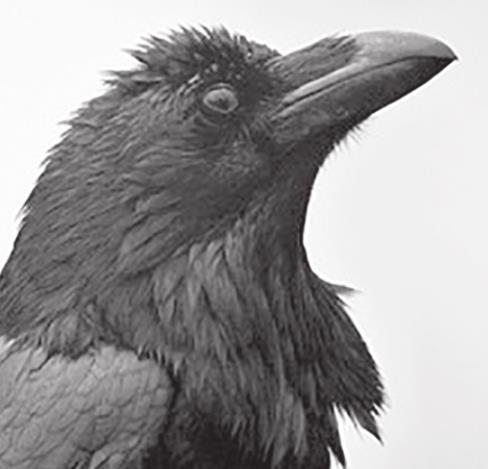

I have a confession. It amounts to me turning into a Julia Child of sorts. Allow me to bring you this luscious dish. It’s fancy, right? Look at the silver domed lid, the decorative platter, the way I have the serving towel draped over my arm, just so. Note the care with which I place it in front of you. Easy now. Lean back slightly so I can remove the lid with the extreme flourish of a fine French waiter. See what I have made you? Oh, but wait, it’s for me. Notice the black feathers I didn’t quite pluck correctly. Oh, that stuff? I included options for dipping sauces – orange marmalade and a sort of horseradish. Here, let me sit in your chair so you can watch me. I’m eating crow and it is a dish best served warm. I did something I publicly said I would never do. In the not quite words of pop star and American Idol judge Katy Perry, I kissed a Kindle. And, I liked it. After years upon years of dismissing the phenomenon and refusing to acknowledge the greatness of digital print, I have become an e-reader extraordinaire.
In 1930, a guy named Bob Brown wrote about an invention he either intended to make or wanted someone else to make. He called them “Readies.” There was talk of futuristic tiny screens (he was talking about roll down cinema screens) where people could sit down and read words broadcasting onto said screen, like an impossibly small projection room run by ants. Oddly enough, people did not laugh him out of town. I made up the part about the ants. It’s a Zoolander reference. You have to take into consideration the times that were upon us. Silent movies had stepped to the side. We had speech in movies, hence the term “talkies.” Miraculous, said the people. Also, these were depression era times. Everything was gone. Fortunes had been wiped out. Food was scarce. Jobs were even more scarce. Why not latch onto such a magical idea? The country needed some over the top magic to grasp onto. While Bob never created a prototype, he planted an electronic seed, one that would take 60 more years to germinate. It began sprouting in 1949 when Spanish schoolteacher Angela Ruiz Robles introduced the Encyclopedia Mechanica, a compressed air personal machine that included audio recordings of encyclopedic facts, a magnifying glass, and a calculator. While never mass produced, this invention caught the eye of one Roberto Busa, who worked tirelessly from 1949 to 1970 when he introduced his Index Thomisticus, an index for the works of Thomas Aquinas. It also intrigued Stanford’s Doug Englebart, who debuted a hypertext file retrieval and editing system called the NLS. Still, though some original text could be viewed on an NLS, it was more of a small mainframe computer than a reading device. It’s University of Illinois student Michael S. Hart who’s given most of the e-book discovery credit. Standing in front of his local grocery store commemoration on a random July 4th in 1971, he was handed a copy of the Declaration of Independence. He wondered if folks all around the country wouldn’t like to read the document without hand scribing it or going to a local library, back when there were still local libraries. His created e-file marks the first time a handheld device achieved such a feat. That was followed by many other collaborations. E Link Corporation chimed in with the technology for screens to reflect light in such a way that paper does. Rocket Book was first on the e-reader scene, combining all the technology into the blueprint for a stand-alone “readies,” at last. The rest is Amazon Kindle history.
Are there problems? Most certainly, there are. Nothing smells as good as a book. I’ve never been sure if it’s the ink or the paper, or the glue they use to hold the darn things together, but if I could bottle the scent of a well-read book, I would bathe in it every night. Maybe it’s the leather. First editions smell like tiny bound angels descending from a glorious Heavenly library. And, books are like fine antique bureaus. I sit and think about the other fingers that flipped the pages over the years, the hands that touched the spine. What about this passage incited the underlining of these words or the highlighting of others? Was the reader so in awe of this section that they sat in the rain and allowed big dollops of water to fall onto the paper? Was the found grocery list tucked in between pages 250 & 251 placed there after the market trip, or did that family have to go without eggs, bread, butter, and bananas for a while? Yet, I have to admit how much easier my insomnia prevalent nights have become. I no longer have to tip toe into the living room to read under the glow of a floor lamp. I can blindly reach for my Kindle at 3 am, it’s illumination so slight that both husband and dogs are none the wiser. Nothing can replace a real book. But, there’s something about an easy to carry e-reader, one that will accept freely borrowed books from libraries all over the country, that makes me wish I hadn’t condemned them. Never say never. I love my Kindle. Also, try the orange marmalade with the crow. That sweetness balances out the gamey taste.
- Log in or Subscribe to post comments.