
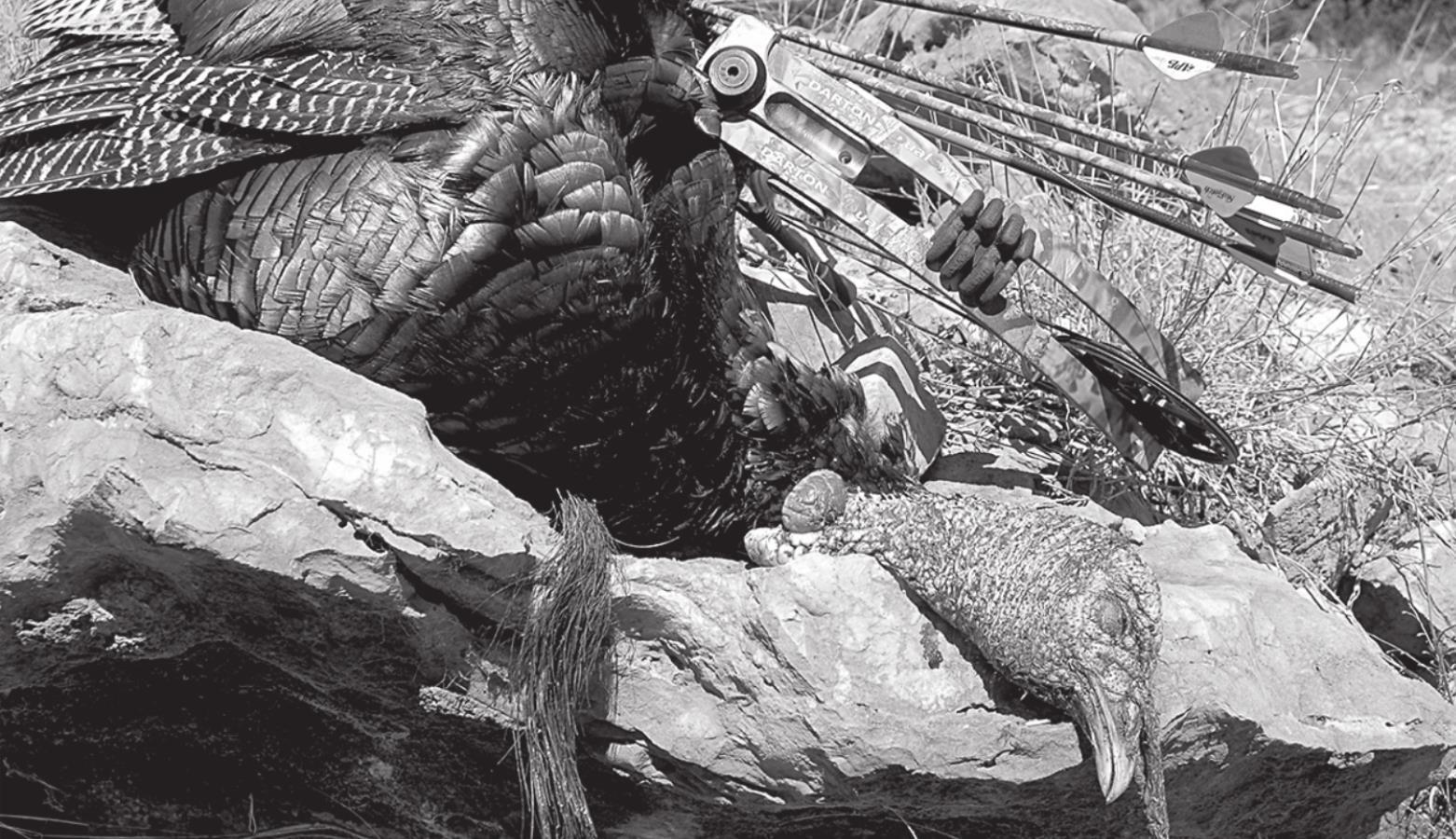
I’m sure I would ‘hunt’ wild turkeys the remainder of my days if I could only use a camera with a long lens instead of a shotgun or bow, but thankfully there is an abundance of these beautiful and tasty wild birds across the state. Most of the western portion of Texas has the Rio Grande strain, and there are huntable numbers of Eastern Turkey in the northeastern counties along the Red River. Red River County where I was raised was the first county in Texas where the Eastern birds were reintroduced, and today it’s probably the best county in Texas to hunt for an Eastern turkey. This year, I plan to do a lot of ‘hunting’ with both camera and shotgun.
A couple of years ago the Rio Grande strain of wild turkey was stocked on a big cattle ranch adjacent land that I have permission to hunt in western Kaufman County. There probably has not been a wild turkey in this area since the early part of the past century. At first I was concerned that the heavy predator population in our area (many coyotes and more bobcats than most folks think) would take a heavy toll on these ground nesting birds but it appears they are flourishing. This past year, I saw several hens with poults in fields near our home and, on several occasions, had solo hens cross our property in the spring in search of suitable nesting areas. A friend that lives closer to the bottomland where wild turkeys winter has had a large number of birds hitting his corn feeder throughout the winter. As the temperature continues to warm, I am expecting to again see these birds up on higher meadows and fields where they nest. I plan to spend a good bit of time ‘hunting’ them, with a camera of course! Hopefully turkey season will again open in my area in future years, but until then it will be fun to set up and call in the gobblers and ‘shoot’ video and still images of them.
Hunting turkey during the spring season when the toms can be enticed within shotgun range with decoys and plaintive hen yelps is far different than shooting them around a feeder in the fall. There is something magical about hearing a boss gobbler sound off just out of sight and suddenly have him pop out of the brush in full strut within shotgun or bow range. I’ve hunted wild turkey since the early eighties and can truly state that no two turkey hunts unfolded exactly the same. One day, it’s textbook spring turkey hunting. I imitate the sound of a hen turkey with my box call and hear a gobbler in the distance sound off. I wait a couple of minutes and call again and hear him stop and gobble even closer. So it goes until a big gobbler comes trotting out of the brush, looking for what he thinks is his lady love of the morning. Other days, I hear zero response to my calling but stay hidden, calling every three or four minutes, and have a gobbler simply walk out of the brush.
I was fortunate to spend a lot of time turkey hunting with my friend, the late Bob Hood, a well known outdoors writer from Texas. Bob had a saying, “Patience kills more turkeys than anything.” He was alluding to the fact that far too many turkey hunters lack the patience to simply sit in one place, in full camo and wait for the turkeys to come to their location. Bob could back up against a tree with a bit of brush for cover and sit for hours if he knew he was in a good spot to intercept gobblers up and about looking for love.
But sometimes, it helps for the turkey hunter to be on the move. Say for instance, you hear a gobbler responding to your calling across a creek or down a fence row and he simply will not close the distance. When this occurs, and it occurs quiet often, I move a hundred yards or so and resume calling. The gobbler thinks the hen is on the move and often heads directly to where he thinks she is. This is a well known trick most turkey hunters use on a regular basis to bag a bird that for whatever reason is a bit reluctant to close the distance.
It’s important to be as comfortable as possible when set up to call. I carry a folding stool with a back and pad to sit on and have found it’s much easier to stay quiet and still when seated in a chair rather than on the ground. Granted, packing the extra gear when ‘running and gunning’ on a turkey hunt is a bit of a hassle but it’s way better than sitting on the ground!
I absolutely love wild turkey meat and relish a big pot of turkey soup made from the drumsticks and thighs. Some hunters are hesitant to cook the drumsticks because of all the little ‘feather bones’ but the meat is excellent and an hour or so slow simmering in a covered pot will make the drumsticks from even the oldest gobbler tender.
A big platter of chicken fried wild turkey breast meat with cream gravy and Jasmine rice is cause enough to spark a spring turkey hunt! If you are new to turkey hunting, don’t be misled into thinking these birds are next to impossible to bag. They are wary and have excellent eyesight and are quick to pick up on movement but can be successfully taken by the hunter that uses good camouflage and cover and remains as still as possible.
- Log in or Subscribe to post comments.