
*These various memories were recorded around the year, 1984, and can be found in one form or another in History of Kaufman County, Volume II.*
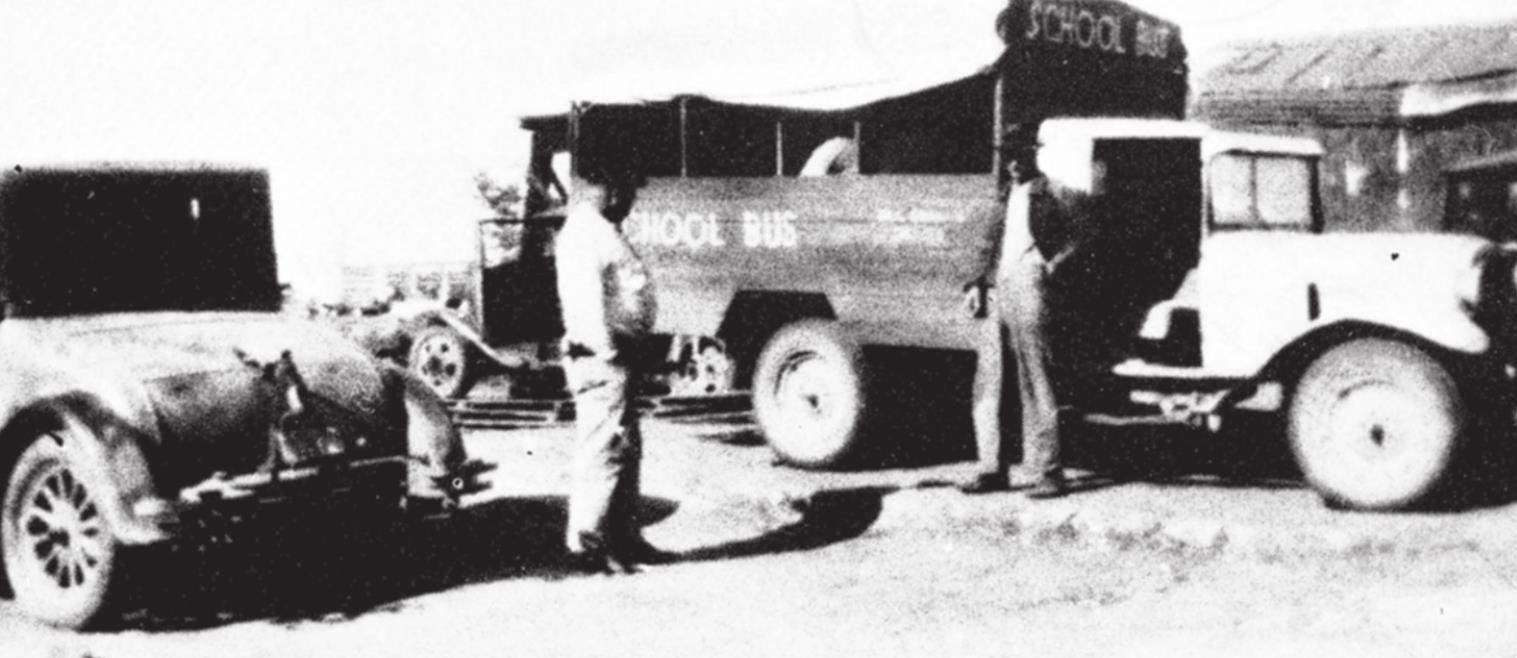
Oct. 5, 1899—The “1st automobile in Texas” event (according to some) saw E. H. R. Green of Terrell make his way from Terrell to Dallas, accompanied by George B. Dorris (manufacturer). An accident in Forney necessitated a delay for repairs. The above “history” book maintains Mr. Green also drove the automobile to Kaufman.
The “Boston Bloomers” travelling baseball team once played the “Kaufman Nine.” (female baseball teams)
Local taylor—“Jack-the-Dyer”—made a balloon ascension by substituting for the owner, who had gotten drunk!
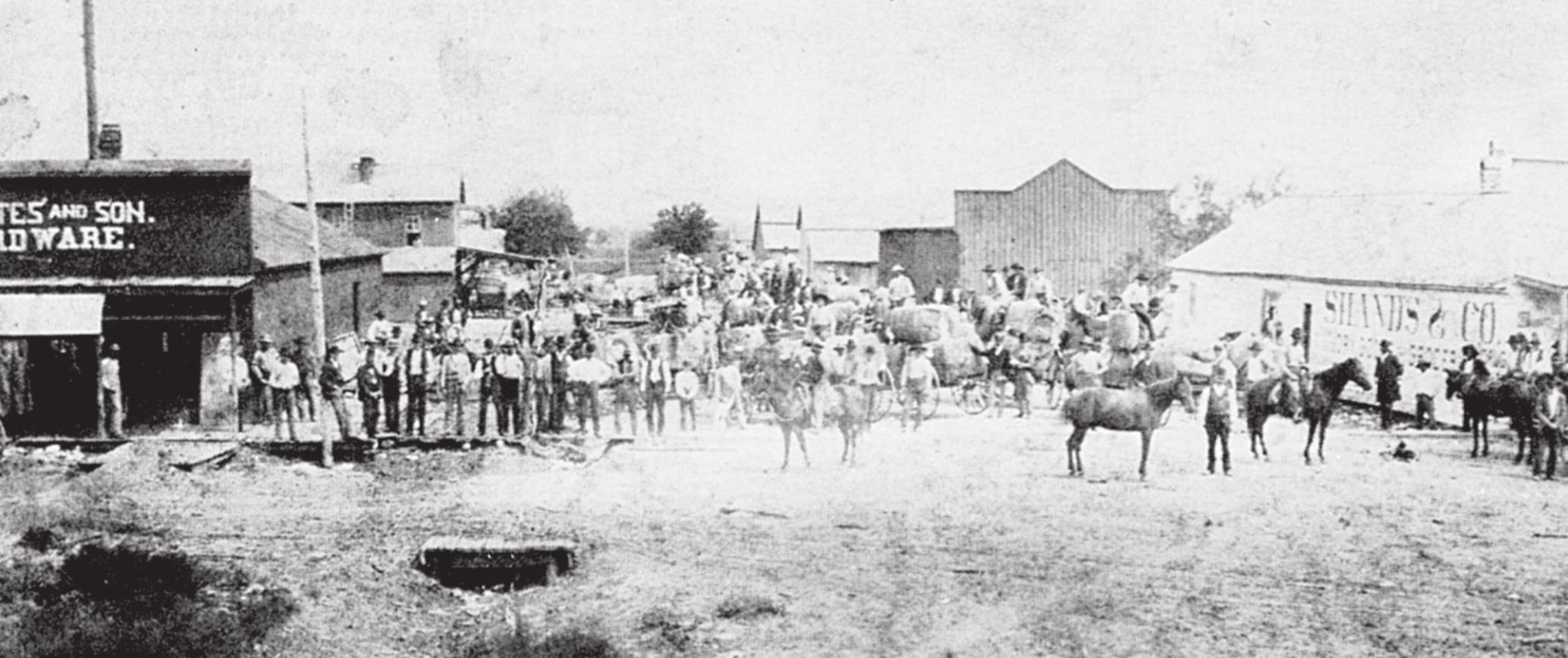
Kaufman had eight passenger trains daily, drawing large daily crowds in buggies, on horseback, and walking to meet the early evening train from Dallas.
An annual athletic event was a baseball game, pitting the “Fats” against the “Leans.”
Schuman Park, east of the city—Kaufman High School played its 1st football game against Terrell, who won!
Kaufman’s 1st electric service came from Jay’s Light Plant and furnished “lights” from 5:00 to 8:00 a. m. and 5:00 to 10:00 p. m.
1898—Kaufman had a militia during the Span-ish-American War—“The Kaufman Rifles” did not see any action as a unit!
Before streets on the square were paved, a horsedrawn tank sprinkled the streets with crude oil, which did settle the dust but “played havoc” with floorlength skirts and petticoats of the “lady shoppers.”
The 1st telephone in Kaufman was in the back end of a grocery store, and calls were “long distance” to Terrell.
The 1st high school in Kaufman was a building constructed by Superintendent C. J. Maxwell, leased to the School Board, and called “Maxwell’s Academy.”
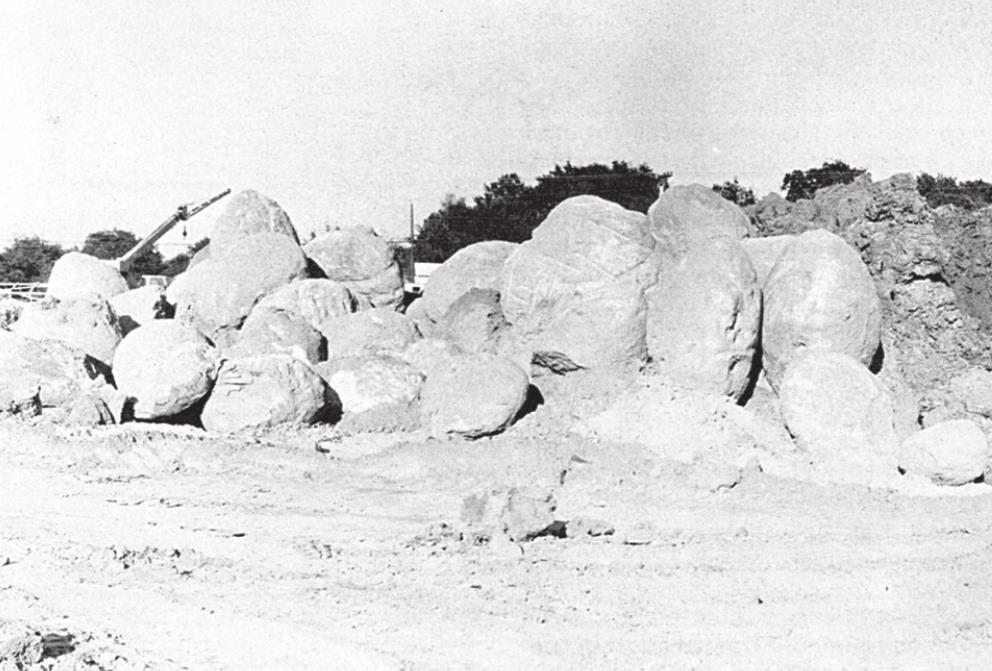
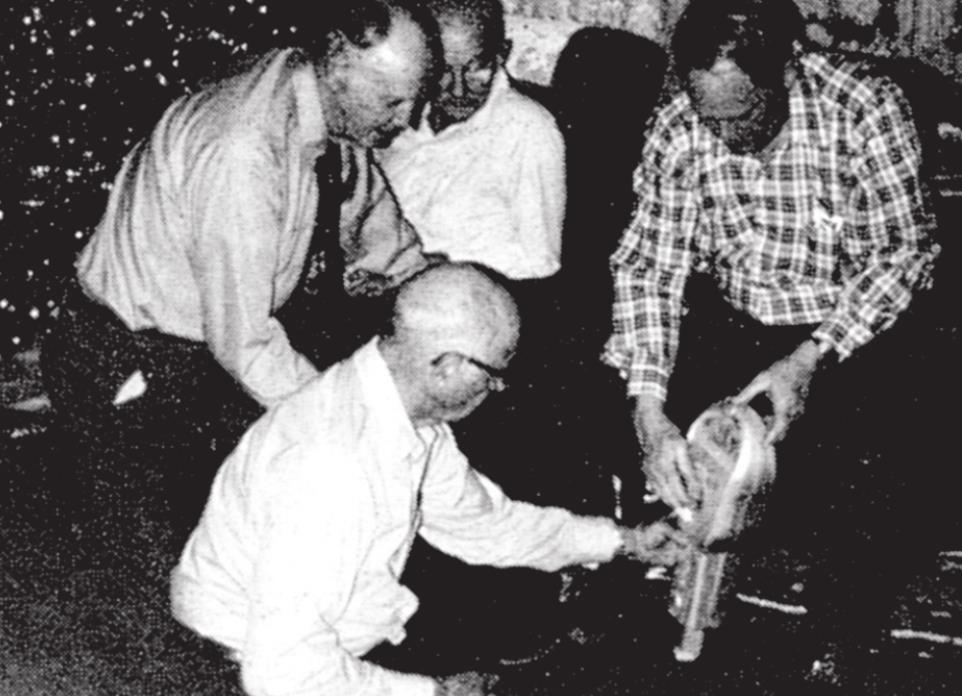
GLACIAL ROCKS—igneous rocks, initially in a molten state, that then occurred in lava flows and fissures of the earth’s surface and were/are massive in size and appearance. Those in Kaufman County have a “regular” shape, which indicates that they originated a great distance from our county and “rolled” to this area on a glacier during one of the “ice ages” (glacial periods), maybe from the Arctic Circle. When finally reaching Kaufman County, many were nearly perfect spheres or elliptical in shape. The depths of the rocks vary from 30 to 50 feet, and some were found when deep cuts in the earth were made during the construction of U. S. Highway 175. Those rocks in the photo came from digging at the city reservoir on Talty Road.
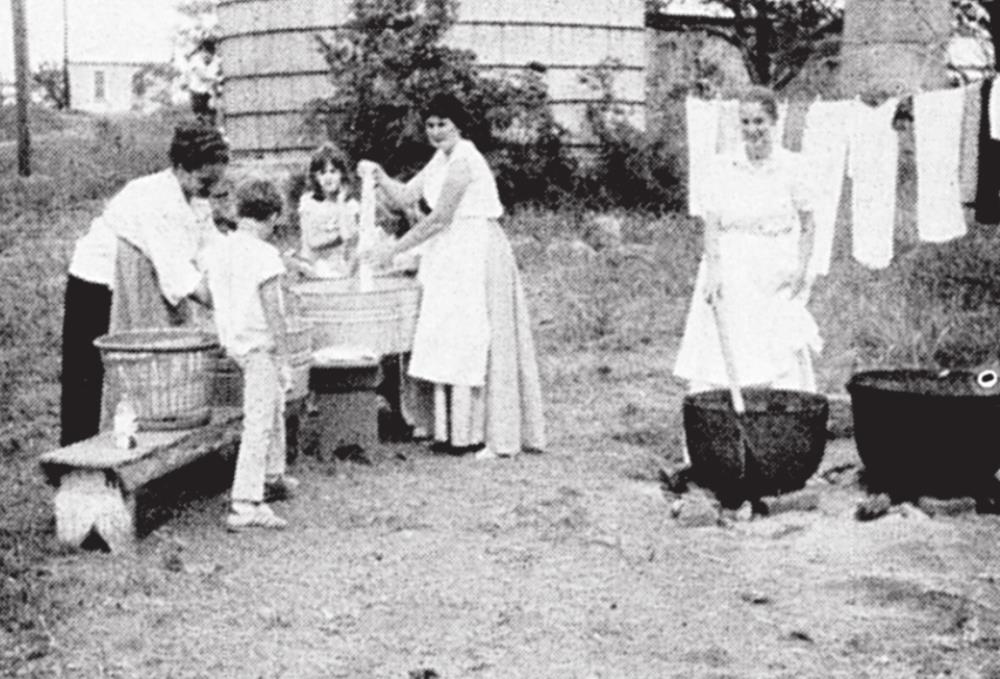
RECEET FOR WASHING CLOTHES—Directions copied directly from the “book.” (1) Bild fire in backyard to het kettle of rain water. (2) Set tubs so smoke won’t blow in eyes if wind is pert. (3) Shave one hold cake lie sope in bilin water. (4) Sort things, kape 3 piles, 1 pile whites, 1 pile cullerd, 1 pile werk britches and rags. (5) Stur flour in cold water to smooth then thin down with bilin water. (6) Rub dirty spots on board, scrub hard, then bile, rub cullerd but don’t bile—just rench and starch. (7) Take white things out of kettle with broomstick handel, then rench, blew and starch. (8) Spred tee towels on grass. (9) Hang old rags on fence. (10) Pore rench water in flower bed. (11) Scrub porch with hot, sopy water. (12) Turn tubs upside down. (13) Go put on clean, irned dress, smooth hair with side combs. (14) Brew up a cup of tee, set and rest and rock a spell and Count BLESSINGS. *Note: Mrs. Wathina Culver and family did the “family wash” at the Kaufman County Fair, sponsored by the Kaufman County Historical Commission, on May 2, 1981!*
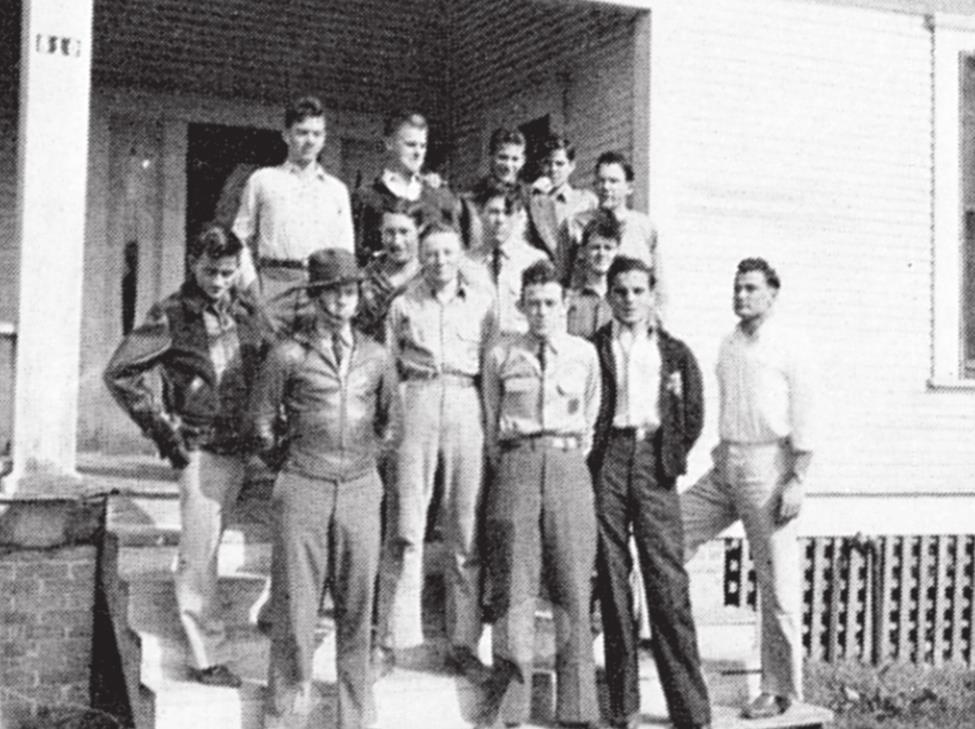
The Kaufman County “project house” opened in Bryan, Texas, in September of 1938, and was an approved A&M University venture/project for boys, who could not afford to live on campus during the Depression. The cost for room, board, laundry, and transportation from Bryan to College Station and the return averaged $16.00 monthly, and the “house parents” were Mr. and Mrs. (Addie) Marvin Steward of Rosser. Sixteen Kaufman County boys lived there during the fall of 1938 and were from Forney, Kaufman, Mabank, Rosser, and Terrell. Roy Pankey, Jr., of Forney was one of them!
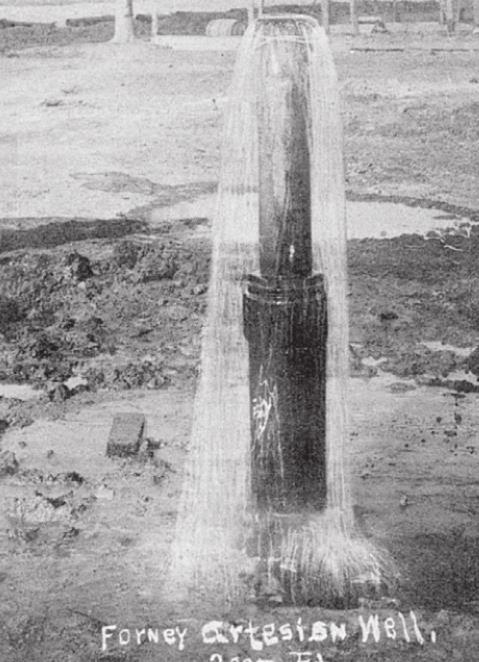
Thanksgiving Day, 1909: The ARTESIAN WELL of FORNEY was brought in from a depth of 2037 feet and was the first “town artesian well” with “health-giving” properties in Kaufman County. The water was bottled and sold and also supplied public drinking water for the town. This well functioned for more than 40 years, and folks said that “after a few weeks, one became accustomed to the taste and thought it was the best water in the whole wide world.”
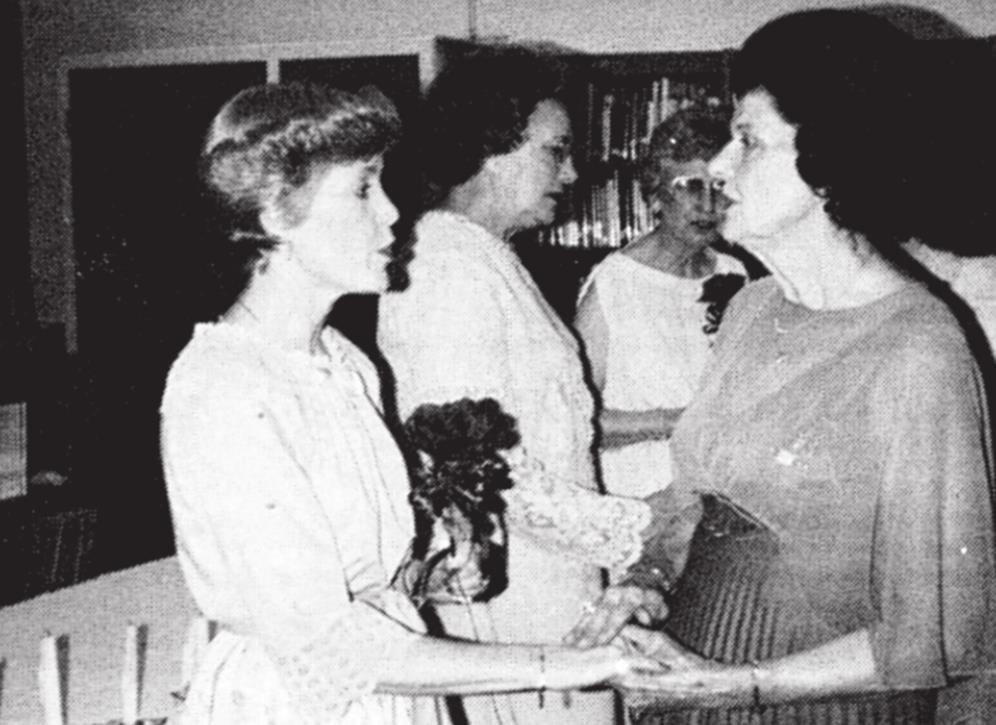
Alpha Tau Chapter of Delta Kappa Gamma: Delta Kappa Gamma was organized May 11, 1929, with headquarters in Austin, Texas, and the local Alpha TAU Chapter was organized April 15, 1933, in Fort Worth, Texas.
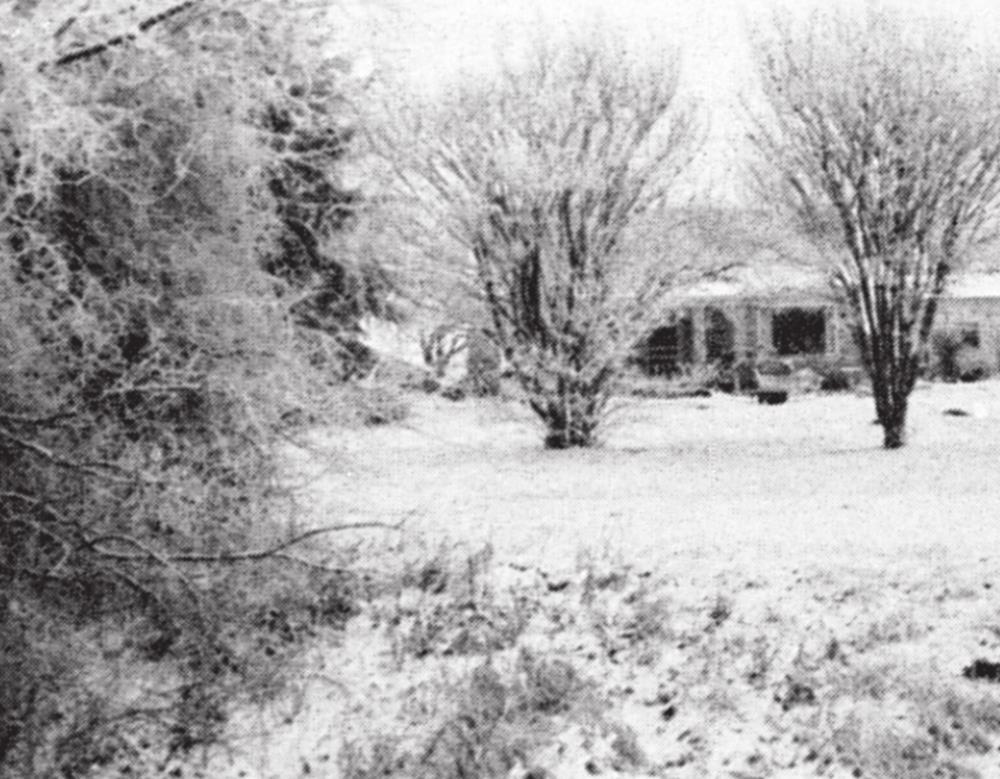
February 16, 1899: There was a “real blizzard” in all of Kaufman County, and ice on ponds was at least 3 inches thick. Much skating was reported on local ponds, and one large group of 40 people got together in one spot in Terrell. Reportedly, this was the heaviest ice since the “great blizzard” of 1886! The recorded low temperature was 11 degrees below zero, colder here than ever before, and a few cattle froze in the fields!
1980: All “parking meters” were removed from the streets of Kaufman and sold to individuals, who found a “few pennies” when opening them!
ROAD LAW ENFORCEMENT—1885: “Each and every male person, between the ages of 18 and 45 years, has to ‘work the road’ five days every year. If this law was carried out (sic) strickly to the letter, we would have good roads. Like many other good laws, it is not enforced!”
Cornelia Guice Kitchen from Elmo, Texas, in January of 1874, wrote a letter, parts of which follow: do not like this windy country—new houses built in Elmo all the time—three large dry-goods stores— three grocery stores; a shoe-maker shop—a large livery stable to be built—a very large house at the depot—barren prairie land…..
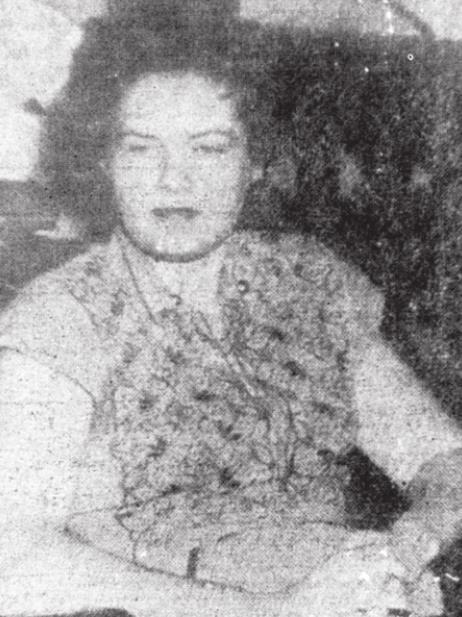
Mrs. Ernesteen Myrick of Kemp was the first woman to serve on a jury in Kaufman County, 1955— District Judge A. A. Dawson’s District Court.
1931 Senior Class of Scurry-Rosser High School had the first boy to graduate from it—C. R. Grady and ten girls were in that ceremony. C. R. moved to Dallas, and folks conjectured who had more fun—C. R. or the girls.
Russell Yarborough won the Interscholastic League Track Meet junior high “high jump” in both 1922 and ’23. In 1925, he won the “County” high school high jump and also “placed” in shot-put and discus. He also won 1st place at the Greenville “District” meet and went to “State” and placed 4th. In 1926, he again won “County” and “District” and took 3rd place at “State.” In 1927, he was the “County meet” high point man, and also at the Greenville “district” meet, and continued his winning ways in “high jump” and “high hurdles” and a few other events, too! Finally, in 1928, he was again the “big winner” at “County” and “District.”
However, Russell decided to concentrate on only one event at STATE—the high jump, which he not only won but set a new record of 6’ 3¾” and did it using the “scissor” jump, which was not broken until 1946. When the “belly (Western) roll” jump became the popular way to compete, it took over the records until the “Fosbury flop” became the jump of choice during the late ‘60s/early ‘70s. *Just for the record, the “scissor” jump, used by Yarborough, enabled him to both jump from and land on his feet!*
- Log in or Subscribe to post comments.