
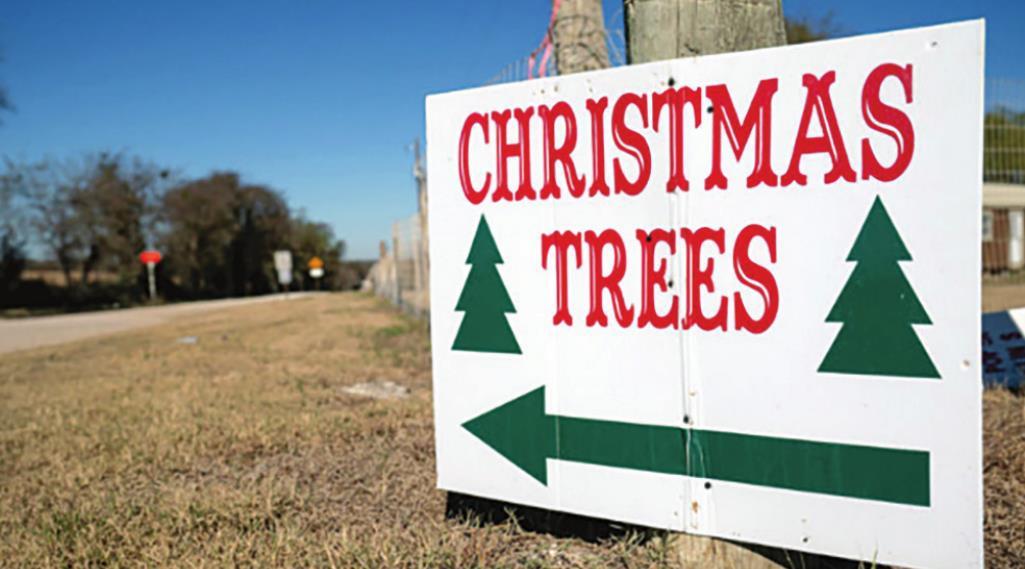
There are plenty of options for decorative trees during the holiday season. Texas A&M AgriLife experts have ideas and tips for a live or cut Christmas tree, including an increasingly popular option — live container-grown or balled-and-burlap trees.
Oregon and North Carolina account for 51% of harvested Christmas trees annually, with almost 3.4 million and 4.3 million trees, respectively. But tree farms in Texas have increased over recent years both as a destination experience and supplier of shipped and locally grown trees.
Fraser, Douglas and balsam firs are popular tree varieties shipped from other parts of the country. Eastern red cedar, Virginia and Afghan pine, and Arizona, Leyland and Carolina sapphire cypress trees are suited for growing in Texas climates. These can be bought locally as a cut tree or in a container.
Potted Christmas
tree tips
Mike Arnold, Ph.D., Texas A&M AgriLife Research landscape horticulturist in the Department of Horticulture Sciences and director of the Gardens at Texas A&M University, Bryan-College Station, said there is a growing trend during the holidays to decorate potted live trees. Potted trees, unlike cut trees, can be planted into a landscape after their decorative use.
“It’s a green-friendly alternative,” he said. “You’re putting back instead of removing, and I think a lot of people are drawn to that, the experience of planting a tree and having a goodlooking evergreen in the landscape.”
There are two major considerations for potted plants, Arnold said – choosing the right tree variety for local growing conditions and maintaining the tree’s dormancy while using it to decorate.
Being mindful of a tree’s dormancy is important to avoid post-planting freeze damage during the coldest winter months, Arnold said. The tree should be kept indoors for as short a time as possible and preferably outdoors or in a transitional space that remains cooler.
Arnold also recommends using LED lights for decorating as these will not heat up as much as older bulbs and potentially damage the tree.
“My recommendation is to have the tree indoors a few days before Christmas and then plant it outdoors on, or soon after, New Year’s Day, so a week to 10 days because you would likely run into problems beyond that,” he said. “The concern when bringing a container tree into your home is that the tree thinks it is spring and will break bud and sap will begin moving in stems. That spring-like activity can lead to damage in freezing temperatures.”
Arnold said buyers should consult AgriLife Extension agents in their county or nursery professionals to discuss variety options that are adapted for local conditions and the best location for the tree in the landscape according to growth habit and sunlight requirements.
The root ball should be kept moist because dry environments can cause moisture stress, Arnold said. When planting, trees should be planted with the base level or slightly above ground level to avoid pooling water.
Arnold said rosemary makes a good alternative Christmas tree, and that Norfolk Island pines and weeping fig trees, which are tropical trees, can be used as indoor plants after the holidays are over.
“You don’t have to have a conifer,” he said. “Other trees and house plants can be used as temporary decorative trees.”
Caring for cut trees
Greg Grant, Texas A&M AgriLife Extension Service horticulture agent, Smith County, said Christmas tree shoppers should focus on choosing the right tree and maintaining it correctly for the duration of its time as a decoration.
“One thing I’ve noticed over the last few years is that people are putting out Christmas decorations earlier and earlier, and people just need to remember that cut trees typically only last three to four weeks if they are cared for correctly,” he said.
When picking a tree, Grant said to look for trees that are full and even without damaged spots and to choose the correct size for the space it will be placed. Buyers should look for signs of freshness in cut trees, such as whether the tree is dropping needles. Cut trees can be shipped long distances and may show signs of drying out.
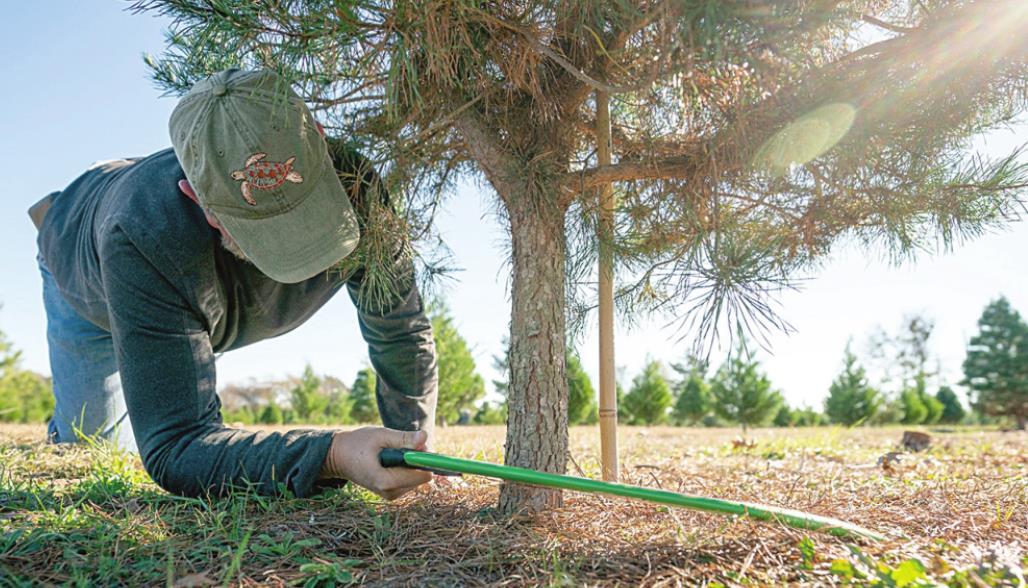
For this reason, Grant recommends buying trees from local farms that allow shoppers to pick and cut their choice tree. Variety choices will be limited by region, but fresh cut trees will typically last longer than those cut and shipped.
“When it comes to freshness, local is best,” he said. “Tree farms have been gaining popularity and usually carry both shipped cut trees and live trees that are picked and cut. Buying a Christmas tree at places like that is usually about the experience, and it helps support local businesses.”
- Log in or Subscribe to post comments.