

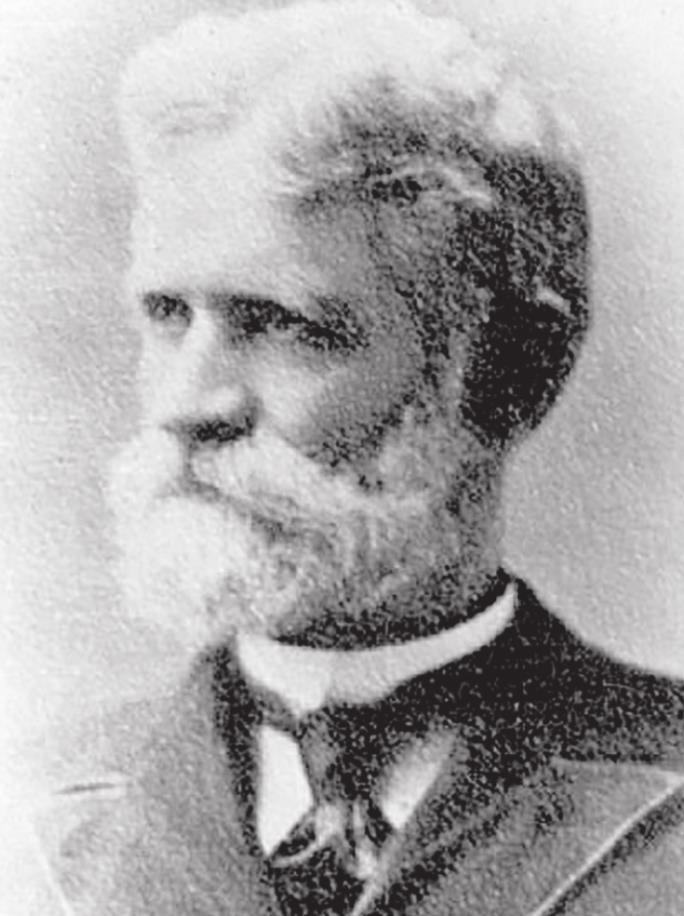
“Our need will be the real creator” is a quote from Plato’s Republic and it is likely the root of the modern adage: “Necessity is the mother of innovation.” That saying is certainly true of an undertaker in Kansas City in the latter part of the 19th century. Almon Brown Stowger
Almon Brown Stowger was the owner of the only funeral home in a town of about 40,000 people in Kansas. He had a thriving business. Then another funeral director came to town. That would have been ok, and there should have been more than enough business for the two of them. How ever, his new competitor had an edge. Mr. Stowger’s business plummeted. Since his business had already been established he should have gotten the lion’s share of business in spite of his new competition. Then he learned a bitter truth. The wife of his competitor held a key position in the fledgling telephone network in town. She was the switchboard operator, and Almon soon learned that whenever someone tried to call for his services, the call would be directed to his competitor and not him.
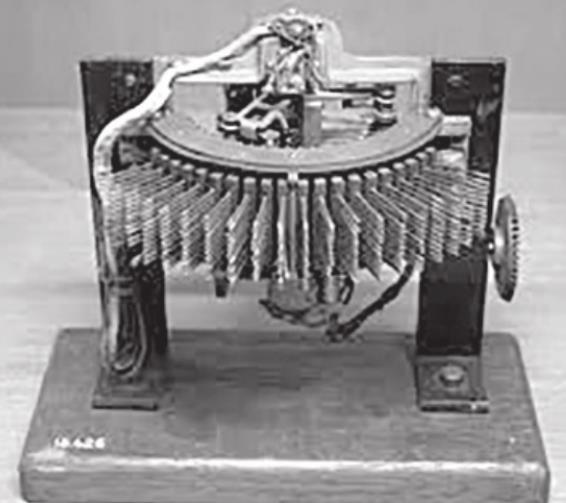
Stowger filed complaints that his competitor’s wife was literally stealing his business but nothing was ever done to stop her. Stowger resolved that he would have to find a solution on his own. He had an idea. He needed help to make it work, so he solicited the help of his nephew to teach him the working of new and modern technology. He gained a working knowledge of electricity and set out to develop something that was completely new. Using a round collar and some straight pins, Stowger invented the first automatic telephone exchange. His device revolutionized communication because one of his devices could automatically handle up to 99 connections at one time. Thus eliminating the need for a telephone operator at a switch board.
If that wasn’t remarkable enough, Stowger invented the first rotary-dial telephone that used a pulse system that meshed perfectly with his prior invention. He patented his inventions and formed the Automatic Electric Company. In 1896 he sold his patents to an associate for $1800 and his company for $10,000 in 1898. By 1899 Almun Brown Stowger was back in the funeral business.
In 1916 the patents Stowger sold for $1800 were sold to Bell Systems for $2.5 Million Dollars a staggering sum in the early 20th Century. It is strange that Stowger was so fixated on saving his undertaker business that he lacked the vision to see the huge impact his inventions would have on the business world.
- Log in or Subscribe to post comments.