
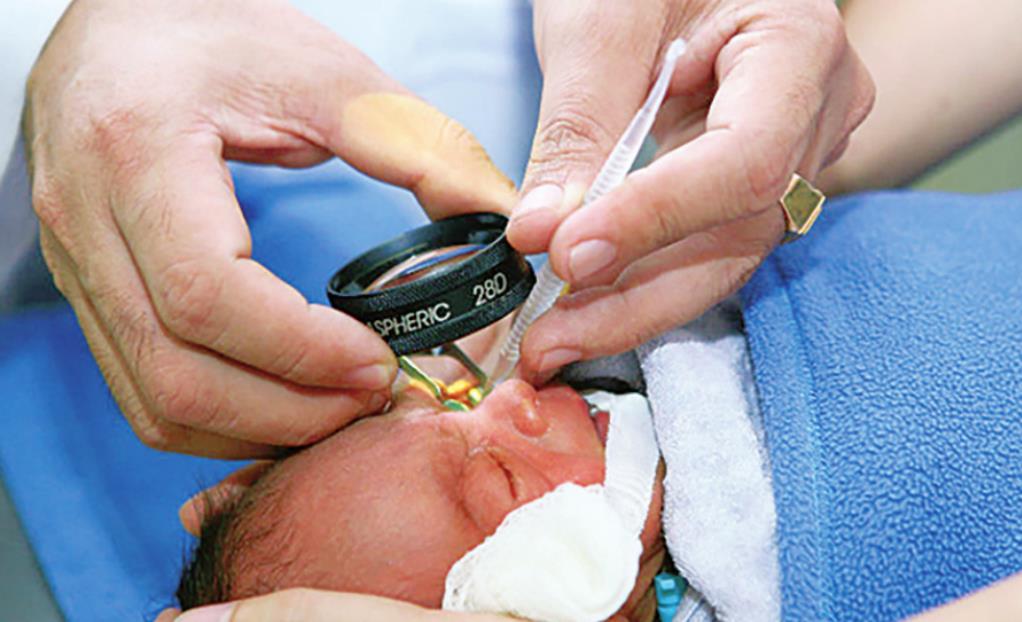
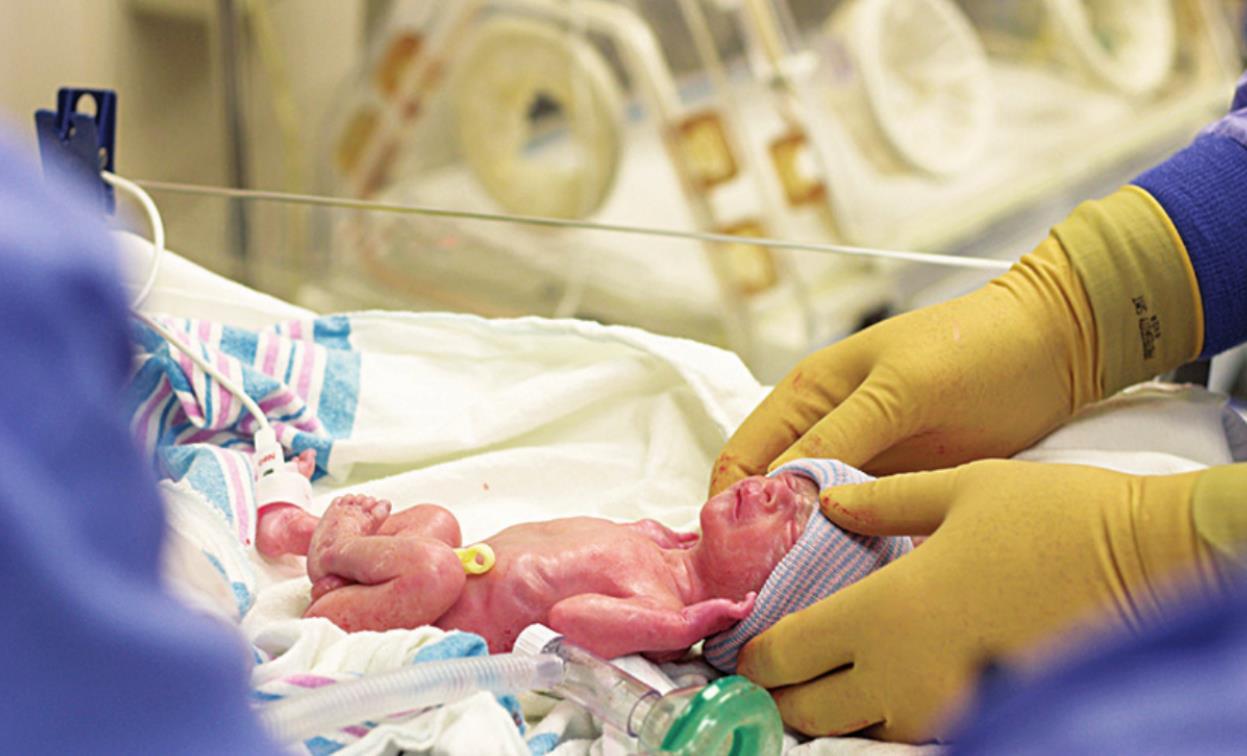
I have heard about the problems premature babies often face, and one of the very devastating ones is partial or total blindness/ severe vision impairment. The problem is called RETINOPATHY of PREMATURITY, an occurrence of blood vessels in the retina growing abnormally and happening most of the time in babies born before 32 (thirty-two) weeks of gestation, weighing less than 3 (three) pounds.
This is complicated because it happens that the eyes of “preemies” in “isolettes” are easily damaged by too much oxygen, but reducing the treatment oxygen is a danger to non-survival if the lungs need more to fully develop.
Years ago, doctors used a treatment of freezing the retinas’ outside walls, usually stopping abnormal growth.
That treatment evolved into the use of lasers to stop the abnormal growth. However, both of these treatments had the drawback of destroying often 1/3 of the retina, causing severe, severe near-sightedness and a sometimes greatly reduced field of vision—and sometimes worse!
Today, however, doctors are often able to inject the eyes with anti-vascular endothelial growth factor (anti-VEGF medications), thus most often saving peripheral vision by delaying laser treatments by targeting the protein that is causing the excess growth.
Then, when babies reach gestation plus chronological age of 60 weeks, lasers can also then be used to make sure there will not be any abnormal growth—but by then, the lasers can be used to a lesser degree, greatly helping to preserve peripheral vision and not causing near-sightedness.
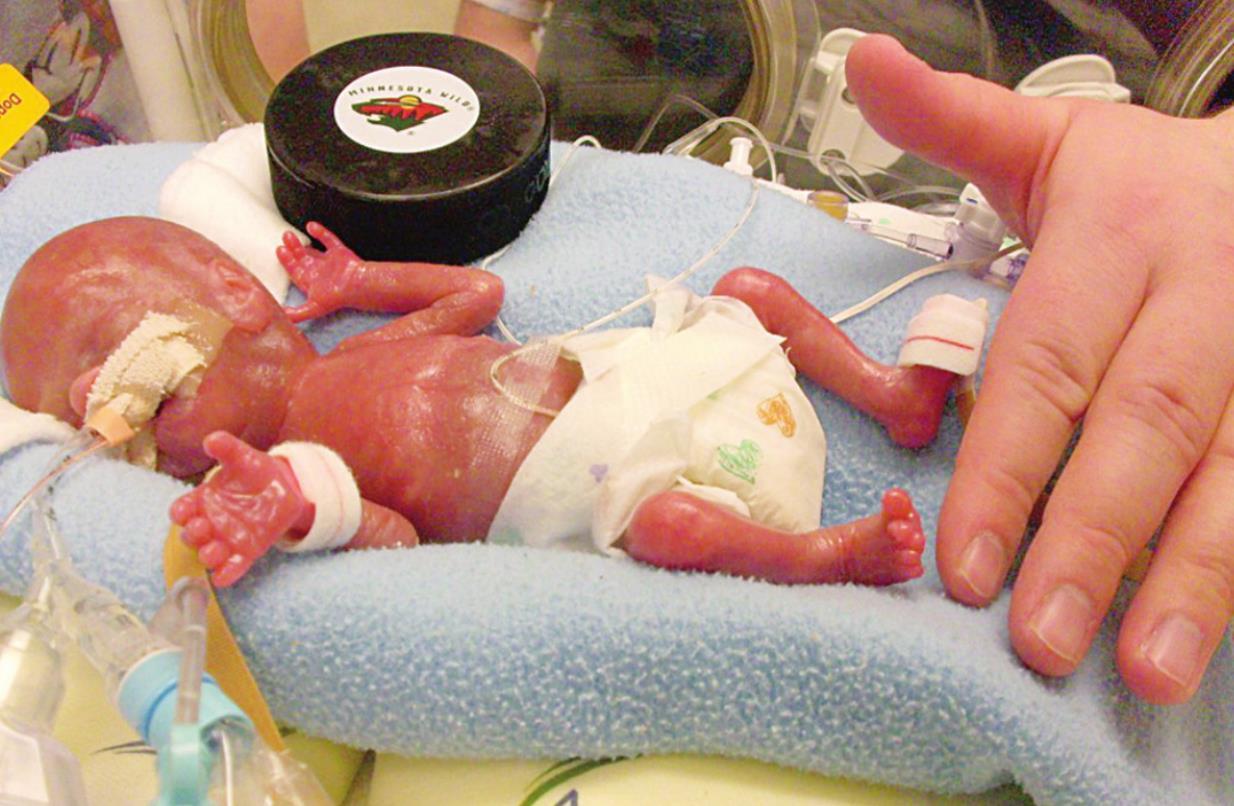
You may not have ever seen a severely premature baby, but a 1 (one) pound, 2 (two) ounces child can have a man’s ring fit over his/her shoulders—and children this size do quite often survive!
In the United States, more than 1,000 (one thousand) babies go blind each year because of retinopathy of prematurity, but with this new treatment becoming more and more available, these cases do not have to continue to happen so often!
A child (name deleted) was born at 25 (twenty-five) weeks and weighed 1 (one) pound, 7 (seven) ounces with eyes still “fused” shut, a child the product of parents who had tried and tried all types of treatments to become pregnant and finally succeeded. They were desperate to keep the child alive for the first 2 1/2 months and had to use large amounts of oxygen. It became clear that the baby’s eyes were deteriorating, so she was injected with the “anti-VEGT” treatment as part of a “research study” and then had laser surgery a year or so after leaving the NICU. That was in 2014, and the treating doctor says the child’s vision is incredible and much better than his own! And, improvements have been made since then and are still being made each year!
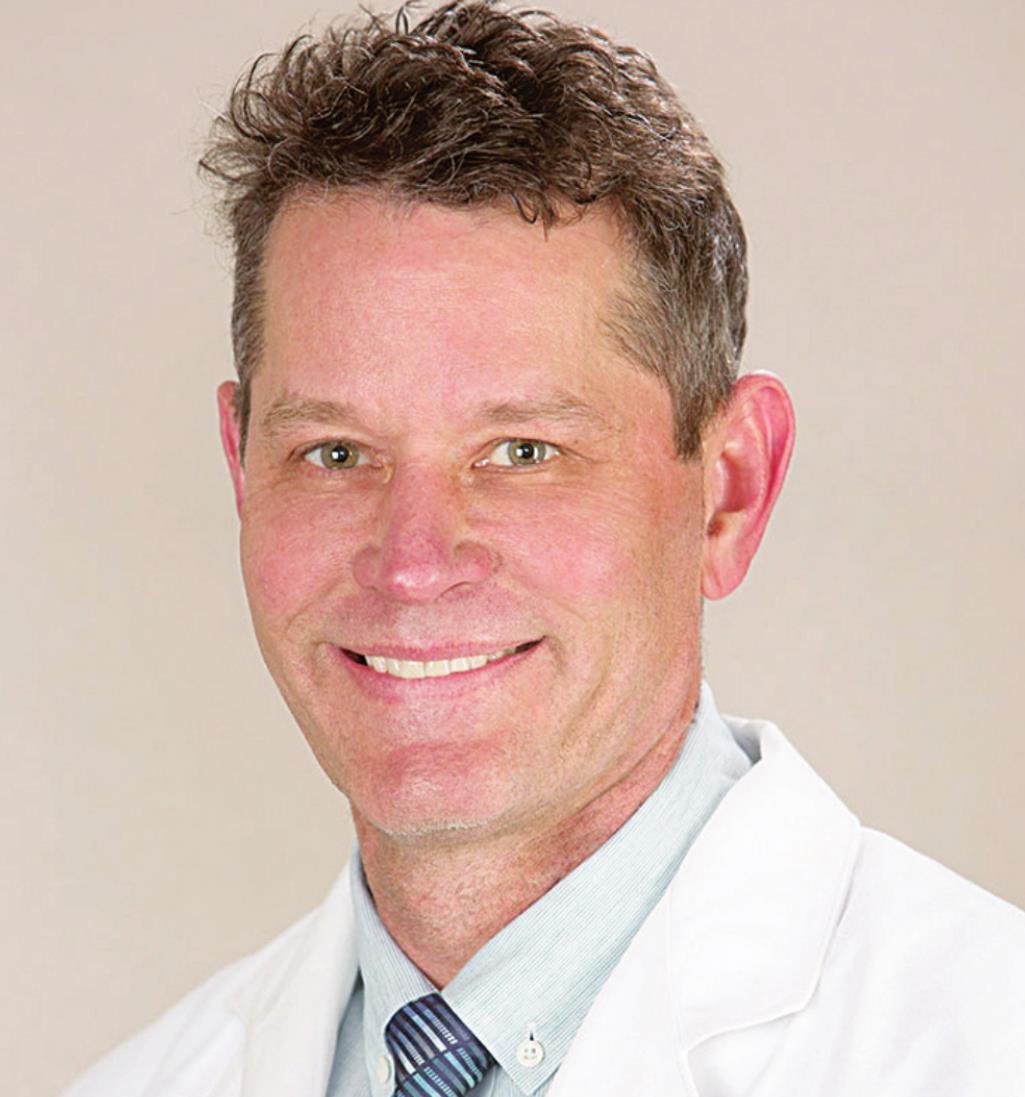
A doctor, C. Armitage Harper, with a family background of “doctors and writers,” had an “early-born daughter,” who made it to 34 (thirty-four) weeks after being part of a labor process that first began at 18 (eighteen) weeks. Dr. Harper made a promise to himself (and maybe others knew, too) that if mom and child made it through the birth process and were in good health, he would “do babies” for the rest of his life!
And that is what he has been doing, and he knows that there is always some resistance to change, and that this new treatment will continue to get better and “catch on” more and more! He wants to create self-contained NICU units, which could be brought to places (even some remote) that need them so badly! I hope he succeeds!
I found this next information about Dr. Harper as I was researching different things. C. Armitage Harper was born in Nashville, Tennessee, and later attended St. Stephen’s Episcopal High School in Austin, Texas. He moved on to graduate from Vanderbilt University with a molecular biology degree and then earned a Medical Degree in 1988 from Oklahoma University. He did his “residency” at Charity Hospital at Louisiana State University in New Orleans.
This all was followed by a 2 (two) years fellowship at the Casey Eye Institute, University of Oregon in Portland, receiving specialty training in medical and surgical retina, as well as in retinography of prematurity. He joined Austin Retina Associates in 1995 and continues to be involved with numerous studies, trials, treatments, and associations. His wife, Ruthie, is an internal medicine physician, specializing in nutritional medicine and non-surgical aesthetics. They have 2 (two) children.
I think you will agree with me that all the above is wonderful news!
- Log in or Subscribe to post comments.