
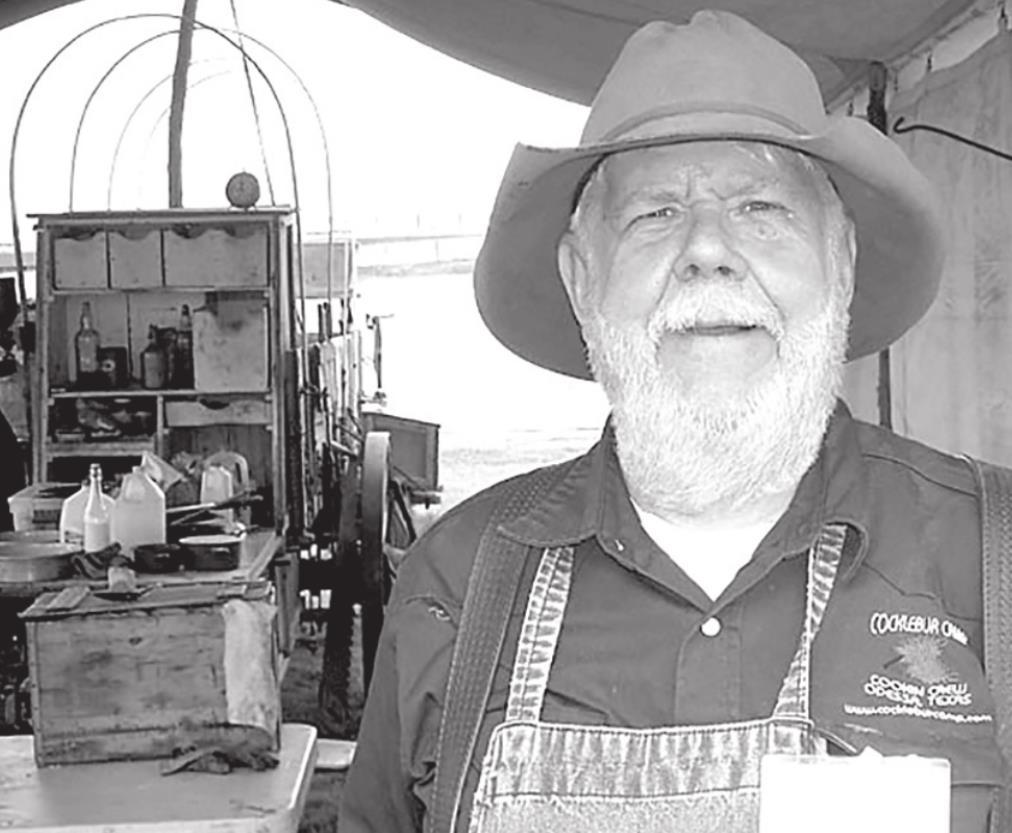
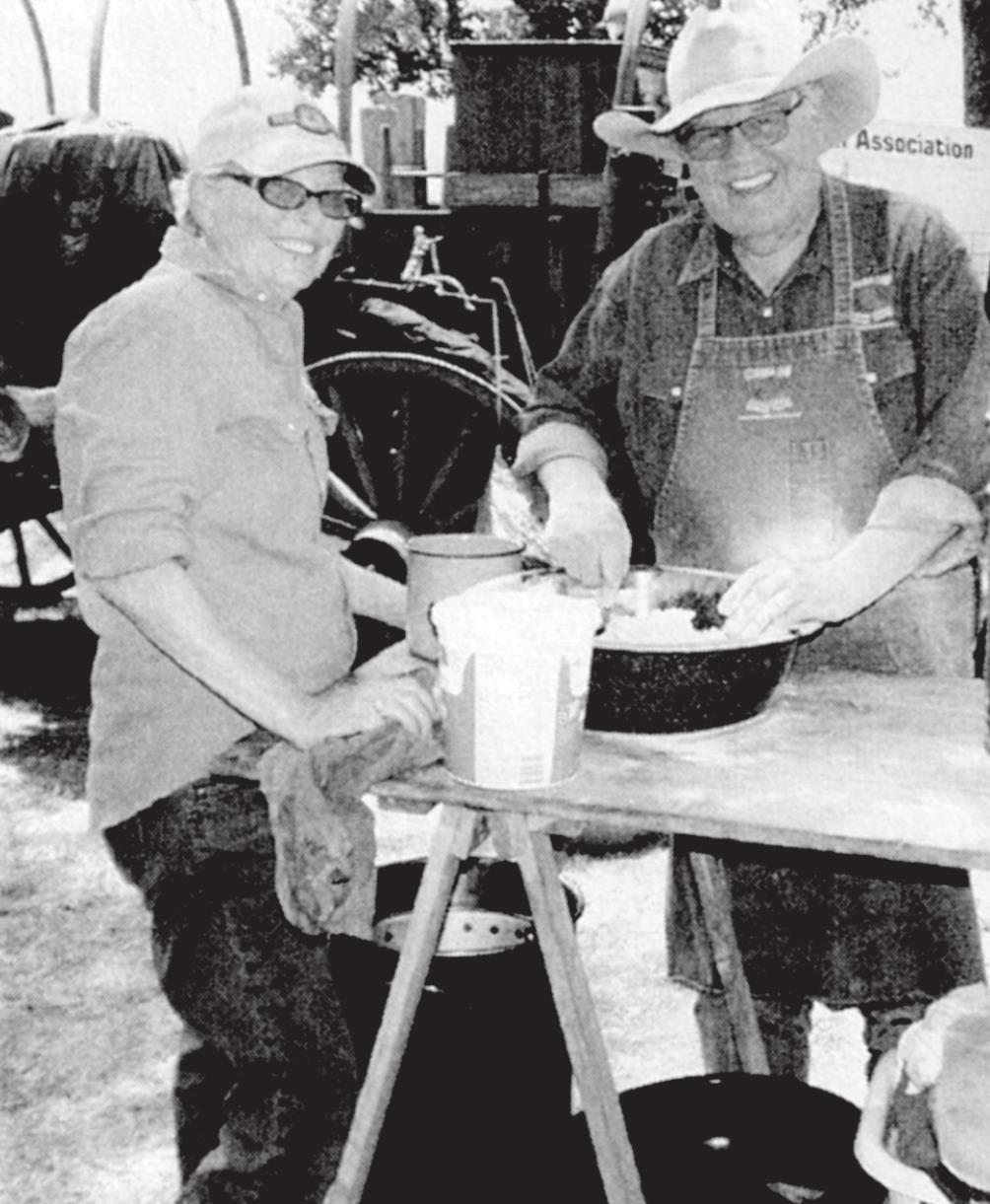
I think I mentioned last week that Mr. and Mrs. Brown had recently returned from a shared “Chuckwagon Adventure” in Logan, New Mexico, and Monday when John and I shared a few more minutes of “shooting the breeze,” he mentioned that one of his favorite “cook-offs” is held there, and it is called “Canadian River Renegades Chuck Wagon Cook-Off” and is held at Ute Lake State Park in Logan during March each year. The profits gained from the event are given to graduating seniors in the form of college scholarships.
That part of New Mexico is economically depressed and college money is (as they say in that area) “hard to come by.”
John describes the activities by relating that “we take over the entire dayuse area of the state park for the event, and typically eight to twelve wagons participate. They are usually from Texas, Colorado, New Mexico, sometimes Oklahoma, and even as far away as Tennessee! Last March, the wagon I (John) cook with (Cocklebur Camp out of Odessa) won most of the events. The wagon owners get to keep any prize money to help offset any travel expenses and any other ‘out of pocket’ needs. That process is consistent with all the events.”
His all-time favorite event is held in Clarendon, Texas, in September and is called the “Charles Goodnight Chuck Wagon Cook-Off! It is a fund-raising event for The Saints’ Roost Museum, and the history of the building is fascinating.”
(Mr. Brown’s story) John Adair, years ago, purchased most of the upper portion of the Palo Duro Canyon to use as a cattle ranch. With high, steep walls and very limited access, it made a good area to raise cattle with very little fencing required. Adair partnered with well-known cattleman, Charles Goodnight, to manage the ranch as General Manager and over-all boss, forming the JA Ranch.
Cowboys injured on the job were most often able to return to work; however, sometimes they were not, and sometimes they just became “too old” to continue cowboying. In those days, that meant usually being “let go” and having no work and being “totally on their own with no special help.”
Since most cowboys had all their possessions in their saddlebags, life was hard, or at least unpleasant, when they could not work and had no medical help. So, these two ranchers decided to build a hospital in Clarendon for those people who were working or had worked on this ranch and needed periodic medical attention and/or who could no longer work and needed special help.
In front of the hospital, cabins were constructed for cowboys who could no longer work and had nowhere to go. There was no charge to stay; everything (even food) was included, and those needing to do so could even stay there for the rest of their lives!
The hospital remained open until sometime in the 1930s and then sat vacant until it was finally purchased by the County. After a time, a group of Clarendon residents formed a non-profit group and nominally leased the old hospital and opened a museum for the surrounding people—The Saints’ Roost Museum in reference to a local saying along the lines of, “This is where all the old saints come home to roost!”
PROFITS for the yearly “cook-off” are spent maintaining the building, expanding the displays, and moving in several other historic buildings from the surrounding areas and renovating them.
John and Sandra “Sandy” also spend some time visiting interesting areas as they travel to cook-offs or back home. One of these places is Alibates Flint Quarry, which is north of Amarillo, Texas, and has not had any cook-offs there yet!
Flint was an important rock for both Native Americans and White settlers/ cattlemen. Flint was used extensively by “Indians” for arrow points, early flint knives, various tools, and for generating sparks to start fires for cooking, warmth, etc. (Starting a fire with flint and steel was often a life-saving skill, and at least a great convenience, before the advent of matches and lighters.) I (Themer) learned how to use that process at one of my first camp-outs as a Boy-Scout under the direction of Scoutmaster Jim Johnson during the early 1960s, and John says “he still demonstrates this skill at adult leader training and for local Boy Scouts and would be happy to demonstrate for others some time.”
There is also a large Chuck Wagon competition, held at the Ruidoso Downs Race Track in New Mexico, “where we (John’s group and others) are allowed to ‘set up’ our wagons and equipment in the large grassy center area of the track. Usually from ten to twenty wagons participate at Ruidoso, and the competition is much like many of the other events; however, the prize money is considerably greater!” John is not exactly sure in what exact ways the proceeds are used, but the “racetrack” also attracts many “big-name singers” and a considerable number of vendors at the same event—all in all, he says, “it is one great big party event!”
Another “event” is held in Mustang, Oklahoma, an area completely surrounded by Oklahoma City, and it sponsors Mustang Western Days. It seems to John that the entire city is involved with one thing or another. The Chuck Wagon portion is held at the Mustang City Library, and, again, he is not exactly sure just where all the proceeds go!
There are also several Chuck Wagon events held for military personnel and families at Ft. Hood and one at Lebanon, Missouri, for wounded service personnel, and both are great and worthwhile events. “Proceeds from the Lebanon event go to provide housing assistance for veterans.”
And to close, according to JOHN BROWN, probably the biggest cook-off event is Cheyenne Frontier Days in Cheyenne, Wyoming. “I have not been able to at-tend yet, so I don’t know much about this one, but the Cocklebur Camp Wagon does participate—and I can hardly wait to go for my first time. It is about a 10- day event held in July. The 1st Frontier Days was held as a cowboy round-up, featuring bronc busting, steer roping, pony racing, and so much more and was held in 1897.”
We will be expecting Mr. and Mrs. Brown to report about all the events and excitement when they attend, and I thank John for all this interesting, historical, and awe-inspiring information. And when I eat my next “chuckwagon breakfast” at the Palo Duro Canyon, I will tell them how John said it was supposed to be done if they do not do it “by the book.”
- Log in or Subscribe to post comments.