

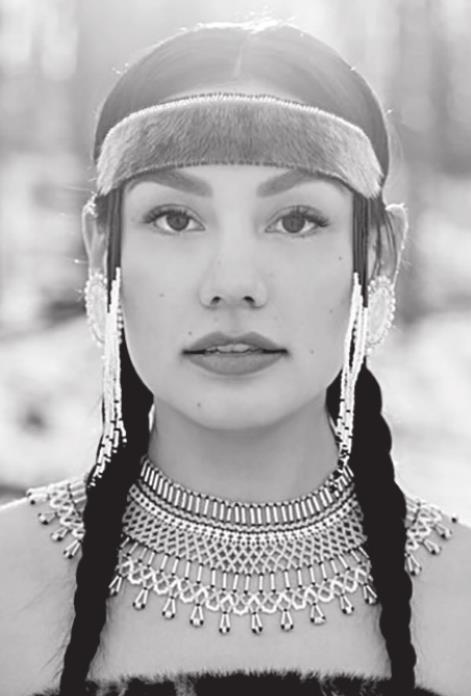
The problem with social media, if you ask me, which you certainly did not, is the voice lent to those who are all too happy to say the things they’d dare not say to another person, in person. The lure of anonymity is just too heady for some folks. In 1938, Orson Welles and his troop of actors went on the radio for a recitation of an HG Wells original novel “The War of the Worlds” on the series The Mercury Theater on Air. Except, they just acted out the scenes. They didn’t tell anyone this was a book of fiction about Martians taking over the earth. Panic ensued. People thought a performance, made and specifically engineered to upset others, was real. In a case of no harm, no foul, the FCC ruled that no laws were broken. Orson Welles landed a contract with a studio and wrote/produced/ directed/starred in Citizen Kane, while later reenacting his Martian moment on my favorite I Love Lucy episode. That’s my take on social media. Anyone can get their 15 minutes. They don’t even have to tell the truth. They just have to fool you. But, as with life, the good always comes with the bad, and vice versa. I cannot abandon social media because I have found so much pureness and goodness hiding in the tacky crevices. Take Canadian born Shina Novalinga, for instance. She’s been trending in my Instagram Reels lately. And, she’s making a big difference. To understand Shina’s Canadian experience, we must pay homage to 2 separate but connected travesties: The Sixties Scoop & the MMIW crisis. See, Shina Novalinga is a college student studying business management. But, that’s the last thing she’d tell you about herself. She wants you to know that she’s a proud Inuk. Where once she was ridiculed for embracing her Inuit customs, like the homemade parkas handcrafted by her mother and their art of throat singing, a custom that could easily have been lost, she’s focused on bringing her culture back to the forefront. But, in order to see where Shina is going, we have to examine where her culture has been. Remember when Austin Powers lost his mojo and had to time travel? We’re going back to the 60s.
We Americans think of Canada as a kinder, gentler cousin. Most of us base our understanding of this vast country on one thing, the movies. Whether you were drawn into Meg Ryan’s American trying to gain Canadian citizenship yet stuck in France without a passport dilemma in “French Kiss,” or virtually any movie about The Vietnam Conflict that mentions draft dodgers fleeing to Canada, it’s perceived as a place to escape for peace. Yet, under the surface lurks one of the major genocides in modern history. In the 50s & 60s, the Canadian government set out on a mission to educate their aboriginal children in Christian values by forcibly removing them from their homes, forbidding them from speaking their own languages, and housing them in residential school facilities. Unfortunately, this was only the beginning. Child welfare policies enabled authorities to “scoop” the Indigenous children and place them in foster homes to be adopted by white families. Next came the AIM program (Adopt Indian Metis) targeting unmarried mothers, forcing them to surrender their native babies into the adoption program. By 1977, while Indigenous children only made up 5% of Canada’s child population, they accounted for over 20% of those in the adoption/ residential school/foster system. These numbers are thought to be but a fraction of the actual damage. Though Canada has worked diligently to change these policies, with things like the Truth and Reconciliation Commission and the Canadian Human Rights Commission, the damage is still having residual effects. Aboriginal children and families were discardable. The ramifications are being felt today, still, within the female Indigenous population. This takes us to the MMIW – Missing & Murdered Indigenous Women crisis. A 2014 report issued by the Royal Canadian Mounted Police cited the homicide rate for Indigenous women in Canada was 6 times as high as for non-Indigenous women. Showcasing that this isn’t just a past prejudice, the Native Women’s Association of Canada has documented nearly 600 murder cases since the 60s, with almost 40% of those occurring after 2000. But, don’t gloat. These same studies show US Native American women are more than twice as likely to suffer from domestic violence than any other demographic, 1 in 3 of which are sexually assaulted in their lifetime by predominantly non-Native American perpetrators. While Canada is making strides in righting these grievous wrongs, it has been a source of despondency within the native community. How do you overcome an attempted genocide? How do you recover the loss of pride in your culture? How do you change the way an entire world looks at your value? Shina Novalinga gets it. She’s educating the world.
You can find Shina, often with her mother, Caroline, on Tik Tok, linked face to face, arm to arm. They’re throat singers. While a few other tribes practice similar iterations, it’s the Inuit people who perfected the art. Always performed by women, throat singing was originally a form of entertainment female tribe members practiced while men were away on hunting trips. The goal is to claim victory by outlasting your opponent. But, as Shina and Caroline explain, it’s so much more than a contest. It tells a story. In a recent Instagram post, Shina recalls being scared to show others her Inuit throat singing. As a child, she was ridiculed. It took her time to work up the courage to showcase the talent again. She performs “Qimmiguluapik,” The Little Puppy, while wearing a traditional silapaaq garment made by her mother. On Tik Tok, her view count often exceeds pop culture song samples. Shina is a proud Inuk. She’s offering the world a chance to watch her bring an entire culture into the mainstream. I’m bringing the popcorn.
- Log in or Subscribe to post comments.