
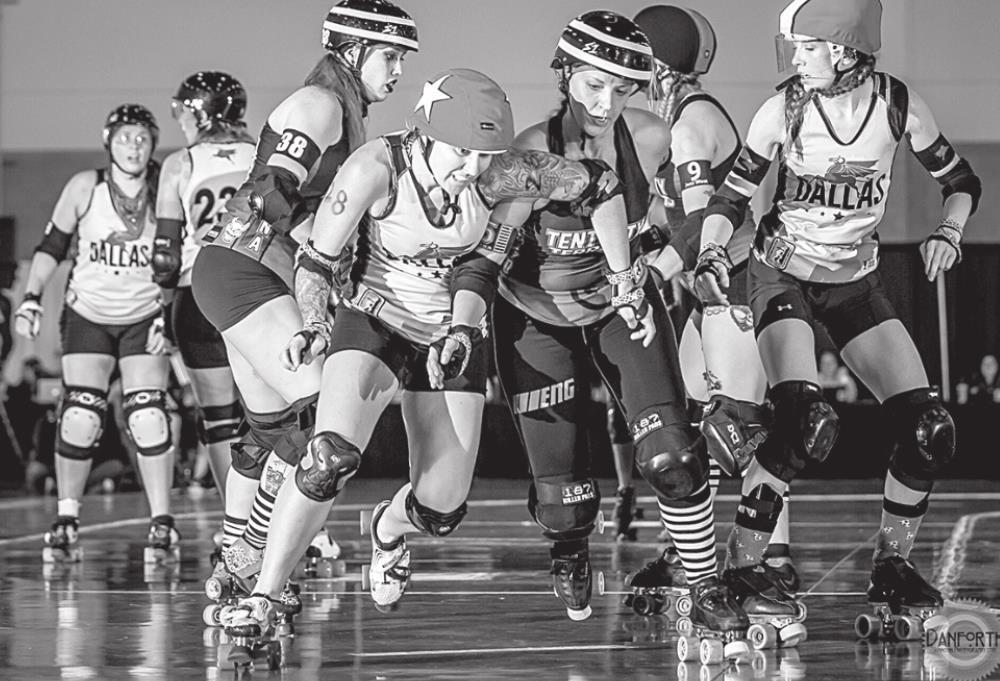
This article was inspired by a feature I read awhile back about the DALLAS DERBY DEVILS League, which consists of five home teams that play each other at the NYTEX Sports Centre in North Richland Hills to crown a champion each season, and they are a branch of a nation-wide governing body, called the Women’s Flat Track Derby Association, which provides a universal set of rules and guidelines. The top players from the five Derby Devils teams make up an all-star team of sorts, called “The Army of Darkness” that competes against other WFTDA teams across the country. Apparently, their “seasons” are on hold now until 2022 due to the pandemic, but they plan to come back with even greater competitions!
ROLLER DERBY was “born” in 1935 at the Chicago Coliseum and became the full-contact sport, still known today, around 1937. It had become a national sport sensation by 1949.
I have written previously about my younger joys of watching “studio wrestling” and “sportatorium wrestling” and how my dad rather “rained on the parade” when he hinted to me that they might not be “real” but primarily “for show.” But when he said the same thing about ROLLER DERBY, that was just too much!
BAY AREA BOMBERS— I just knew that the fantastic skating duels between Ann Calvello (the designated “bad girl” with rainbowcolored hair and a deep tan by the later stages of her career) and Joanie Weston (“designated hero” and probably the most popular skater in the sport for 25 years) just could not have been staged. And when these two women “went at it” with each other, everyone else had better stand back!
Now, if you go back long enough (1930s, ‘40s, ‘50s) before my time, you might find a quote that said the following: Roller Derby was a combination of nicely dressed spectators, the fragrance of perfume and after-shave, the odor of sweat and urine, and the inviting/ tasty aroma of popcorn and hot dogs—plus maybe a few “bad words” from a player, who had just been “checked” too hard!
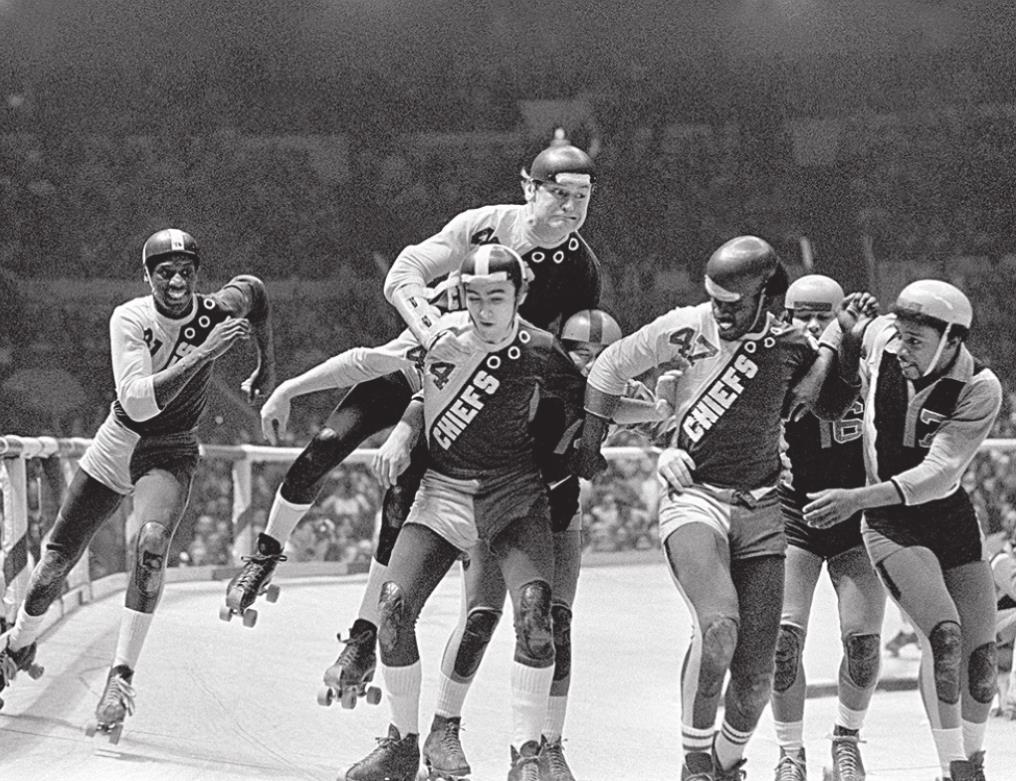
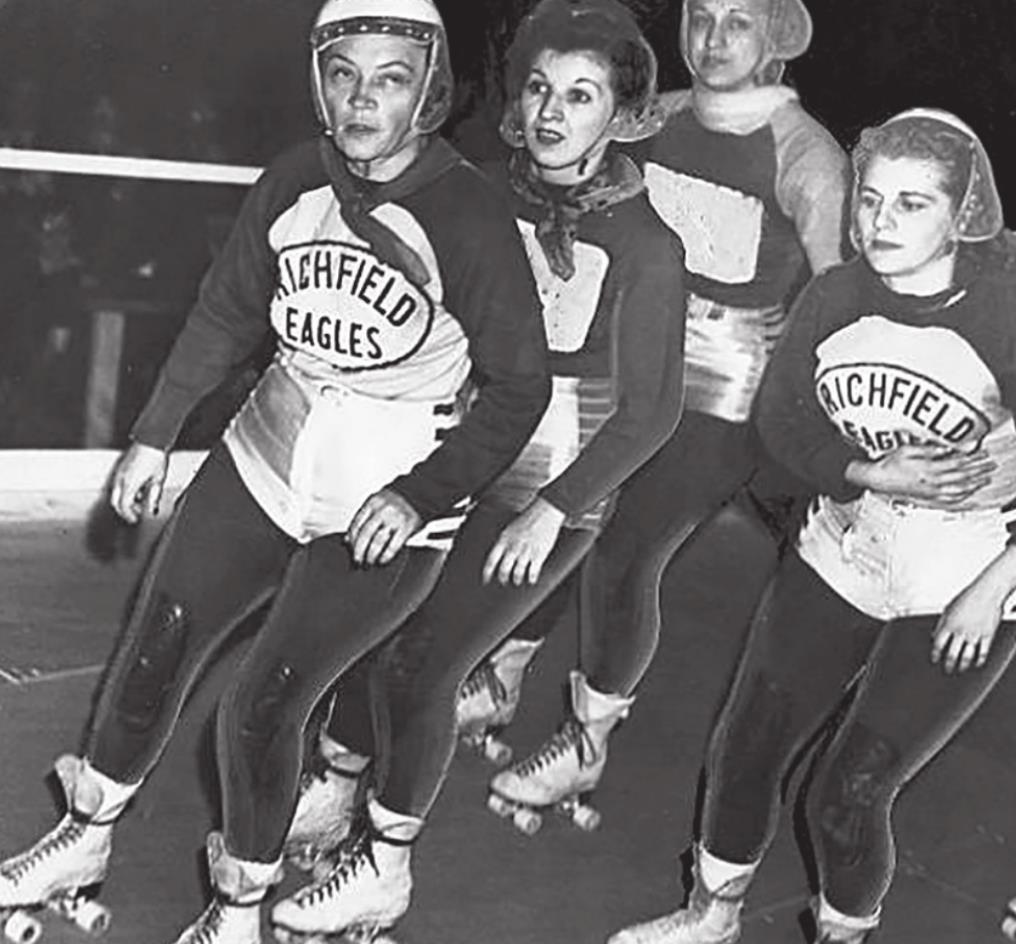
And for folks, who grew up with the “real roller derby” and its legends, the skaters were sportswomen and sportsmen and the heroes and idols of their fans! The first female skater inducted into the Derby Hall of Fame was a lady by the name of “Ma Bogash,” who was skating already in the 1930s! And there were epic matches taking place in the “Cow Palace” during the 1950s between the Bay Area Bombers and the New York Chiefs.
And, though there were as many men’s teams as women’s when I was a fan, it always seemed to me that the women were much more popular and famous! The King and Queen during my time were Charlie O’Connell and Joanie Weston. (No, that is not where we found the name of our 2nd son, Weston Themer!)
In brief, the sport demands offense and defense at the same time and starts with two teams of 5 players on the track. A “jammer” attempts to “lap” the opposing team members to score points, and the other 4 skaters are “blockers,” who try to block the other team’s jammer and clear the path for theirs. The beginning of the round is a “jam,” and two jammers try to get out first to become the “lead jammer.” The jam goes on for 2 minutes, and teams earn a point each time their jammer laps an opposing skater. The lead jammer can “kill” a jam by repeatedly tapping his/her hips. There are rules about illegal contact, etc.—but you need to see a game to understand. Also, it nearly always seemed that the favorite team found a way to win in the end, even if the opposition was “skating dirty” and cheating!
And, yes, Roller Derby was “real” skating and “real” competition, but, and I never admitted this to my Dad, I finally did come to realize that some of the theatrics of the matches had elements of “staging,” just as did “studio wrestling!
- Log in or Subscribe to post comments.