
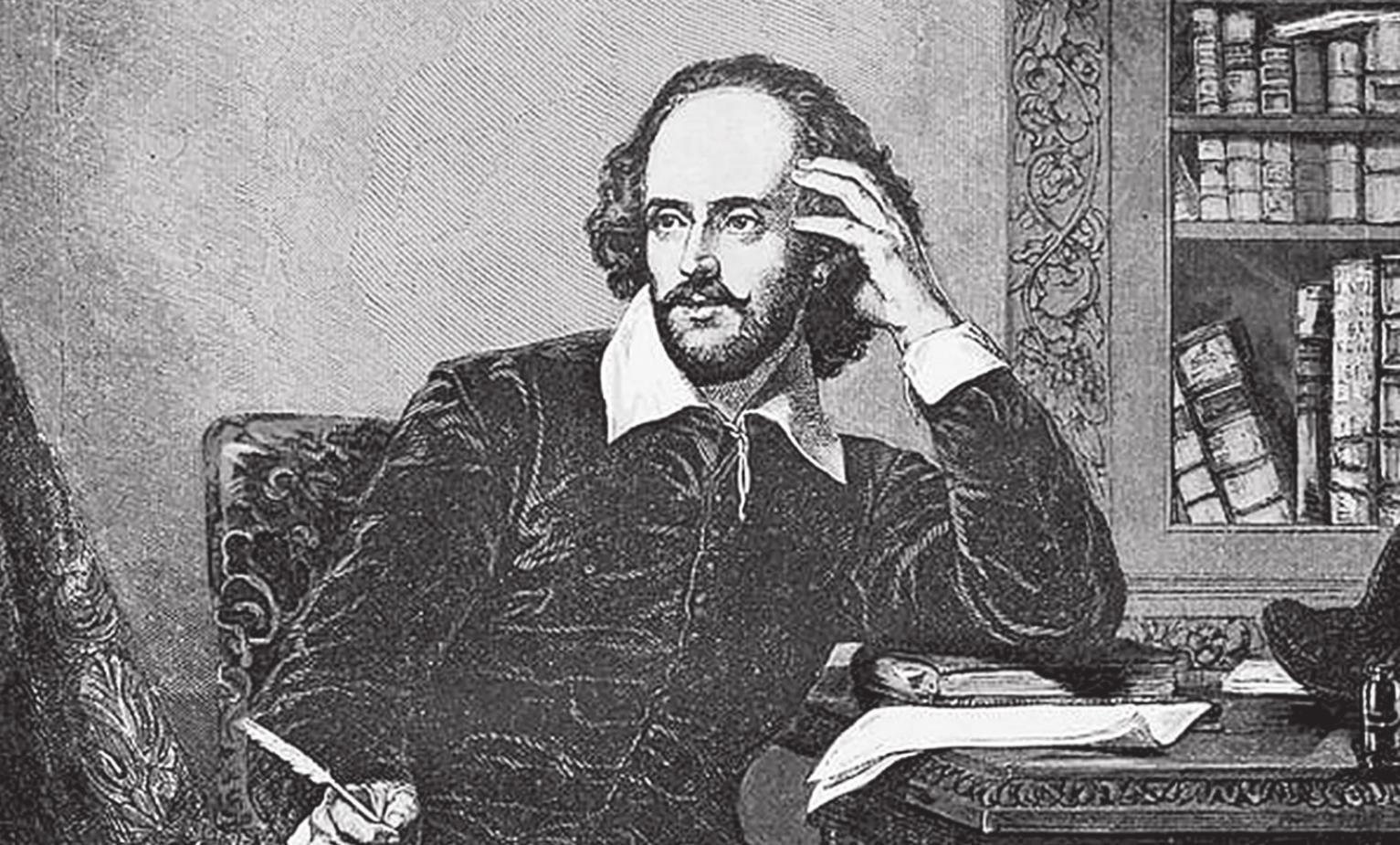
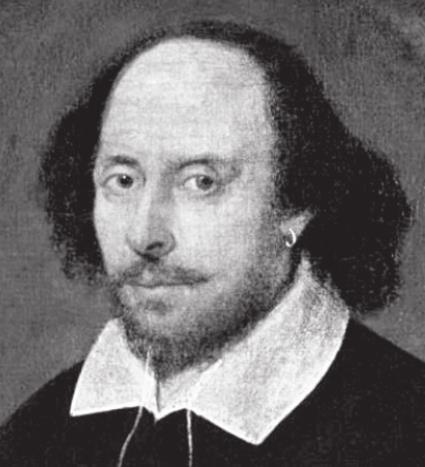
April is the “birth-month” of William Shakespeare, in my humble opinion, “the GREATEST WRITER/PHILOSOPHER of all time.”
For many, many wonderful years at FHS, my English IV and Advanced Placement Literature classes celebrated his “birthday” with cake and ice cream in the classroom, and “boy, oh, boy,” did I have a “sugar high” by the end of the school day! (I had to eat the refreshments of each class—usually six— to avoid offending mothers, grandmothers, and students, who had prepared the “goodies.”)
And, besides reviewing the birth (April 23, 1564) and death (April 23, 1616) dates of William Shakespeare, we also read profound, pertinent, pithy, provocative passages (Try to say that fast!) to keep us mentally prepared!
Now, I know that those of you who were not my students might be wondering about the “same-ness” of the birth and death days of the month. William Shakespeare was BAPTIZED on April 26, 1564, and most “church experts” place his birth three days earlier, which gave mother and child “recuperative” time before the journey to the church building for the baptism of the infant. The official record of his baptism is still in existence, but not the official notice of his birth. (He was not royalty or famous then.)
But we tarry with incidentals. Let’s look at the wisdom of a few of his writings!
“To be, or not to be: that is the question.” Pondering the purpose and “righteousness” of life vs. suicide (to end depression) in this soliloquy from Hamlet, Prince of Denmark. (probably his most famous quote)
“Love all, trust a few, do wrong to none.” Spoken in All’s Well That Ends Well by the Countess of Roussillon to her son as he sets out on a journey to a distant “court.”
“Love sought is good, but given unsought is better.” Olivia in Twelfth Night speaks of the joys of unexpected love compared to “pined for” love.
“If I lose mine honor, I lose myself.” Antony in Antony and Cleopatra worries that his “slavish” devotion to Cleopatra might destroy his honor.
“The fault, dear Brutus, is not in our stars, but in ourselves.” Cassius (nobleman) is speaking to his friend, Brutus, in Julius Caesar and telling him that man is in charge of his own destiny and not fortune, magic, horoscopes, or luck.
“That which we call a rose, by any other word would smell just as sweet.” In Romeo and Juliet, Juliet speaks (and a hidden Romeo hears) of the family rivalry and philosophically states that the objects (family names) are what they are and would be the same even if called different words.
“For there is nothing ei ther good or bad, but thinking makes it so.” Hamlet is speaking to Rosencrantz and Guildenstern in the drama, Hamlet, and explains to them that the “things” or “people” are not in themselves good or bad—but rather the way we view (think about) them. “The course of true love
“The course of true love never did run smooth.” Lysander, in A Midsummer Night’s Dream, laments that in a romantic relationship there will always be problems that two people will have to overcome to be with each other.
“All the world’s a stage and the men and women merely players.” As You Like It—Life is like a continuing performance, and the people are like actors who play roles in the “play” of life.
This speech (previous paragraph) by Jaques concludes with “Last scene of all, that ends this strange eventful history, is second childishness and mere oblivion, sans teeth, sans eyes, sans taste, sans everything.” (“sans”—without) Meaning most often spoken as the following: Man is born sans teeth, sans hair, sans intellect, and if he lives long enough, he will conclude his life sans teeth, sans hair, sans intellect. The whole speech details the “7 Ages” of man.
And I will conclude this fond memory of William Shakespeare with his famous “Sonnet 29.”
When in disgrace with fortune and men’s eyes,
I all alone beweep my outcast state
And trouble deaf heaven with my bootless cries,
And look upon myself and curse my fate,
Wishing me like to one more rich in hope,
Featured like him, like him with friends possess’d,
Desiring this man’s art and that man’s scope,
With what I most enjoy contented least;
Yet in these thoughts myself almost despising,
Haply, I think on thee, and then my state,
Like to the lark at break of day arising
From sullen earth, sings hymns at heaven’s gate;
For thy sweet love remember’d such wealth brings
That then I scorn to change my state with kings.
Explanation: Shakespeare tells that he feels that he is “the scum of the earth,” an outcast, prayers unheard, wishing he could be like others that he envies. But then, in the pits of despair, he (by chance) thinks of “his honey,” and then his feelings soar like a lark, who awakens in the morning in heaven and sings. He realizes he is so blessed to have “her” that he would not change places with a KING!
Ah, isn’t LOVE grand? Try some of the BARD’S love sonnets on your “honey” if you want KISSES!
- Log in or Subscribe to post comments.