

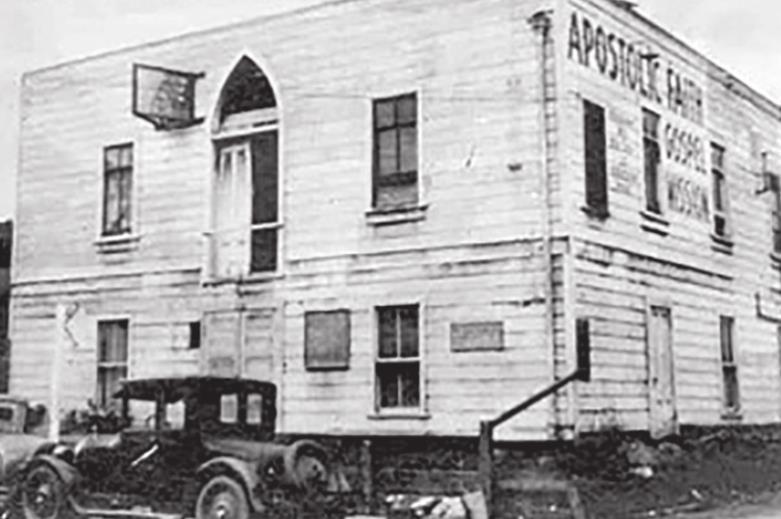
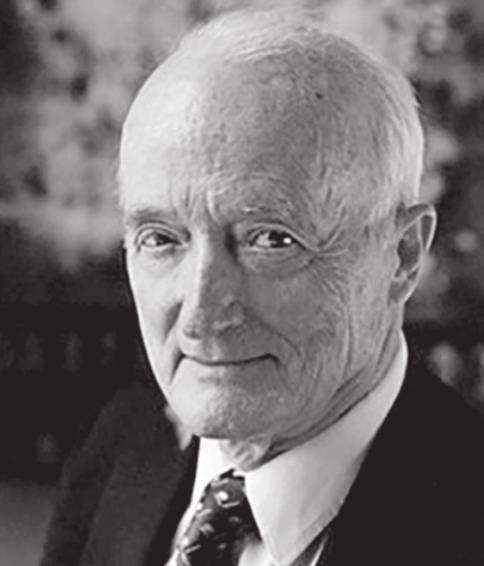
In 1906, William Seymour was a newly discovered Pentecostal preaching phenomenon, just settling into his new life in Los Angeles after leaving his interim pastor gig in Topeka and preaching his way through Houston. A 34-year-old one-eyed son of freed slaves, William’s Houston sermons were the food for Neely Terry’s soul. Neely was in Houston visiting friends, but she was a devout attendee at a small holiness church in LA, pastored by a woman, no less. Impressed with William’s character, Neely reached out to Pastor Julia Hutchins, and within 2 days of Seymour’s arrival in LA, he was a Cali preacher. It didn’t go well. Church elders weren’t ready for Pastor Seymour’s proclivity to both speak in tongues and offer up his interpretation of that act as proven biblical infilling in the Holy Spirit. Translation: they padlocked the door on William Seymour. But, that didn’t sit well with the church’s more progressive members, who followed Seymour to the home of Richard & Ruth Asberry where they studied the Bible. Soon, they took their traveling congregation to a ramshackle building near downtown LA. The newly named Apostolic Faith Mission had a home at 312 Azusa Street. By May of 1906, before the women’s suffrage movement and during the height of the establishment of Jim Crow law, the people came: black, white, Asian, indigenous, immigrant, wealthy, destitute, illiterate, well educated. They sat on planks. They sat on empty kegs. As many as 1500 people began gathering to listen to William Seymour, who often preached in 24-hour increments. First-hand accounts reported the blind with restored vision, diseases cured, and people of non-English languages suddenly able to communicate. The odd hours and unending sermons gave the event a panoramic title – The Azusa Street Revival. Among its attendees were the McConnells, whose son, J.S. McConnell helped found the Assemblies of God. Still, the Azusa Street Revival isn’t even our topic today. For that, we have to look to J.S. McConnell’s son, John, called the world’s most influential spiritual leader by former United Nations Secretary, Kurt Waldheim. John Mc Connell spearheaded the Star of Hope peace movement of 1957 and the Minute for Peace movement that began in 1963. He led the group Meals for Millions during the early 60s. And, in 1968, to celebrate the spring equinox, he coined a term during a presentation to the UNESCO Conference. John McConnell gave us Earth Day. Except, April 22nd does not fall on the spring equinox. Soon, grasshoppers.
In 1939, 24-year-old John McConnell partnered with Nobell Research Laboratory chemist Albert Nobell to manufacture plastic. There was a whole heap of things going on in 1939. Texas A&M won the national football championship. The first Batman comic was released. The Wizard of Oz premiered at Grauman’s Chinese Theatre. The Yankees won the World Series. Maury Povitch was born. Russia and Germany attacked Poland, domino effecting Great Britain and France to join the official 2nd world war. Though the US would remain neutral for 2 more years, a decision was made to ramp up and rearm, signaling the end to the Great Depression. No one was thinking about plastic, except the son of a Pentecostal evangelist working in a lab, who quickly realized the ramifications of the ensuing pollution. John served in the Merchant Marines during the war & eventually wound up in the Army, where he rejected rifle training. He later told his wife that he saw the face of Jesus on the targets. He was sent to solitary confinement and later went AWOL, according to a Denver Post article written in 2012. A post war McConnell swore off violent acts at all costs and dove headfirst into a life centered on peace activism and an unending love for the planet, based on his favorite Psalm (115:16), “The earth has been given to the children of men.” Fast forward to that UNESCO Conference proposal in 1969. No one had ever addressed the masses with thoughts of preservation or tales of threatened resources and the ecological balance the planet relies upon. The proposal was a hit, being immediately adopted by San Francisco on John McConnell’s proposed date of March 21, 1970. By June of that same year, McConnell’s proclamation heralding world leaders to care for the earth was signed by 36 notables, including UN Secretary Thant, Margaret Mead, and, in 2000, Mikhail Gorbachev. Alas, no good deed goes unpunished.
The original Earth Day was lost in the shuffle soon after its formation. Senator Gaylord Nelson soon proposed his own official Earth Day event in 1970, with the emphasis on environmental teach-in events. He chose the 100th anniversary of communist leader Vladimir Lenin’s birthday as the first official launch. In subsequent years, Nelson’s aide approached McConnell at a UN meeting to propose that McConnell move his celebration and share the 4/22 date. He refused, feeling Nelson’s version was politically based, whereas his vision for Earth Day was one of international celebratory stewardship and peace, with prayers and charitable acts for the Earth and all her people. McConnell viewed Nelson’s hostile takeover of Earth Day as an out-and-out steal and remained a deep critic of the “new” Earth Day until his death in 2012 at the age of 97. Then, there’s the tragedy of another Earth Day wannabe heir apparent, Ira Einhorn, who hosted the first Nelson based event in Philly, circa 1970. Seven years later, police raided Ira’s closet and found the remains of his ex-girlfriend in a trunk. Not cool.
Whether you celebrate your version of Earth Day on the spring equinox or this week, the words of John McConnell ring loud and clear. “I definitely believe what my father taught and preached. One can love Jesus and care for creation; these two attitudes are not mutually exclusive.” Indeed.
- Log in or Subscribe to post comments.