
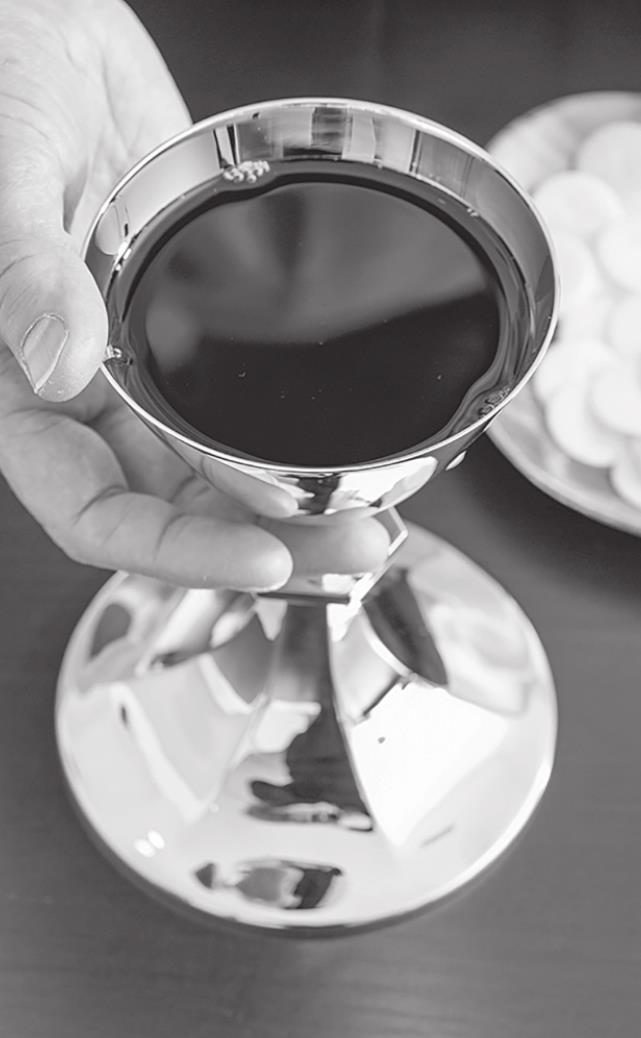
The Eucharist is a central component of the Christian faith. During the Eucharistic celebration, the sharing of bread and wine, which many Christians believe symbolizes the actual body and blood of Christ after the process of transubstantiation, takes place.
The Easter season is a key time to reflect on the origins of sharing communion and the Eucharist. Church teaching and Biblical study says the origin of the Eucharist occurred at the Last Supper of Jesus, which is commemorated on Holy Thursday. According to the religious resource The Catholic Tradition, the Last Supper in the New Testament set the course for the tenets of the Christian faith. Christian liturgies exist because Jesus Christ told people to do what he had done, in memory of him.
The most detailed account of the first sharing of the Eucharist is found in St. Paul’s First Epistle to the Corinthians, which predates the Gospels. St. Paul 1 Corinthians, Chapter 11, offers nearly verbatim the terminology used in today’s Apostolic liturgy. St. Paul’s words read:
For I have received of the Lord that which also I delivered unto you, that the Lord Jesus, the same night in which He was betrayed, took bread, and giving thanks, broke, and said: Take ye, and eat: This is My Body, which shall be delivered for you: this do for the commemoration of Me.
In like manner also the chalice, after He had supped, saying: This chalice is the new testament in My Blood: this do ye, as often as you shall drink, for the commemoration of Me. For as often as you shall eat this Bread, and drink the Chalice, you shall show the death of the Lord, until He come.
Jesus and his disciples gathered on the first day of Passover for the Last Supper. In addition to sharing food and wine, Jesus explained that one in their midst would betray Him and another would deny knowing Him.
Jesus also explained to the disciples how the bread was a symbol of his body and would be broken for them. In addition, the wine was a symbol for his blood and would be poured out for their sins to be forgiven, indicates Bible Study Tools. Additional Christian traditions which emerged during the Last Supper include the washing of feet. Jesus washed his disciples’ feet as an example to be servants to all.
From the Last Supper on, faithful Christians follow the guidance of Jesus Christ, and the Eucharist is the central component of masses within many Christian churches. Keeping this feast renews repentance and people’s faith in Jesus’ blood and sacrifice.
Easter is an opportunity to dive deeper into the Christian faith and the meanings behind the tenets of Christianity.
- Log in or Subscribe to post comments.