
“There one goes in Grandpa’s garden; grab it, Themer!” “Heck no! It has horns and thorns; you grab it, Schroeder!” (conversation between cousins in Oklahoma in an area of red sand soil and shale)
David Costello to Don Themer: “Let’s go to 3rd Tree; we always see one or two there.” (Forney area near a land section about where Melody Lane houses are now)
“There’s one; let’s catch it and scare Gail and Shirley with it,” said Reggie Scheu to Don Themer and Paul Appel. (Hope Lutheran Church property at intersection of Jim Miller and Day Streets)
In the 1950s and even into the ‘60s, it seems that Horny Toads were quite common, and the scary-looking little creatures were subject to being caught and taken as pets once the “catchers” disregarded the supposedly true injunction to “look out and don’t let them spit blood into your eyes!” (Articles state that “horned lizards can actually spurt blood from the sides of their eyes up to five feet, and this scares some predators and also tastes and smells foul.”
Legend: A horny toad was put into a time capsule in the cornerstone of a court building with assorted documents and mementos and was still alive when the box was retrieved more than 30 years later. The “taxidermied” body is supposedly still on display in the Eastland Courthouse.
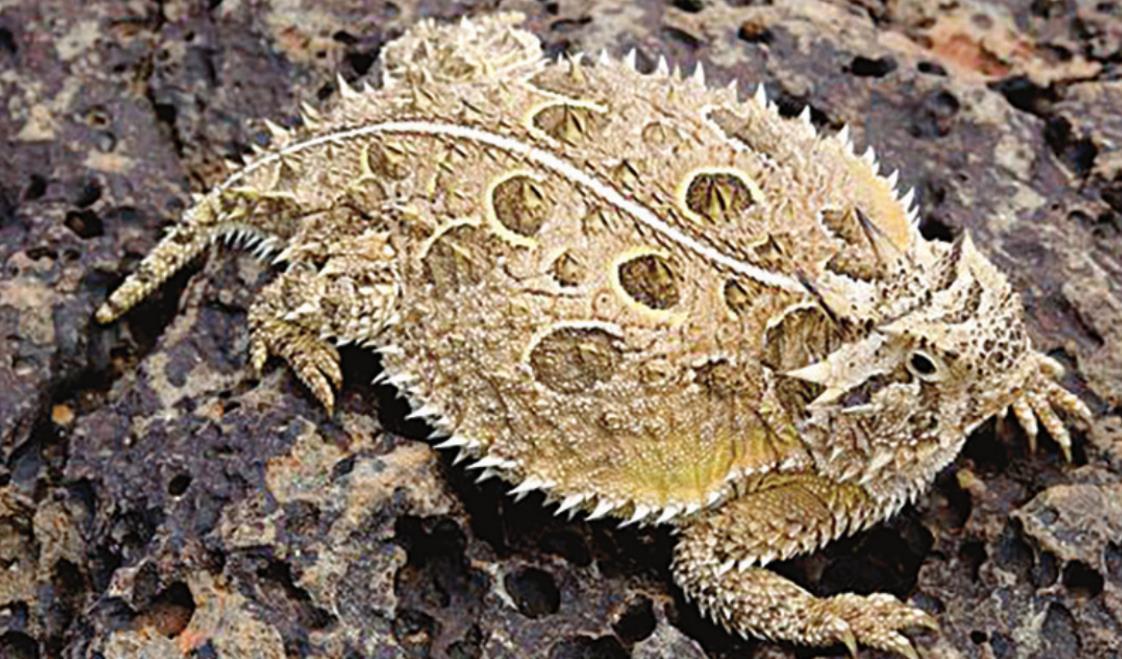
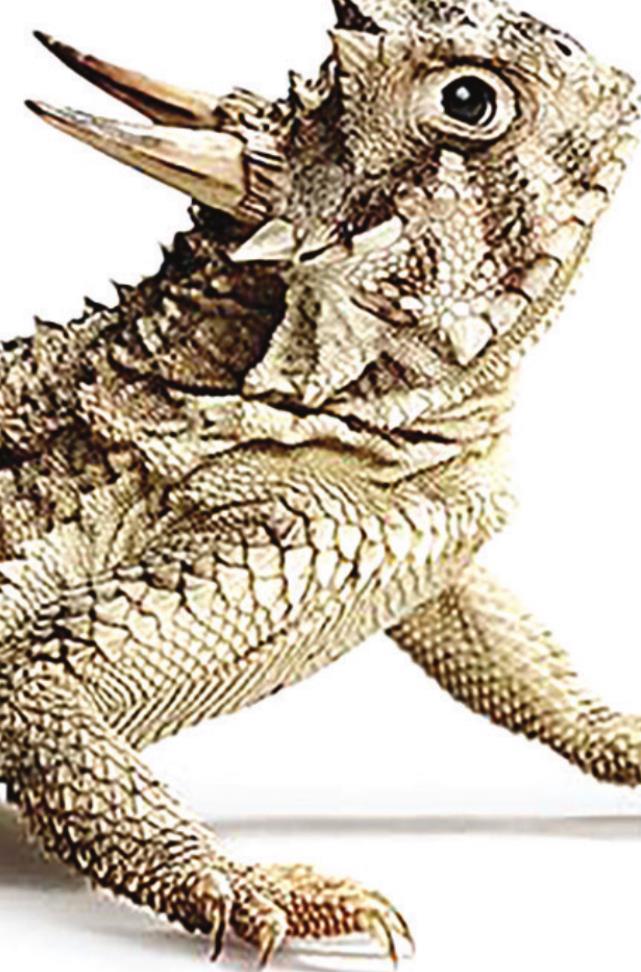
The lizards with flat, squatty bodies, little tails, and horns upon their heads once seemed to be just about anywhere a person travelled in New Mexico, Texas, Oklahoma, Kansas, Louisiana (places with which I am familiar) and seemed to be quite harmless, except for eating insects and maybe toothlessly nipping a finger when it posed a threat! They do look rather “pre-historic,” though! The horns on their heads are “true horns,” but the smaller ones on their backs are actually spiny “reptile scales,” which help them not to lose moisture through their skin.
My friends, cousins, and I often caught one or more and kept them on string leashes for a while—and then “turned them loose” towards evening.
There are about 20 species of “horned lizards,” and the TEXAS HORNED LIZARD (horny toad of which this article speaks) has just about completely disappeared from anywhere I travel and explore in surrounding states, especially east of a line set by Interstate 35.
Especially in Oklahoma and Texas, where they are considered an “endangered species,” their noticeable decline began maybe sixty years ago. Before then, there were so many that the losses of a few were never felt.
I am pretty sure that most children today, and many adults, have never seen a “horny toad” in the “wild,” or probably anywhere else, except possibly in zoo settings or magazines!
One old farm hand type summed up his feelings, and those of many country folks, when he quipped, “In the summers, we always had ice cream gettogethers and horny toads, and now-a-days, it seems we have neither!” Well, w h a t has happened to them all? The answers are predators, loss of natural habitats, pesticides, fire ants, and especially humans, at least so the “experts think.”
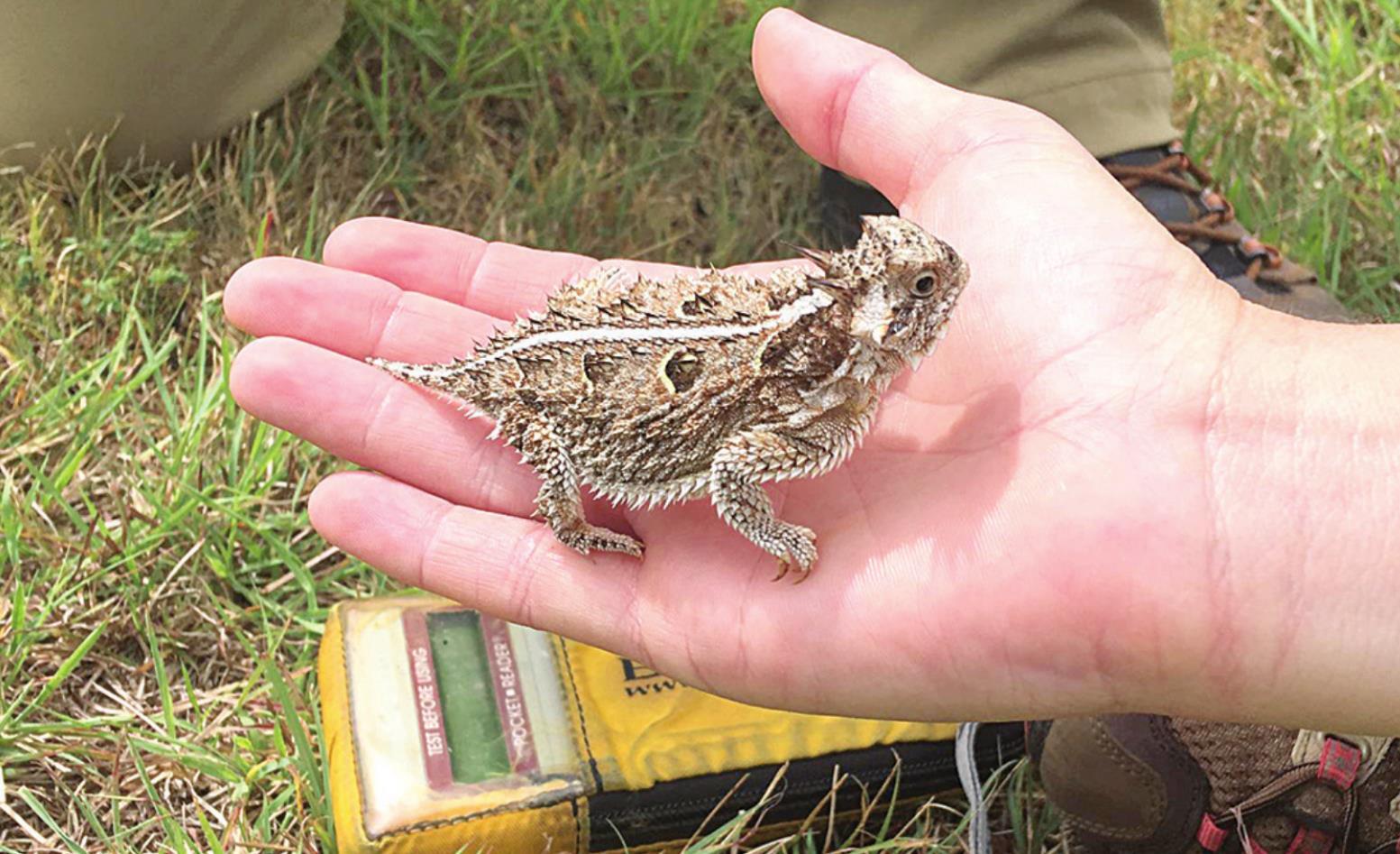
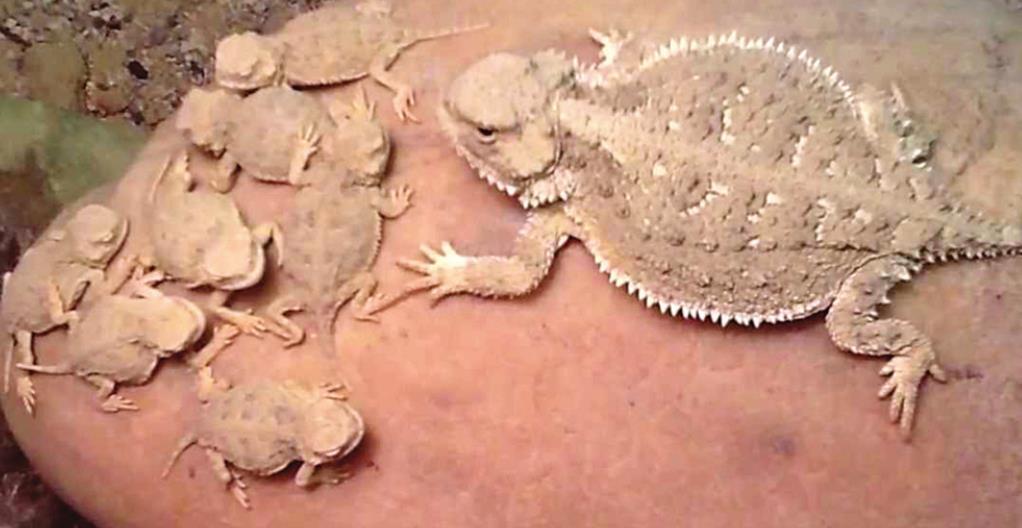
Some zoos have been somewhat successful at breeding horny toads and re-introducing them back into the wilds, but it has been hard to tell how many, if any, have survived and begun replenishing the dying “breed.” They are small (size of toad frog) and wellcamouflaged and probably have a 1—3% chance of surviving mankind and the environment today. (hatched egg clusters)
According to the “releasers,” finding even five or seven of one-hundred released animals alive the next year is exciting and rewarding!
The Oklahoma City Zoo and Tinker Air Force Base are involved in a “funded” research project to understand what has happened and why and how these animals can be saved from extinction.
I certainly hope they are successful, for I have fond memories of “Catching Horny Toads” during hot summer days and playing with them on our breezeway, out at Uncle Martin’s Oklahoma farm, out in the back area of our church in Dallas, and out at 3rd Tree—and I really enjoyed scaring Debra and Mitzi and “Suzie Q” with them in our neighborhood!
- Log in or Subscribe to post comments.