

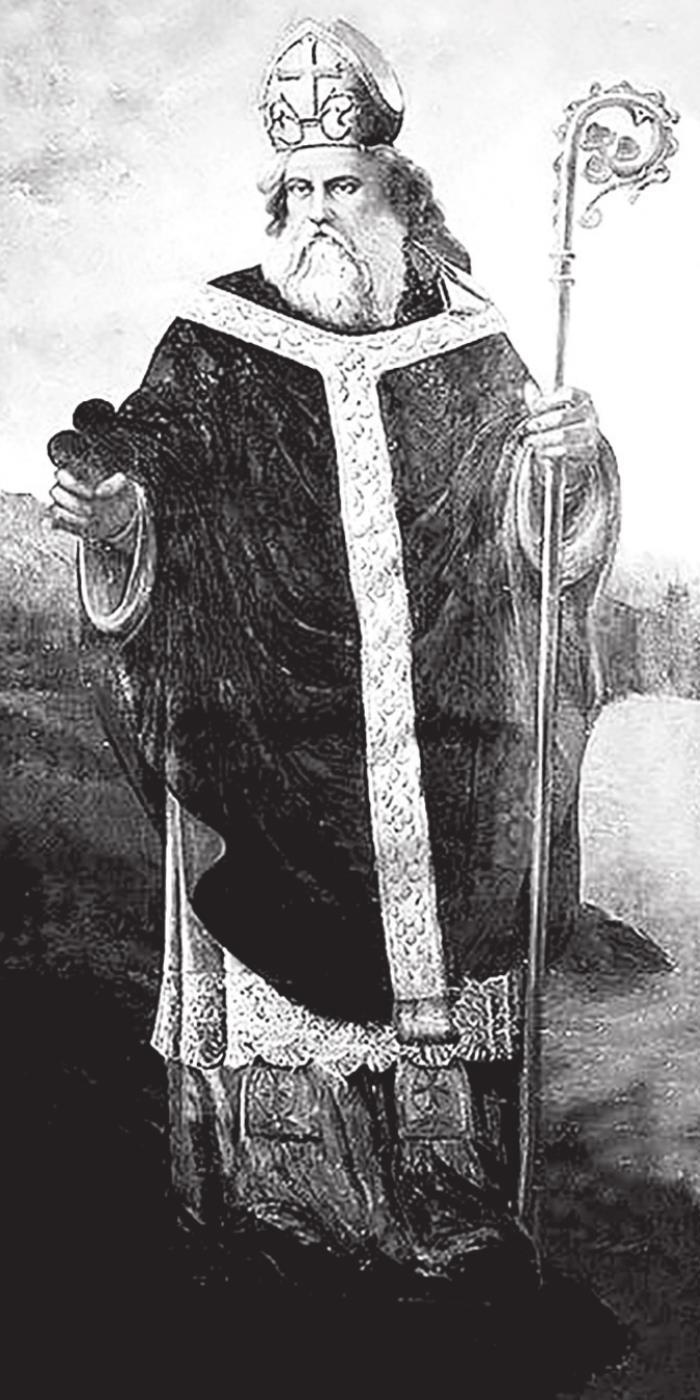
I have the best idea. I’m going to write my own autobiography in the form of a public declaration touting my amazingness. I’ll throw in a kidnapping scenario, some stuff about shepherding - people love a good shepherd story. And, forget about snakes on a plane. I’ll give them snakes in a whole country. No one will second guess me. After all, I descend from a line of powerful people. Thousands of years from now, I’ll be responsible for the single biggest alcohol consumption event anywhere in the entire world. In the words of Bruno Mars, don’t believe me - just watch. Nice to meetcha. You can call me Patrick, St. Patrick, that is.
When historians look back into the days of early Christianity, back when pagans were converted in the name of God, they typically have multiple sources of information regarding those who helped these concepts flourish. Ditto with the men and women who risked their lives for the progression of their faith. Maybe they’re mentioned in the Bible. Perhaps they’re written about in ancient manuscripts penned by prophets or religious leaders. Rarely does the majority of the info come straight from the person, such as in the case of Saint Patrick, an Irish bishop in the 5th century who wasn’t even Irish at all. Patrick, of Roman Britain descent - meaning he was British in a time when Britain was controlled by the Roman Empire - was the son of a deacon and the grandson of a priest. According to his self-penned manifesto, The Declaration, he wound up in Ireland after being kidnapped and forced into slavery as a shepherd by Irish raiders. Patrick writes that God spoke to him and told him to flee to the coast where a boat would take him to safety. This was the event that prompted young Patrick to pursue the priesthood. His harrowing time in Ireland would be his impetus to return to the Emerald Isle in hopes of converting all the pagans to Christianity. Patrick tells us he did just that, and so much more. He evangelized the entire northern half of the country, all by his lonesome. He single-handedly conquered the Druids. Part of his proclamation had him ridding Ireland of all snakes, never mind that Ireland wasn’t known to have many snakes in the first place. Why, if ever there was a shoo-in for sainthood, it was Patrick.
While we typically think of Catholicism when we think of saints, St. Patrick’s Day was adopted as a Christian feast holiday in the early 1600’s and is observed by many other religious factions: the Anglican Communion, the Eastern Orthodox, and the Lutherans, to name a few. Modern celebrations here in North Texas are more aligned with green jello shots on Greenville Avenue while watching green painted faces on green parade floats wearing green tutus. Yep, we Americans do love to down that shamrock. That’s when you place an actual shamrock at the bottom of a glass of beer, similar to a worm in a bottle of tequila (visions of Urban Cowboy are dancing in your head). Except, the mug finisher doesn’t eat the shamrock. It’s tossed over the left shoulder. You know, for luck. But, even the practice of alcohol overindulgence has religious ties. See, the holiday is celebrated on March 17th, or whatever Saturday is closest, to honor St. Patrick’s birthday. Mid March means the Lenten season is well underway. At one point, mainly during Vatican I Catholicism, drinking during Lent was strongly discouraged. This is a time for somber reflection on the path Christ willfully took toward crucifixion in order to save the souls of mankind forever. On St. Patty’s day, however, the Church relaxed the rules against overindulgence, of both food and drink, ever so slightly. Even the color green has an unsubstantiated pseudo-biblical twist. According to the 11th century book Lebor Gabala Erenn, Goidel Glas, ancestor of the Gaels, was bitten by a snake. Moses, who happened to be in Ireland (?) walked over, placed his staff on the snakebite, and saved Goidel Glas from death. The green mark left by the bite, the staff, or both, would forever remind him of his Irish people. Saint Patrick was said to have used green shamrocks (the 3 leafed variety) to explain the Holy Trinity to the pagans upon conversion. Even the pinches we loathed from not wearing green in elementary school have a loosely tied relation to the pinch of Goidel Glas’ snakebite. But, was this a green Irish snake, hiding in a shamrock patch? One never knows.
As I edit this column, press conferences abound with news of the end of our Texas mask mandate alongside a 100% no holds barred reopening of our state. Wherever this St. Patty’s Day finds you, I wish you no snakes, infinite Lenten blessings, all the luck of the Irish, and the hope of a safe return to “greener” pastures of health and prosperity after a gray and dismal year. St. Patrick knew, even in the 5th century, that sometimes you have to be your own hype man. Stay safe, my friends. It’s not easy being green.
- Log in or Subscribe to post comments.