

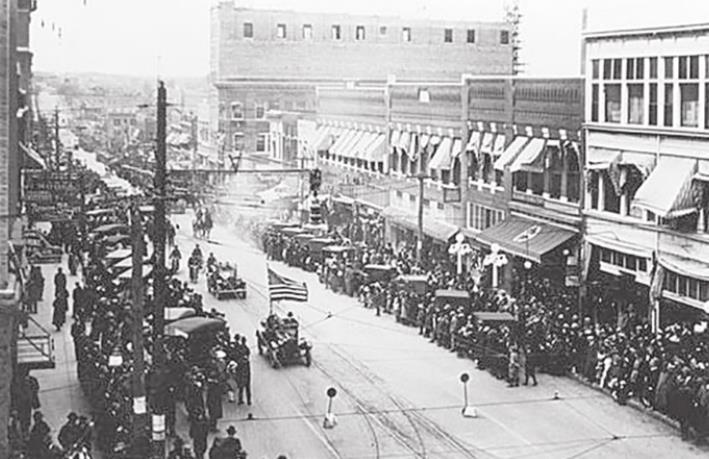
The 1920 Greenwood District in Tulsa, Oklahoma, was a sight to behold with its multiple newspapers, movie theaters, grocery stores, schools, churches, hotels, medical centers, and nightclubs. Historians credit Tulsa for embodying very progressive racial views. See, Greenwood was a black neighborhood, a very successful black neighborhood. A black family could live, shop, and even obtain a bank loan from another black person without leaving the comfort of their own neighborhood, a feat unheard of anywhere else in the US at that time. Booker T Washington deserves much of the credit for Greenwood’s success. His visit in 1905 set all of the wheels in motion. He was instrumental in guiding the community’s black leaders toward developing 4,000 acres within Tulsa two full years before OK was even considered for statehood. I bet you’re asking why Tulsa? Again, we turn to the historians who explain that post-emancipation slaves largely stayed & settled in the Oklahoma area. They would soon rub elbows with prosperity when massive amounts of oil were discovered in 1901 and again in 1905 with the Glenpool area wells. Soon, the whole country wanted a piece of the action, too. In 1900, Tulsa’s population was 1,400. By 1920, they hit 98,874. The money was flowing as fast as the oil, and, since Booker T had persuaded the Greenwood community to stress education over everything else, a very savvy black community was poised to achieve a lifestyle that would be envied by black neighborhoods throughout the country. The Greenwood District was so successful, it picked up a trendy nickname: Black Wall Street. This is how it was meant to be, they thought. Look at us working hard one generation past slavery. Look how we’re going to persevere. Look what we’ve created. Alas, you may already know this won’t end well. If not, consider this a spoiler alert of catastrophic proportions.
Post WWI America saw returning soldiers greeted by a devastated economy and grim job prospects, except in Tulsa. Cue white servicemen in large numbers descending on Tulsa looking for work in the oil industry. There was one problem. Tulsa had a large number of returning servicemen looking for work back home, too. Many of them were black. The white Tulsa transplants were not accustomed to competing for work against African American veterans. Word got out that Tulsa’s black residents didn’t seem to know their place in the world. I bet you’ll never guess who showed up on the scene next. You’re absolutely correct – The KKK. For all the advancements Tulsa’s Greenwood District had made in equality, black residents still weren’t allowed to vote or work in a federal building or eat in the white section of a restaurant outside of their neighborhood or use a public restroom. Outside of Greenwood, Jim Crow laws were king. The Klan decided to show white Tulsans how to tip the scales. But first, let’s talk about orphans.
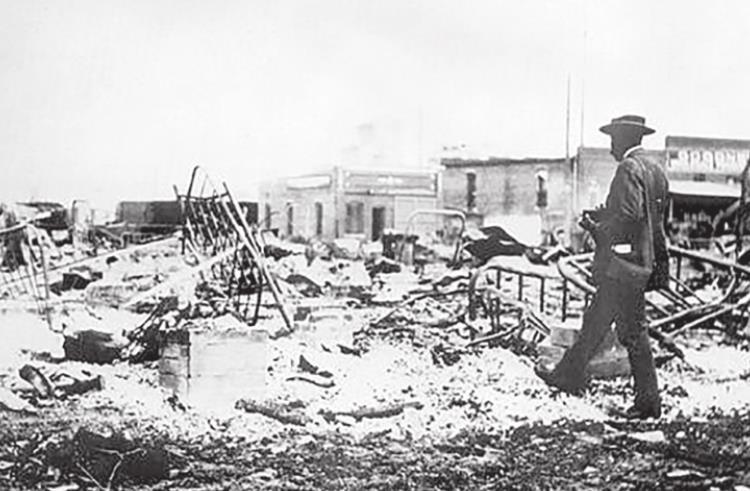
We don’t really know what year Jimmie Jones was born or where, for that matter. We do know that he surfaced in 1908 in Vinita, OK, a 6 year old African American boy with 2 sisters and no living parents. The fate of the Jones girls is unknown, but young Jimmie was adopted by Damie Ford and subsequently relocated to Tulsa to live with Damie’s family, the Rolands, later reported in the news as Rowland. Jimmie took Roland as his last name, too, and when told he could use a very different first name for his very different life, chose his favorite name, Dick. Dick Roland attended Tulsa’s segregated schools, but dropped out before graduating to take a job as a shoe shiner in downtown Tulsa. Since there was no “colored” bathroom in the shoe shine shop, black employees had to access their designated facilities by going to the top floor of the nearby Drexel Building. On May 30, 1921, 19 year old Dick tripped boarding Drexel elevator and bumped into a white woman, Sarah Page, who screamed. A white clerk in a store near the elevator entrance called the police when Roland ran away from the screaming woman, who told the authorities she’d been attacked. Roland was captured and arrested while the (reportedly) Klan controlled newspaper issued a (reportedly) Klan written editorial calling for Roland to be lynched. This white cry for justice by death led to the gathering of several hundred white Tulsans outside of the courthouse, demanding Roland be handed over to them. There were skirmishes. White protestors infiltrated the courthouse and were thrown out by the white sheriff. Black residents of Greenwood also descended on the courthouse with requests to personally guard Roland. They were denied, but then tussled with the white protestors leading to the shooting deaths of white and black citizens. In retaliation, disgruntled white protestors descended into the Greenwood District and rioted for 16 hours, shooting black residents, burning buildings, and even dropping firebombs from small aircraft. 35 city blocks, the entirety of the Greenwood District, burned to the ground over the next 2 days. While only 25 black residents were counted as dead, per the white Tulsa news, 300 black residents were nowhere to be found. Historians point to a mass grave in a potter’s field as a likely resting place for approximately 275 more bodies.
An all-white grand jury took 12 days to recommend to the court that the black Greenwood District citizens were responsible for inciting the white riot. There were no convictions for the murders or the destruction. In the fall of 1921, Sarah Page wrote a letter to the County Attorney stating she did not want the case against Dick Roland to be prosecuted after all. Dick was exonerated and fled Tulsa for good, without a trace. By the fall, it was all gone: Dick, the entire Greenwood area, and the American dream known as Black Wall Street.
For more information about the Black Wall Street Massacre of Tulsa, I highly recommend the podcast “Dreams of Black Wall Street” hosted by Nia Clark, the Washington Post article written by De-Neen Brown, and episode 211 of the podcast “My Favorite Murder.”
- Log in or Subscribe to post comments.