

Aqueducts, concrete, elaborate roadways & bridges, bathhouses: Ancient Rome was a very sophisticated place. Experts may disagree on the order of importance in the factors that contributed to the fall of the Roman Empire, but they agree that things like an army that grew ineffective, a failing economy, an incompetent emperor, and invading barbarians all played crucial roles. Regardless, the ruination of Rome inevitably led to the loss of these tremendous engineering feats. Indeed, in the case of concrete, that knowledge would fade away by 476 AD (those darn Goths), and not be rediscovered until 1824. But, we are here neither to bury Caesar nor to praise him. We’re here to talk about another black American you must know, but probably don’t. But this Roman thing, tuck it into your back pocket for me, please?
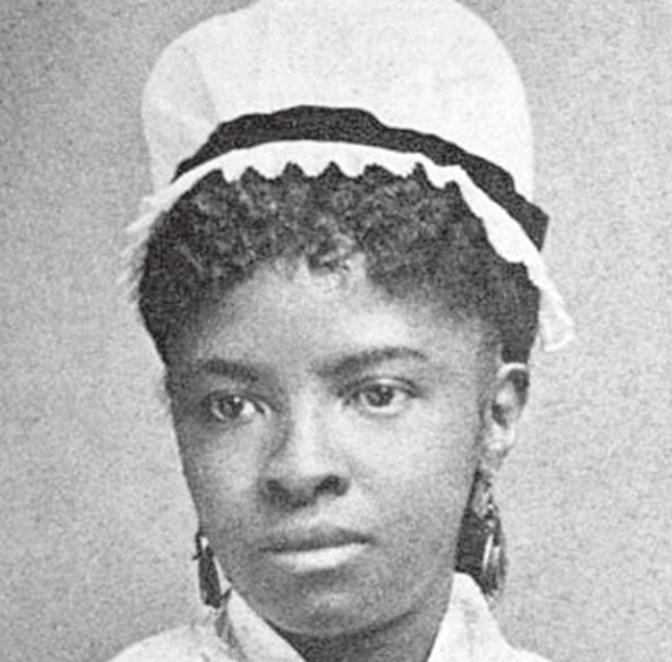
Charles and Mary Jane Mahoney were freed slaves from N Carolina who, upon the endowment of their freedom, quickly got the heck out of the Carolinas and settled in Boston. There is virtually no other information available about the Mahoney family. I cannot even explain to you how they became freed people, though we can surmise it happened one of a few ways. Slaves could be freed by the manumission, usually as part of the last will and testament of their owner. This generally had to do with the unburdening of a slave owner’s conscience prior to death. A slave could be freed by self-purchase. It wasn’t uncommon for the price to be in the hundreds of dollars, however, which made self-purchase rare. $500 in 1850 is equal to almost $17k in 2021. Slaves could be freed when religious organizations posing as traders purchased the enslaved with the sole intent of freeing them. The Quakers were known to do this. And, occasionally, a slave could be freed if he or she was sick or advanced in age and unable to perform the tasks for which they were purchased, though this meant further suffering for the slave, who wouldn’t be able to provide food or shelter for themselves. All of these scenarios were rare. Re-enslavement was quite common in the event any of these acts of freedom did occur. A freed person was still a person with no rights whose paperwork could be alleged as fraudulent, leading to a “capture” and a re-entry into slavery. So, the Mahoney family wasted no time. Once in Boston, we know they had 3 children born to them before they disappear from our radar. But, just like a Roman concrete bridge rising from the Middle Ages, Bostonians were ahead of their time. They had The Phillips School, a once prominent white school that became desegregated by Massachusetts law in 1855. Who was one of the first black students enrolled? Why, it was the eldest child of Charles and Mary Mahoney. Meet Mary Eliza.
Mary was a conscientious student who knew exactly what she wanted from a very young age. She was determined to be a nurse. After leaving The Phillips School, Mary headed straight for the New England Hospital for Women and Children, groundbreaking for its time in that women were even allowed to attend. It wasn’t that easy, however. Before being admitted to NEHWC, Mary had to work her way inside. She was a janitor there at 18. She worked her way into the kitchen as a cook. Employment records also show her designation as a “washer woman.” In fact, Mary Mahoney would work as a laborer for over 15 years before being accepted as a student. Finally, in 1878, Mary Mahoney began an intense 16 month nursing program at NEHWC. Only 4 of the 43 students enrolled made it to graduation. Mary was one of them, making her the first African American to earn a professional nursing license, at the age of 33. Mary’s dreams of public nursing were short lived. It was impossible for a black woman to work in a white hospital as a licensed nurse. Undaunted, she dove into an illustrious career as a private nurse, often for wealthy New Englanders who heralded Mary for her knowledge and professionalism. She went on to found the National Association of Colored Graduate Nurses in 1908 and would eventually be bestowed with a lifetime membership and made into their national chaplain. Mary’s other accomplishments include, along with national accolades too numerous to list, her directorship of the Howard Orphanage Asylum for Black Children in Long Island, New York. An avid supporter of the suffragette movement, Mary actively participated in the campaign for women’s rights. After the ratification of the 19th amendment, Mary was one of the first women in Boston to register to vote. Mary Eliza Mahoney died of breast cancer in 1926. She was 80.
In the year since Covid-19 emerged, we have watched over 460,000 of our fellow Americans die. They all shared a commonality. They were flanked by a nurse, a living angel with one hand tethered in hell and the other reaching out toward the light. It is only fitting to recognize Mary Mahoney, a black American whose postmanumission parents saw something better waiting for them in Boston, and who washed the clothes of the sick, mopped their floors, and cooked their food in hopes that she would one day nurse them back to health. Boston was ahead of its time, even before the Civil War. But, just like the fall of the Roman Empire, the racial inequities of these United States have seen us lose precious commodities of equality, too. 100 years after Charles and Mary Jane fled the south, black children would still be fighting to attend white schools, secure guaranteed voting rights, and avoid the fate of Emmett Till. As a society, we can do great, Roman things. We can also fall to the Goths. We would be well served to remember this, in the name of what is right and what is just.
- Log in or Subscribe to post comments.