

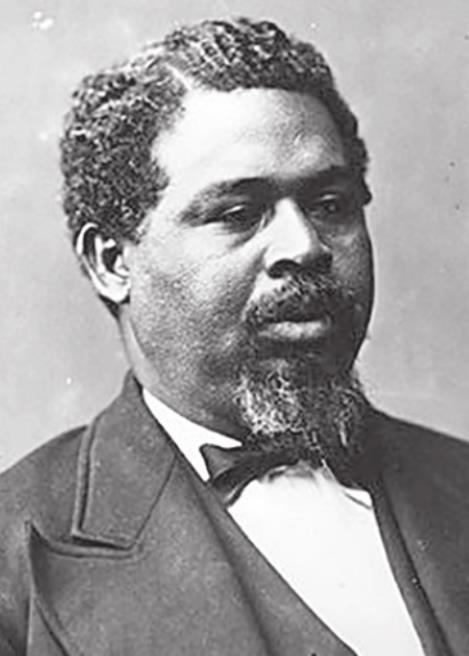
Lydia Polite was a Gullah-Geechee enslaved person in South Carolina. There is really no way for us to know what her given name was, as Gullah slaves were assigned names by traders and never known by the language of their West African mothers. The surname of Polite could’ve been a subliminal sales tactic used by the trader to fetch more money at the slave auction. “This one is so polite that’s what we named her.” By the late 1830s, Lydia had worked her way from the fields into a house servant role. She was enslaved by Henry McKee. In addition to being the wealthy landowner of the Ashdale Plantation on Lady’s Island, historians have also pegged him as the probable father of the child Lydia Polite brought into this world in 1839, in a cabin behind the main house, at the age of 43. How is that for an opening? See, the Gullah-Geechee culture is incredibly interesting. From their folk beliefs, to their story telling, to their beautiful language, dubbed Sea Island Creole, this culture owns a tapestry of beautiful lineage wrapped in the bloody and disgusting gift paper of human enslavement. They are also why I have a haint porch. And, the reason I come to you with this story today is simple. It’s officially black history month. While it’s always an important month in this country, this year/this month/this day is especially crucial. Recent images plucked from the headlines prove that our racial injustices are still flourishing. So, today I bring you a story of a Black American you should know, but might not. It’s the baby of Lydia Polite, a boy born into slavery who rose to incredible heights of American legislature via a few things like a slavery escape and the old impersonating a captain act. Allow me to introduce Robert Smalls. But, keep Henry McKee & his wife in your peripherals. We aren’t finished with them yet.
Even the cruelest social castes have hierarchy. Young Robert was most likely hated and mocked by other enslaved children on the plantation. He didn’t work the fields, after all. He was a house boy. Robert was smart, too. Henry McKee, in a move scholars cite as further proof of likely parentage, decided to hire Robert out to townsfolk at the age of 12. From hotel work to street lamplighter to dock work, Robert Smalls developed a reputation as a hardworking young man. Eventually, he was made a wheelman on a ship. Slaves weren’t legally allowed to be helmsmen, so they downgraded his title. In 1856, 17 year old Robert was banking $10 a week, nine of which went to his owner, McKee. That’s the year a young, enslaved hotel maid with 2 children caught his eye. Within 3 years, they would marry & add 2 more children to the unit. Robert’s plan had always been freedom. He was determined to buy his way out of slavery. There was one problem. It would cost $800 for the entire family – roughly $24k today – and Robert had only $100. By April, however, finances would be the least of the Small family concerns. Robert’s ship, the CSS Planter, would go to war, and he with it. But, worry not. A determent from freedom is not the measure of a man.
Robert’s sheer obsession and knowledge of the sea was well known among the crew. The Planter, while not a war ship, had the dubious task of reconnaissance and mine laying. Robert was assigned to steer. In 1862, when the Planter docked, very near their home base of Charleston, to pick up ammo and weapons from a dismantled confederate post, the officers immediately disembarked for a night ashore. The remaining crew of enslaved men was thrown a bone, too. Their families would be allowed to visit onboard the ship. That’s when Robert saw an opportunity to shine. With families onboard, Robert donned the infamous straw hat of the ship’s white captain & sailed the Planter straight up to Union waters, replacing the rebel flag with a white one, fashioned from a sheet. This was Mrs. Smalls’ idea. The information Robert was able to offer the Union Navy led to the capture of Coles Island, & Robert received accolades from the Navy Secretary for his intelli-gence and skillfulness. But, even wartime heroics and securing freedom for family and crew still isn’t the measure of a man. Robert’s military career
Robert’s military career and fluency in the Gullah language made him a natural in the political arena. A lifelong Republican, he was a delegate at the S Carolina Constitutional Convention in 1868 where he worked to make free, compulsory education available to all children. Once elected to the S Carolina House, he worked to pass a civil rights bill. 1874 saw Robert Smalls in the US House for 2 terms, introducing legislature where men of color could enlist in the military, though this proposed amendment would not pass. But, an esteemed political career is not the measure of a man.
In 1865, Robert Smalls went home to the McKee house to visit his mother, not as a slave, but as the home’s new owner. He used his Navy reward for placing the USS Planter in the hands of the Union to purchase the home where Mr. McKee’s wife still lived. The signs of dementia in his former owner’s wife were evident. In fact, once moved from the home she no longer owned, Mrs. McKee would continually wander through the (now) Small Plantation, unable to understand where she belonged. When asked by his mother, Lydia, what should be done with the wife of their former owner, Robert’s intent was clear. “Let her stay.” And, that is the measure of a man. For more information on Robert Smalls, I recommend the 2012 article from The Washington Post by Avis Thomas-Lester and the book “Be Free or Die: The Amazing Story of Robert Smalls’ Escape from Slavery to Union Hero” by Cate Lineberry.
- Log in or Subscribe to post comments.