








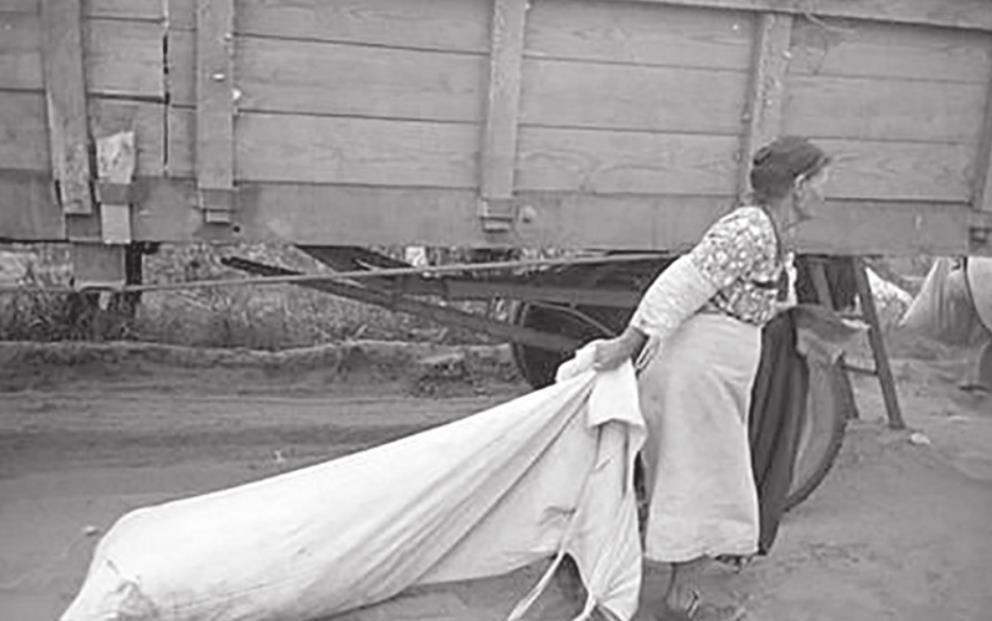
After our water break, the “old lady” with even more cotton in her bag stopped to ask how I was doing with the cotton. I replied that I didn’t seem to be making much progress, so she looked into my bag and laughed and leaned closer and said, “Boy, you ain’t ‘pullin’ cotton; you’re ‘pickin’ it! Look into my bag!” I did and saw that her cotton had “hulls” from the bolls still attached to the cotton. My bag had pure, smooth cotton with no “hulls.” She then said, “Boy, we’re being paid by the pound, and you ain’t gonna have much pounds the way you’re doin’ it!” She gave a little chuckle and muttered “picking, oh my” and trudged on back to her area of the field. I went to mine and started “pulling” instead of “picking.” I did not ask the others of our crew how they were doing it for fear that they were doing it right and would laugh at me.
At 12:00 noon I walked across a couple or three yards to the Themer house and ate my peanut butter/ jelly sandwich, apple, chips, and milk and was rather “quiet,” as I remember my Mom remarking. I trudged back to the field and “picked” the remainder of the day with one water break at 3:00 p. m., as I remember.
At the end of the day, all the new pickers had our bags weighed, while the “old hands” just put their bags onto the trailer to be ready to start again in the morning. I think we were paid ½ cent per pound, or maybe more/ less, and I got a dime, nickel, and penny and was rather downcast, even though that would buy two soda pops, one candy bar, and a 3-pack of Fleer chewing gum!
That night, I told Mom and Dad that I didn’t like the new job and was not going to get rich. Mom was a little sympathetic, but Dad just shook his head in agreement and said I should go back out in the morning and at least try it for another day. I grudgingly agreed; I never was very good at “talking back” to Paul Themer, not even the final years of his life!
The next morning, we original 8 neighborhood “cotton” guys (I think probably Billy Costello, George Hughes, Pat Adams, Don Themer, David Costello, Melvin “Tookie” Tucker, Mike Adams, Andy Boles) all showed up to pick, except two, and I will not tell you the two I remember being absent! We younger guys all agreed that maybe Billy Owen wasn’t as smart as he had led us to believe, but that we would “stick it out” at least until lunch.
At LUNCH, the remainder of our crew told the “boss” that we did not think we wanted to work any more. He was nice enough to pay us for what we had picked that morning—about ½ as much as the day before. But with the penny I found on the ground, I now had 25 cents and was happy to be a RETIRED COTTON FARMER.
**I will relate that I did farm cotton one more time, in 1968, when I stripped cotton and cut stalks and did a little plowing for Billy Smith for $1.25 per hour many days after school and several Saturdays up until a week or two before Christmas. For those days, I did make pretty good money doing that!**
COTTON GROWING/ HARVESTING was a lot more physical work than the process for NATIVE PRAIRIE HAY!
Fields were plowed deeply in the fall/winter and left to sit for awhile before the loosened black soil was “bedded” (raised into beds for planting).
Sometime between April and June, the cotton seeds were planted (sowed), depending upon when the fields were wet enough to sprout the seeds but dry enough so as not to rot them. When “bottom land” flooded, fields sometimes had to be re-planted! Planting was early on done by hand and then later by horse-pulled planters.
As soon as there was a “stand” of cotton seedlings, field hands with hoes went out to “thin” the plants so they were approximately 7-10 inches apart so as not to crowd and stunt the mature cotton plants. The thinning process also was a time for the “hands” to chop out any beginning weeds!
Weeks later, another general weeding took place, and then in a few more, the final “flat weeding” of usually larger invasive weeds took place. Farmers with the right mechanical cultivators also pulled them down the rows between the maturing plants for aerating (Black soil was notorious for getting hard and crusty after rains stopped.) the cotton and destroying any “diehard” weeds!
During the heat of the summer (June, July, August), the plants produced “squares” or buds, then the flowers, and then the bolls, which later split open to show the snowy cotton, usually at the end of August or first of September.
Early on, there were no chemicals to spray on the cotton to control insects, and every-so-often boll weevils or boll worms would invade and ravage the maturing cotton bolls! Droughts at just the crucial times could also devastate crops! It was not easy to be cotton farmers!
“Mid-August” or “First of September” the harvesting began, and boys were often held out of school to help—and even girls some times, or so I was told! The “smart” ones wore gloves to protect their fingers from the burrs, which I learned after my first two hours. But some of the men pickers told me that only the “soft ones” wore gloves!
Pickers pulled long sacks and were paid by the pound. The first day I worked, one old lady had filled her sack so full, she could not pull it back to the wagon and had to get two men to do so. As I remember she had way past 100 pounds in it—not all pulled in one day, of course!
During “cotton-picking” time, temperatures often exceeded 100 degrees, and workers, by the ends of the days, would often be completely sweat-soaked, with scratched and scraped knees and hands and sore shoulders and backs! A brief rest in the shade of cotton wagons and some cool water was the little respite that the workers knew for many cotton picking/pulling days!
I forgot to tell you that what my Dad called “army worms” when they got into his yard or garden or trees also liked cotton, and when they attacked, they somehow produced a foul odor, sort of like sour sewer in my opinion!
Back to “pulling” and “picking,” what was required depended upon what the owner/grower expected, depending upon how modern the ginning equipment was at the gin to which he took his produce. In early times, it was required to be “picked,” but as gins became more modern, “pulling” was a lot easier and quicker— but dirtier to process!
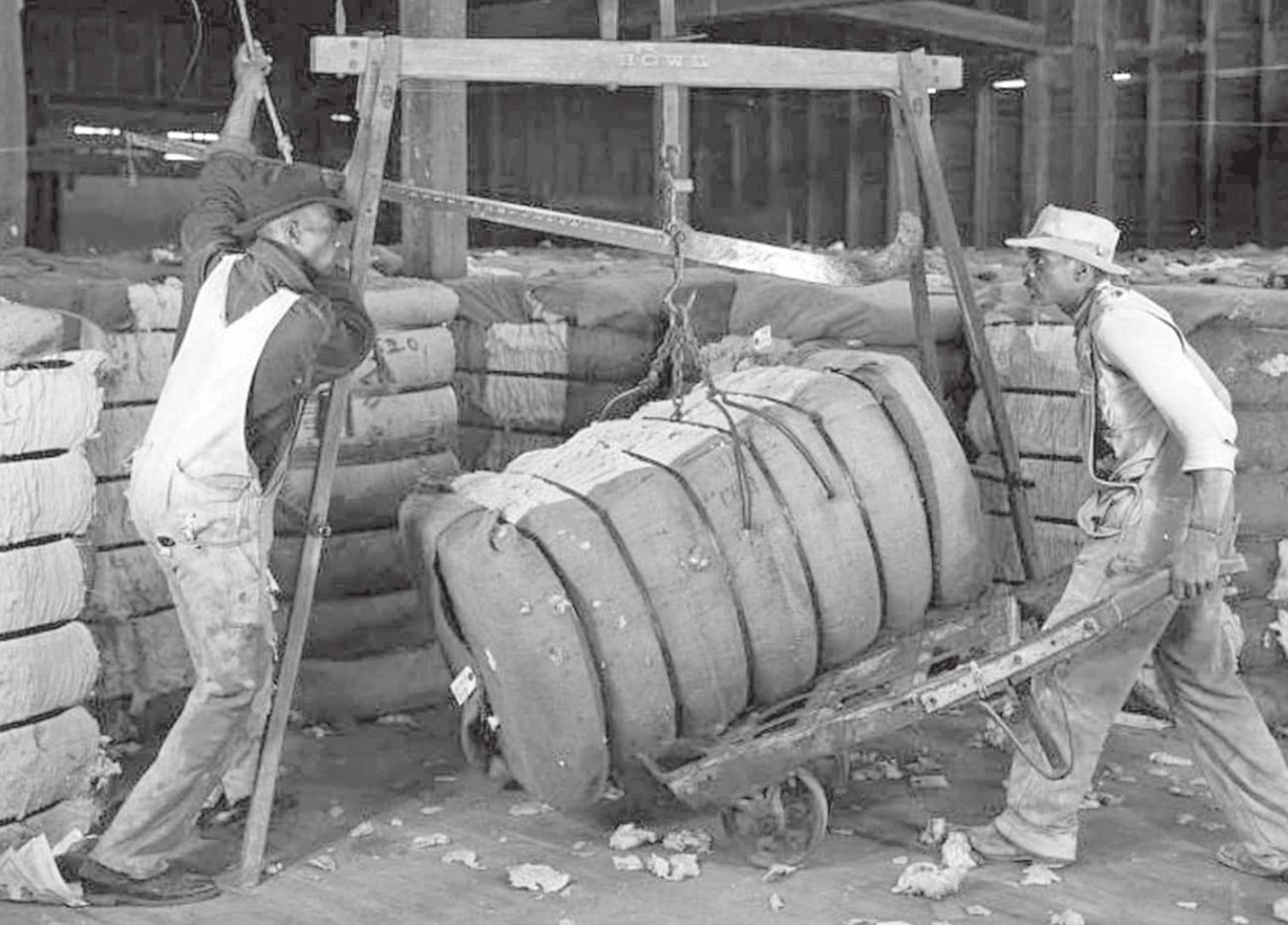
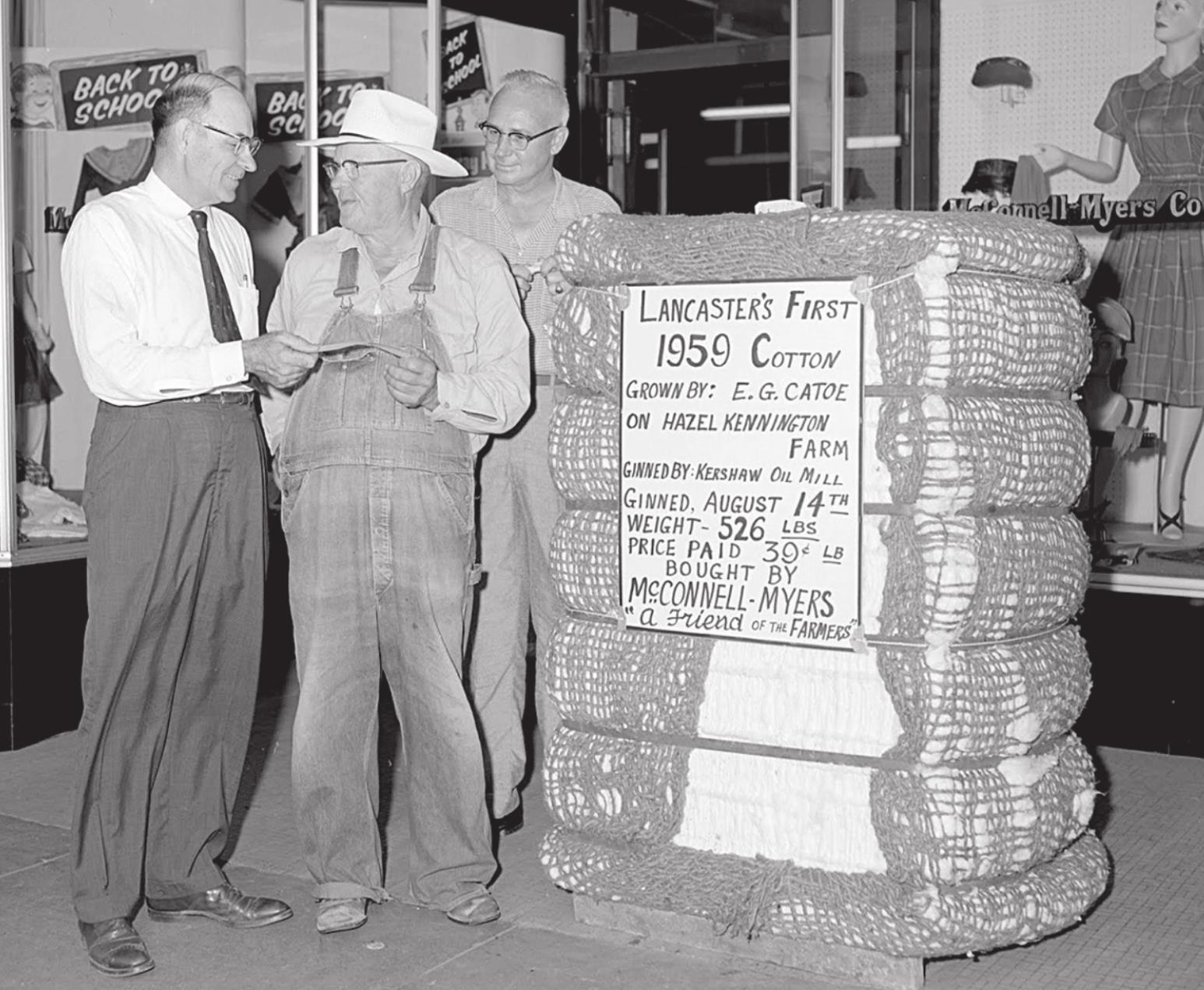
The gins processed the cotton, removing the fibers from the seeds and screening most of the trash— then the cotton was COMPRESSED into BALES that might weigh as much as 500 pounds or a little more.
I can remember that the FIRST BALE of the season was always placed on the street corner where City Hall is today at the intersection of Bois d’Arc and Main Streets and had the landowner’s name on it—such as J. L. Helm or Bill Kelly— and the 1st Bale brought a monetary “premium” to the grower!
I lived on Pacific Street near the cemetery from about 1974—1993, and during cotton ginning time, big wagons of cotton still in the burrs were lined up on the railroad side of the road all the way past my house and the wagon entry into the “graveyard.” The gins “ran” 24-hours-per-day during the busiest times!
Also, all of us school kids who attended Forney Grammar School hated ginning season, because the refuse burrs and trash were burned in two big incinerator silos right across from where the “car wash” is now. The smoke rolled across the school yard and into the rooms, which could not shut their doors and windows because of the need for ventilation, since air-conditioners were not yet a luxury that common folks could afford!
By the time that 40 cents-per-pound was paid for cotton at the end of WWI, it was the “economy” of Forney, and many small and some large farmers lived on credit between seasons! Banks and merchants granted credit and sometimes even accepted bales of cotton payment for larger debts!
Crops were good in the black lands of Forney area and seldom were below ½ bale per acre and often were 1½ or even 2 bales per acre.
1881—1,000 bales produced in Forney Area; 1882—3,200 bales; 1889— between 6,000 and 8,000 bales. KING COTTON was really KING, and it was just getting a good start! And, FORNEY, the area, and the town businesses were BOOMING!
- Log in or Subscribe to post comments.