
According to one Forney history source, Flook’s Forney Country, “…..except for the few families touched by the casualties of warfare, life continued much as before.”
Cotton acreage in Kaufman County reached an all-time high around 1920, due at least in part to cotton prices having peaked at an unheard-of 40 cents near the end of the war. Generally the economic prosperity, which had preceded the War, continued well into the 1920s. (“Generally” was used advisedly in the book because of the “vicissitudes” experienced by the farmers during this period. If you know what vicissitudes means without taking a peek at some dictionary, I hope you were one of my students!) [def.: changes or variations or alternating phases]
Cotton prices in the early ‘20s began to fluctuate while at the same time the costs of manufactured items, including farm implements, were steadily increasing. Thus, more and more farmers were struggling under a load of indebtedness. And, this period of industrial and commercial growth in most urban areas, butting up against the instability on so many farms, caused, or at least speeded up, migrations of the YOUNGER generations from the country to the city; FORNEY areas were not an exception to this phenomenon of our Nation!
But…..Forney had been in a cycle of growth since the turn of the Century, which was slow to be affected by any “plight of the small farmers” worries.
1922—The new brick 2-story Lewis High School was completed.
Mid-1920s—Natural gas service was available to the town.
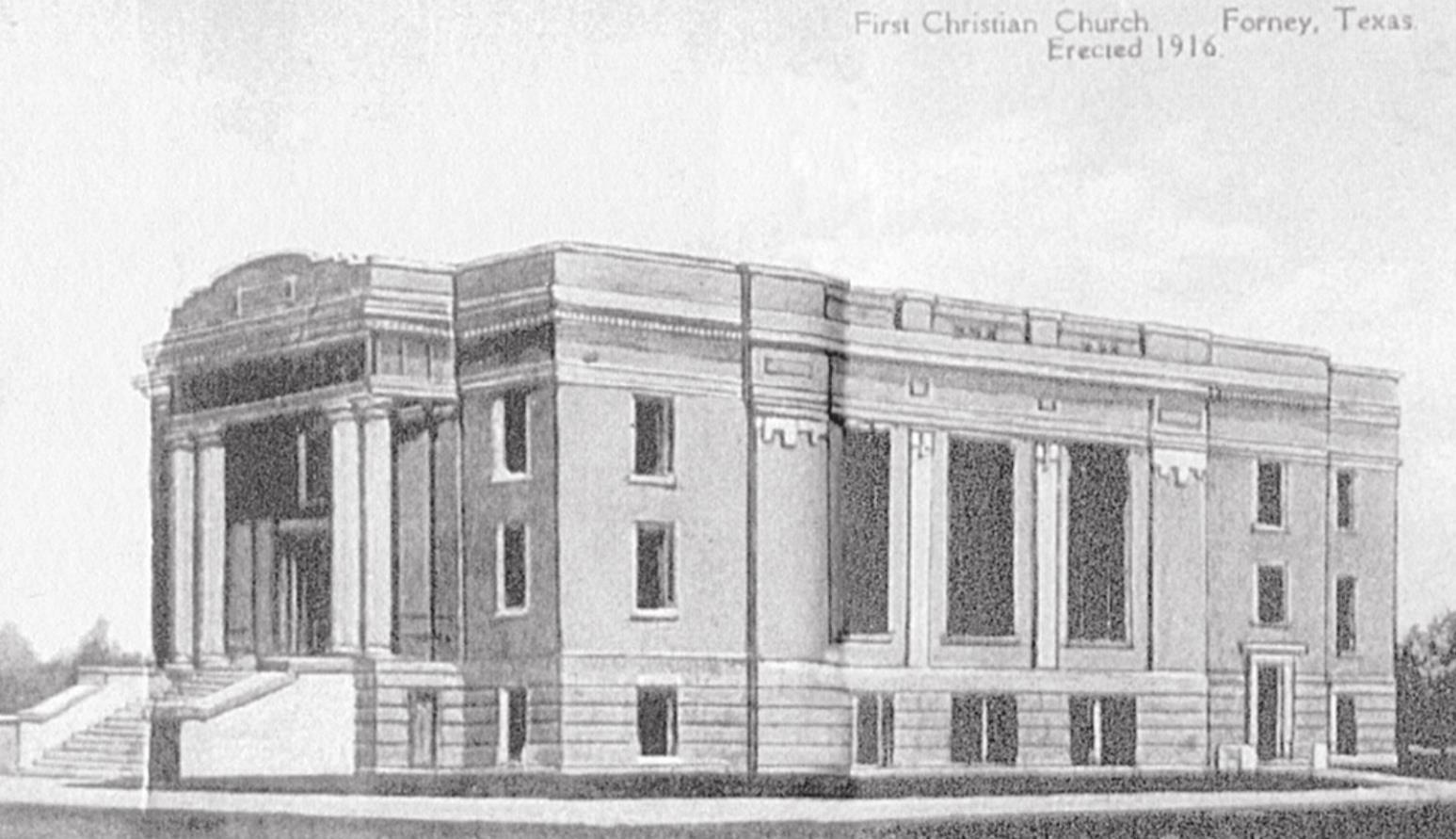
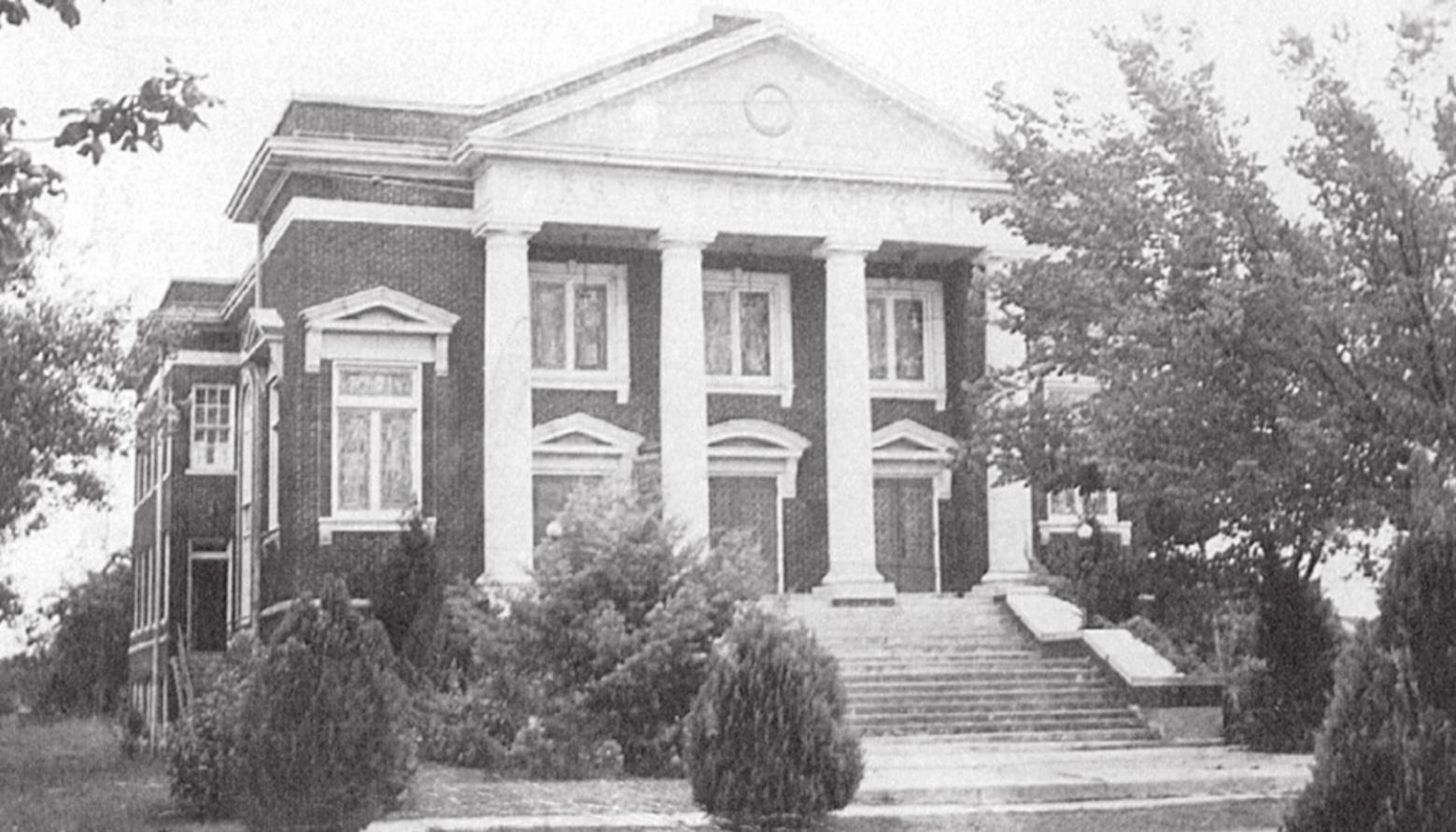
Church building, which had been on an upswing since 1917 and 1918, saw the Christian Church replacing their Gothic wooden building with an impressive Neo-Classical brick building and the Baptist Church following their lead.
1925—The Methodists and Presbyterians both constructed large brick buildings of worship.
The history book states, though, that it was “perhaps indicative of incipient [def.: beginning to exist or appear] economic changes that the construction of commercial buildings and large, stylish homes in Forney had almost ceased by 1920.”
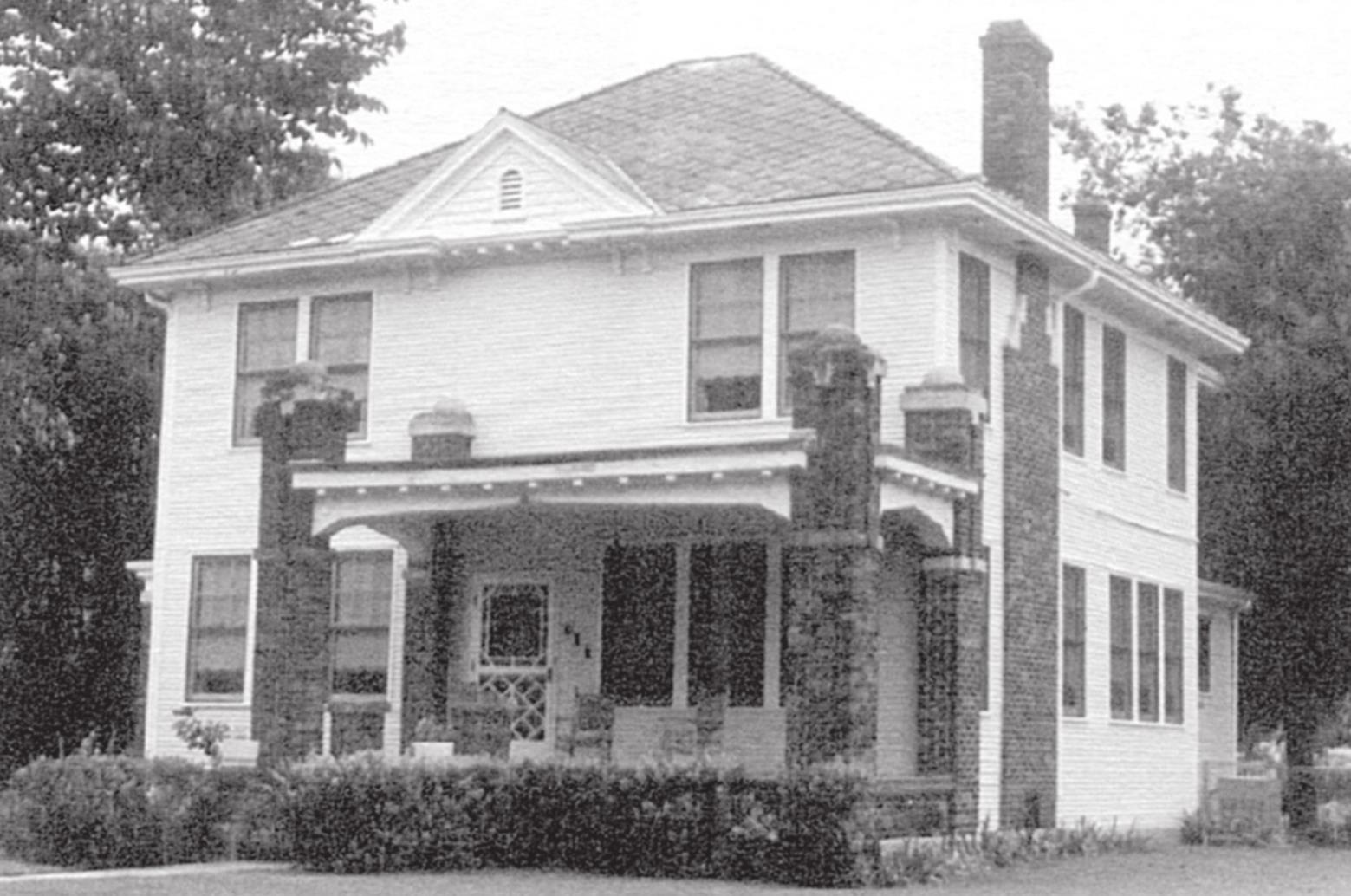
Residential construction continued at a good pace, but modest single-story Craftsman “bungalows” were the rule and not the exception!
Early 1920s—Prospects of striking oil in Forney Country had many folks seeing dollar marks before their eyes! 1922 saw “test wells” being drilled around Forney, probably as a result of true discoveries in East Texas and due to the fact that an early attempt at digging an artesian well in Forney had to be abandoned due to the “dangerous” natural gas it exposed to the public.
Three notable wells were in our area: Dallasoyl #1, just eight miles south of Forney; Huey Cotton #1, just north of the town area; the Daugherty Lake well in the Daugherty Lake neighborhood. Unfortunately, all three diggings produced DRY WELLS! The oil enterprise was alluring enough, though, that the Dallas Times Herald wrote a story about it in April of 1922.
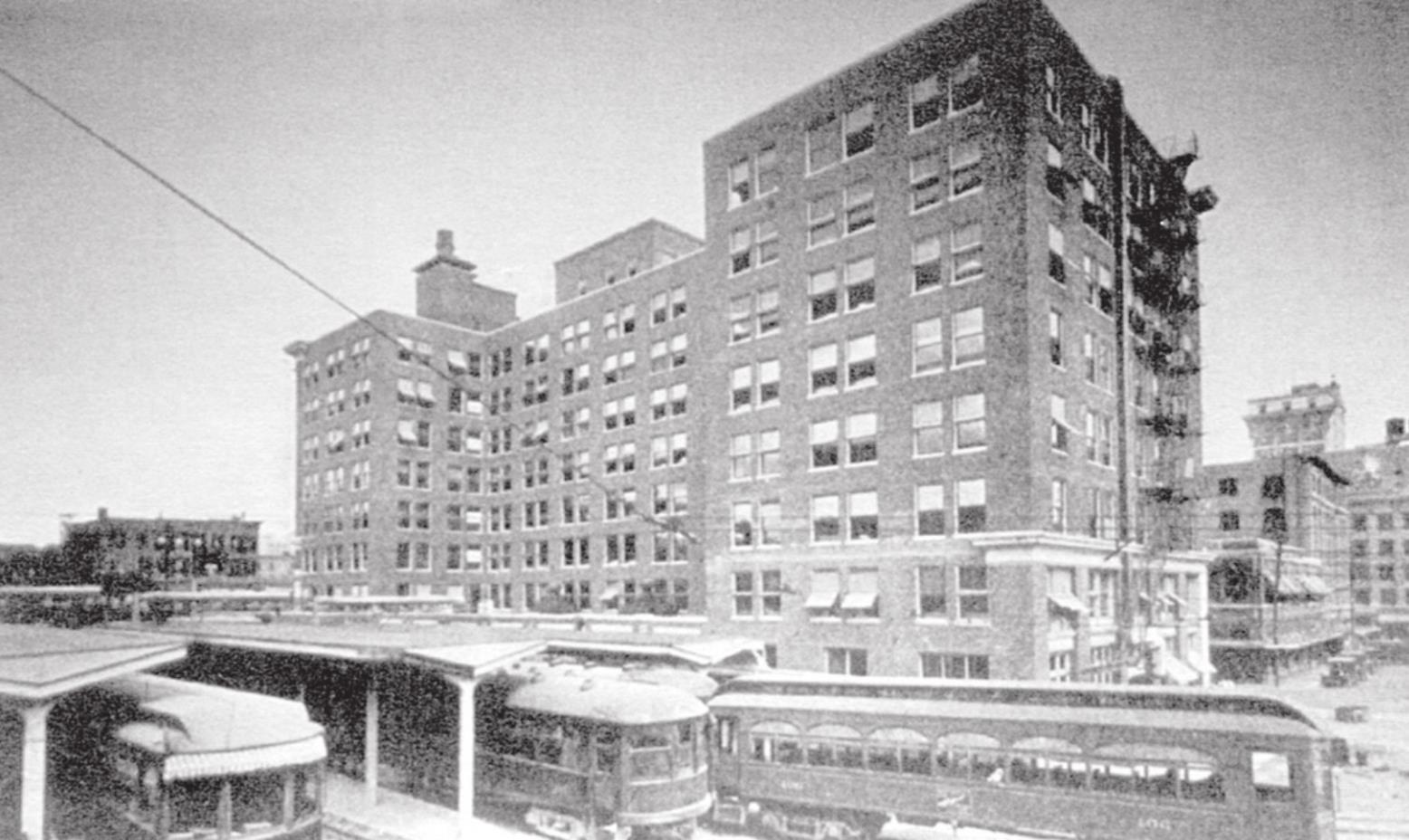
During the early years of the 20th Century, a new type of transportation— electric railway—was enthusiastically being embraced by the more densely populated parts of our country. This new rail transportation ran on rails like the regular trains, were single cars, were smooth/quiet / efficient, and were similar to street cars that received their power from overhead lines. They were safe and merely reversed their directions, seat backs, and operators’ seats locations when they reached the ends of lines.
The first rail line of this type out of Dallas went to Ft. Worth in 1902, Sherman in 1908, and Waco in 1912. And as lines were being built west, north, and south from Dallas, plans were also being made for an EAST line to Terrell and perhaps beyond.
1909—preliminary work began in the Forney Country and by the middle of 1910, Forney (which had seemed indifferent to helping the line along at first) had just about enough “subscriptions.” But….the progress dragged, even though by 1912, an office had been set up—but not an exact route to follow!
1914—Forney’s City Council approved a franchise that allowed a route right down the middle of Main Street, but again the progress stalled (supposedly due to the outbreak of the WAR).
1921—construction of the Dallas to Terrell line began, and Forney’s new route was down Church Street instead of Main. The building of the approximately 32 miles of line was harder than expected and required probably one million (Themer’s calculations) man-hours of labor. Five passenger cars (45 feet long, 8.5 feet wide, carrying 54 passengers in seats) and two express/baggage cars ran on this line.
The interurban cars hit speeds up to 60 miles per hour, were yellow with green trim, had very plush seats, and maintained hourly departures from the Forney station. The final train of the day left Forney at 11:10 p. m., and there was a 10-minute “lay-over” at each end of the line.
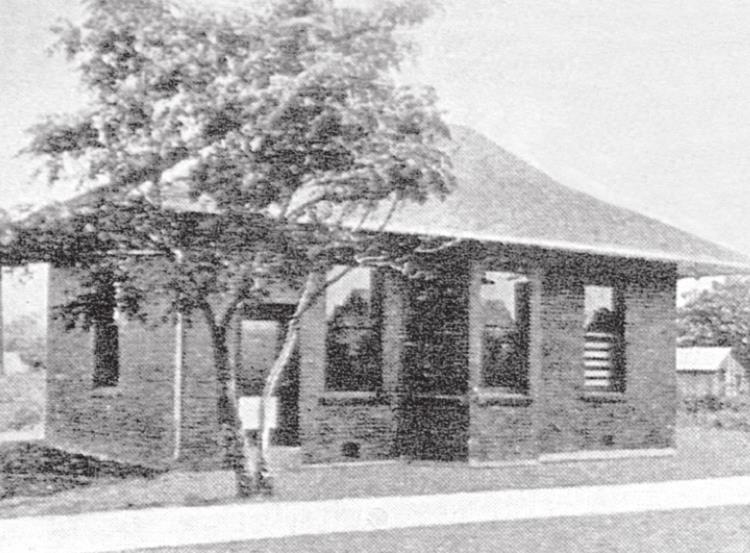
The Forney Station was a small, red brick structure on the northeast side of Church Street, about halfway between South Bois d’Arc and South Center Streets.
Ticket agents included Newt Chenault, Sylvester Chapman, and Richard Chism.
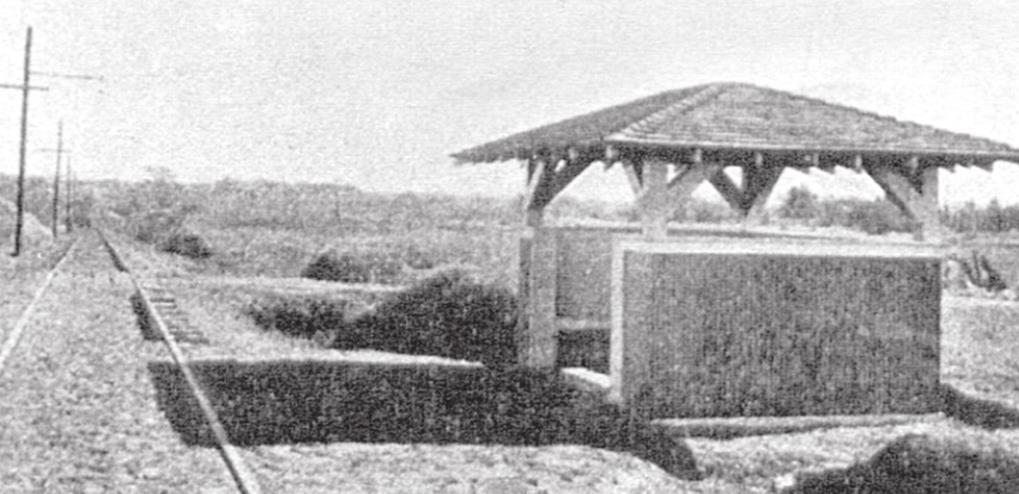
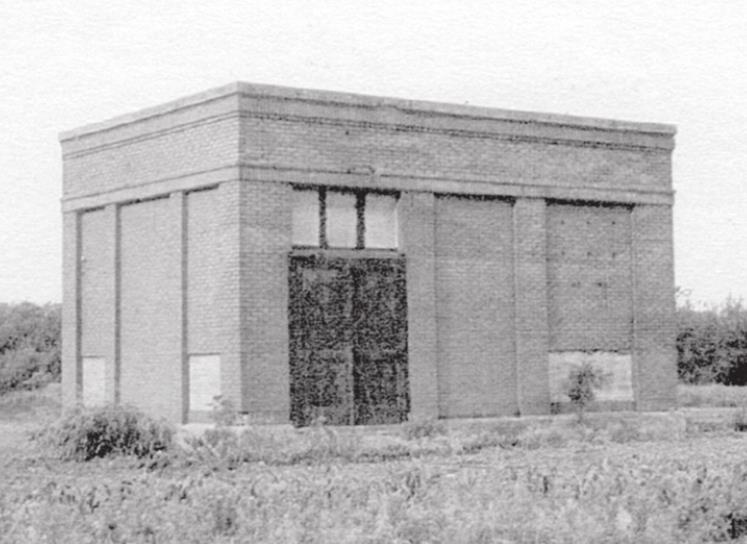
Mick Spellman, at one time, operated a “soft-drink” concession at the Forney Station! At approximately 2-mile intervals through the countryside were “SHELTER STOPS,” each approximately 8’ by 8’ with a roof and with benches on two of the sides. Each stop had its own name. The one immediately east of Forney at present-day FM 1641 was called “Bumpass,” and the one immediately west near present-day Lawson Road was named “Trawick.” Also next to the lines were two “power stations,” one between Mesquite and Forney and one between Forney and Terrell near the community of Lawrence.
Service on the Dallas to Terrell line was celebrated with an “opening festivity” in January of 1923. Walter D. Adams was Master of Ceremonies, and Forney’s Mayor, Clifford L. Duke, spoke about anticipated benefits of the new railway.
The lifetime of the Dallas to Terrell Interurban proved to be brief, and its benefits have been debated; however, many believe that it was a “Godsend” for folks without a car to visit neighboring cities and to patronize their services and retail offerings.
In March, 1932, the Dallas to Terrell line of the bankrupt Texas Interurban Railway suspended operations. Claims were made that this section of the line had ceased to be profitable after its first three years in operation and that the company defaulted on $1,000,000 of indebtedness, a very hefty sum those days!
When you hear “Forney Old-Timers” or their relatives, who have heard their stories, talk about the URBAN DUMP area in Forney, that talk refers to the old roadbed excavation area to the west, which was used as an actual “dump” by many residents for a while and as a play ground/exploring ground for others.
If you would like to visit the area, my advice is to ask a PINSON to show you, at least that is how I usually made it there! My first time was with Andy Tucker, and we were “escorted” there by Robert “Bob” Pinson, who advised us not to shoot our B. B. guns at “Old Man Pinson’s” cows! We hiked, explored, looked at a pond to maybe try the next time for fishing, and rested inside what then seemed to be a giant culvert, large enough inside for us to walk upright! Let’s go find Bob!
- Log in or Subscribe to post comments.