
The Alamo Cenotaph commemorates and bears the names of the Defenders who fought and died at the Battle of the Alamo on March 6, 1836.
There’s a lot of history there, considering that the Alamo Defenders “perished in the flames of immortality that their high sacrifice might lead to the founding of this Texas,” according to the inscription on the monument in the heart of downtown San Antonio. It contains no Defender’s remains, nor is it where the Defenders’ bodies were burned. Its location was selected following the city council’s consideration of multiple area parks. City officials chose to place the cenotaph in the middle of Alamo Plaza as a way to facilitate traffic on Alamo Street and because it would not require rearranging of park features as other potential locations would.
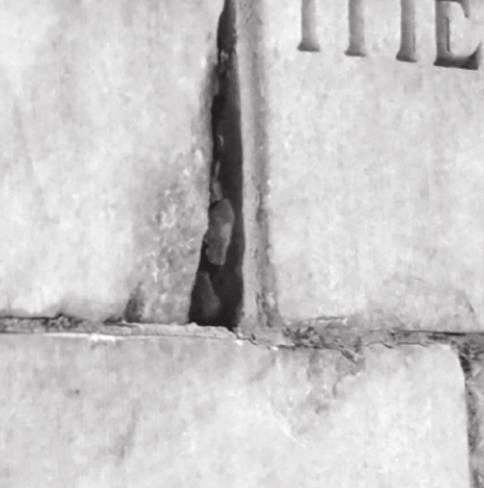
More than 80 years after the cenotaph’s construction, it is falling apart. These conditions require it to be disassembled, its panels carefully cleaned and its damaged marble repaired. It also requires a new frame and foundation of durable materials to replace the existing corroding ones. The cenotaph cannot be repaired in place because demolishing its foundation could damage the historic Long Barrack.
The City of San Antonio is proposing to repair the monument at a new location a few hundred feet south of where it currently stands, near where one of the first Alamo Defenders fell on the morning of March 6. The proposed location allows visitors to view the cenotaph against the backdrop of the Alamo Church, improving the monument’s original purpose as a memorial.
The decision to move the cenotaph results from five years of collaboration between San Antonio officials and the State of Texas to restore the Alamo Complex so visitors can know its complete history and see the battlefield as the Defenders once did. And while the Alamo Church and Long Barrack are original to the Alamo mission and almost 300 years old, the cenotaph was not added to the Alamo grounds until 100 years after the 1836 battle. It does not match the style or scale of the Alamo Mission and is not harmonious with the two original historic Alamo structures. In its new location, the cenotaph will aesthetically find acceptance among other early 20th century pieces of architecture.
Earlier this year, a majority of Texas GOP primary voters approved a referendum calling for the preservation of all state historical monuments, including the Alamo and the Alamo Cenotaph. Public opinion strongly supports the Alamo Plan, including relocation, repair and restoration of the cenotaph.
A recent poll of Texas voters by my firm Baselice & Associates, Inc. shows overwhelming support for the cenotaph’s relocation and repair by a 50 percent margin, 68 to 18 percent. The poll also shows that 74 percent of Texans support the Alamo Plan to preserve The Alamo, restore Alamo Plaza and build a new Alamo Museum and Visitor Center, funded by private donations, that would allow the public to learn about The Alamo’s history.
On Sept. 22, the Texas Historical Commission will meet in Austin and vote on a permit that would allow the City to move the 60-foot-tall cenotaph monument. In addition to providing for the cenotaph’s safe and effective repair, the permit would help foster the sense of place the rest of the Alamo Plan seeks to achieve and adhere to the objectives to which Texans have indicated their support.
Texans can help make the Alamo Plan a success by joining with us to support making The Alamo as great as it can be. Join us at www.supportthealamoplan.com to become another Texan who wants an Alamo people will Remember.
- Log in or Subscribe to post comments.