
“The Good Old Days”
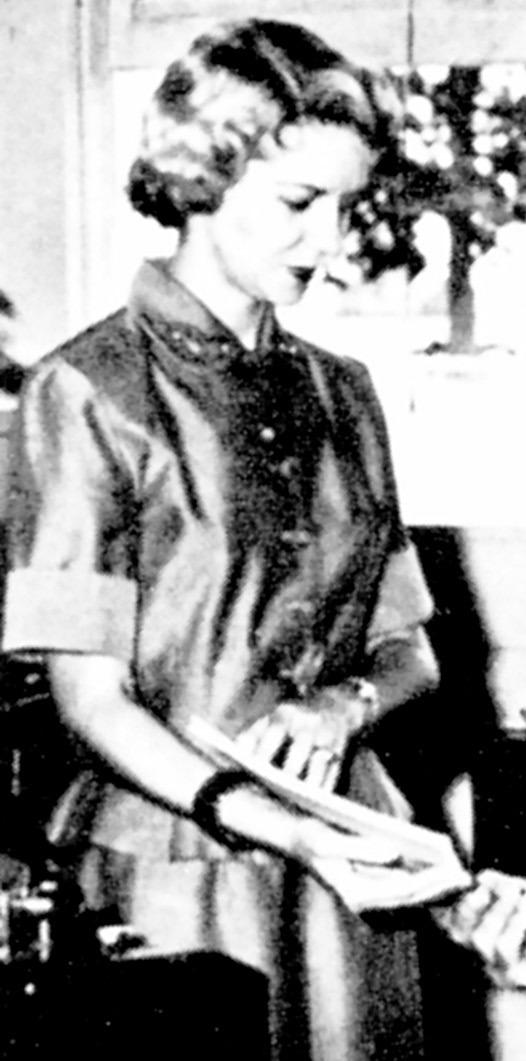
CHERYL (CROSS) OLIVER: My parents were surprised at a meeting of the Mesquite ISD (which they had been encouraged to attend) that the Ben and JoAnn Cross Elementary School is to be built and named in their honor! They both were “long term” teachers in that I. S. D., and Department Heads of North and Mesquite High Schools—JoAnn teaching algebra, trigonometry, calculus, and a computer math program, which she developed when personal computers were becoming “mainstream”—Ben (described by a student as knowing everything and never sleeping) teaching biology, chemistry, and advanced science, including an oceanography program that included Port Aransas field trips to collect samples and learn first-hand. Mr. Cross’s method was “a little text” and “a lot handson.” Mrs. Cross stressed having the tools for critical thinking along with a good sense of humor and “never a dull moment.” I (a proud daughter) feel happy that the above traits are still appreciated and respected.
SAM TEICHELMAN:
My son, Roman (3), and I recently went to the Forney Boy Scouts’ tree lot and picked out our family’s Christmas tree, and there is nothing better than seeing a child’s face light up with all the excitement surrounding Christmastime! Also, the other day I was struggling with a large “cabinet” package at Home Depot, and a nice gentleman stopped to help me load it, wishing me a “Merry Christmas.” I have been a “Forneyite” all my life, although only tangentially so the last 10 years (moved out easterly to the “country”).
RACHEL (LAWLER) CALVERY: Thanksgiving Day I was scrolling through Facebook and came to a post on a Community Page. While “most everyone else” was busy cooking, someone was also thinking of others by offering a “free turkey.” It was a good feeling to see someone stopping to help others. Nearly all of my “Family” lived in Forney, so my parents decided to move back from Abilene when I was in 2nd Grade and Dad was changing jobs. I lived in Forney from 1995 until 2021, when our family of four moved to Wills Point.
SARA (EUDY) BRIAN:
Good morning! We are excited to be a part of a new “church plant” in Forney. The ENDEAVOR CHURCH meets at Criswell Elementary School on Sunday mornings. I grew up and lived in Forney (FHS graduate) until I married and moved away in 1995.
DONNA (HOOD) LAWLER: We went to a Christmas Lights Park in Athens. The line was really long, but we pulled in to wait and “happy feeling indeed” when the car in front of us belonged to my best friend! “No,” we had not planned it, but we both had our Grandchildren along and laughed about the coincidence, visited, and enjoyed the time waiting in line. And, I learned from another friend that her older daughter had surprised her younger sister by having her house decorated with Christmas lights. Every day, I thank God for all my Family and all the selfless acts of love I see around me! I graduated from FHS, have lived in several places, but the longest in Abilene, before moving back to Forney in 1995 and recently moving to Wills Point.
HEARD or READ about Here and There Robert (Bob) Futrell
was mentioned in a recent article as being co-owner of the City Drugstore/Café at one time in Forney. Betty Haynes has added some more information from her memories as follows. Bob Futrell owned a “dry cleaner shop” before the opening of the café, and his wife, Juanita, worked in the shop doing alterations. Bob had adopted her son, Charles, who attended North Texas State University after his graduation from F. H. S. in 1959 and then also later attended the University of Arkansas. Charles became a Faculty Member at Texas A&M University, making Bob a happy “Aggie” fan! After the end of his 1st marriage, Mr. Futrell later married a lady named “Margaret,” who was a Methodist, and the two of them attended in Forney.
TRINITY RIVER Sometimes called the BOIS d’ARC River Forks of the Trinity River—( 3 Principal Branches) East Fork, West Fork, Elm Fork—Clear Fork (shorter and smaller headstream) East Fork rises in central Grayson County and flows south 78 miles, through central Collin County, western Rockwall County, eastern Dallas County, and western Kaufman County, where it joins the West Fork in the southwestern part of Kaufman County.
“The East Fork of the Trinity River”
*This poem (composed by A. E. Morton on August 8, 1974, around the time period I was still traipsing that area) might appeal to many of you who actually have been near or on the river itself. When I was younger, my Dad would drive down Trinity Street and then across the bridges over the Trinity River’s East Fork to Mesquite, maybe to scare my Mom and Sister and to show me the river and its surroundings that were not visible from the Highway 80 bridge! Plus, he and I liked the bridges and their rattles and mystiques! When I was in my 20s, I took my .22 rifles down below the bridges and surrounding areas for target shooting until one day a guy with an old largecaliber military rifle almost shot me (I think accidentally!) and scared me enough that I took my shooting elsewhere.* Across the years my memory Spans over half a century. A barefoot boy with his fishing pole Heading for the Old Round Hole.
Straw hat, overalls, worms in a can, I can remember that little man Happily watching his bobbing cork On the shady banks of Old East Fork.
The river was clear and flowing free, As Nature must have meant it to be.
From Sand Point, with its mystery Of Indian camps that used to be.
To Daugherty Lake, with its family Of flying squirrels, the first I knew.
Beautiful to see and harmless, too.
A stranger came and shot them all Just for the sport of seeing them fall.
The woods were deep and the timber tall, Years were needed to learn it all.
Briscoe Lake and Panther Hole Slough, Carter Flats, where the wild ducks flew.
Down the river was old Fort Coon We must start for home very soon.
Gilky Hill was our landmark To guide us home before it was dark.
My heart is sad as I contemplate The future of my river’s fate.
Strangled, soiled, brought to shame.
Progress, I guess, must bear the blame.
Sometime, around the river bend She will be reborn. Until then, May time not erase from memory The old East Fork of the Trinity.
Recollections of the GOOD OLD DAYS in Kaufman County
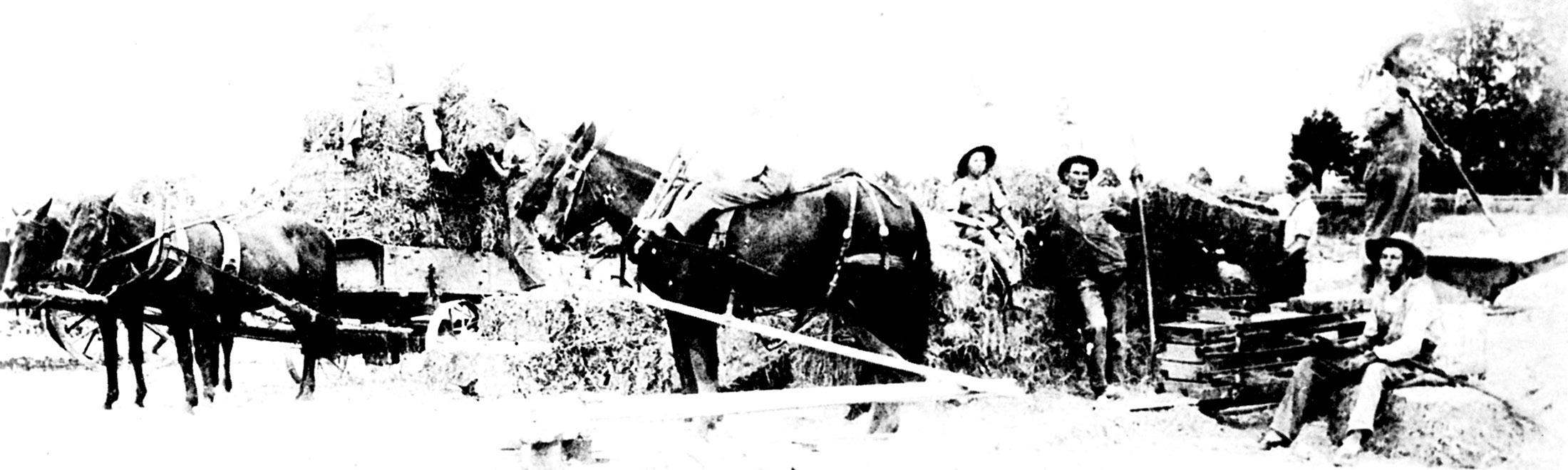
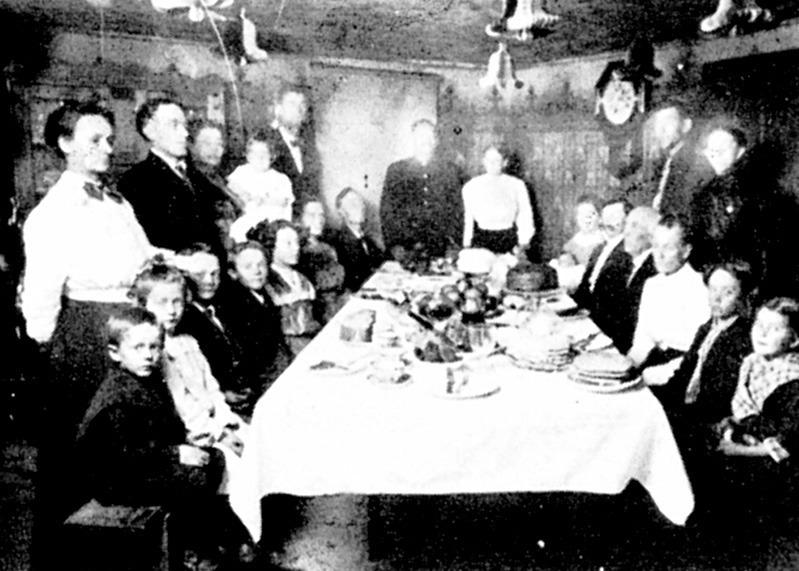
We have all probably heard one or more folks talk about the “Good Ol’ Days” and maybe wondered if they really were. As I told about in a previous article, both of my Grandpas, when I asked them, stated that they were a little before, during, and a little after the 1930s, which we all know surrounded the Great Depression and its aftermath. Well, Julie Hellums and Gary Hellums, in A History of Kaufman County, recalled and recorded what had been “recollected” to them.
“Great-Great-Grandfather” Tippett operated a general store in the small community of “Cottonwood.” The classes in school were ungraded, and all classes were taught in a one-room log cabin at the cemetery. Girls were called FLAPPERS. Flappers wore dresses above their knees, and wore “spit curls.” Boys were called JELLY BEANS, wore tight-legged pants, and wore their hair “slicked down.” Boys then would not have believed they would ever wear necklaces!
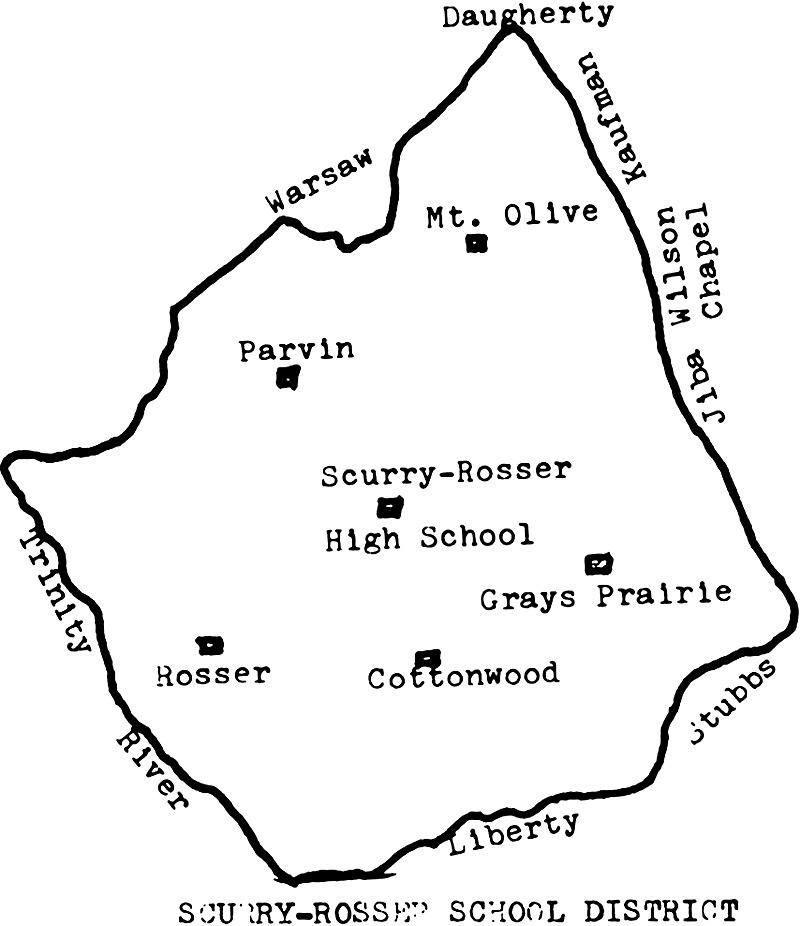
The community of Rosser had a SALOON. Scurry had a BANK. “Scurry-Rosser” was not even organized. Where would we have gone to school if it had been?
People went to town two or three times a year for family supplies. The men had “log raisings” to help build new houses for their neighbors. There were no school buses; everyone walked to school.
Lye soap was made in the wash-pot; clothes were boiled in the wash-pot, rubbed on the rub-board, rinsed with bluing water, hung on bushes or the fence or a line to dry, and came out snowy white. Imagine “lye soap.”
Cotton was carded into bats and quilted into the quilts. There were no electric blankets; there was no electricity!
People dug for buried “Spanish Treasure” in our community! The ladies had “quilting bees.” The BOYS and GIRLS stole watermelons and ate them on the way to Church.
Everybody in the Community picked COTTON. I’ll bet they had no pretty fingernails.—(This was the comment of the authors of this report!)
The 1st Model T automobile came to Cottonwood.
People milked cows for the family milk supply and churned fresh butter.
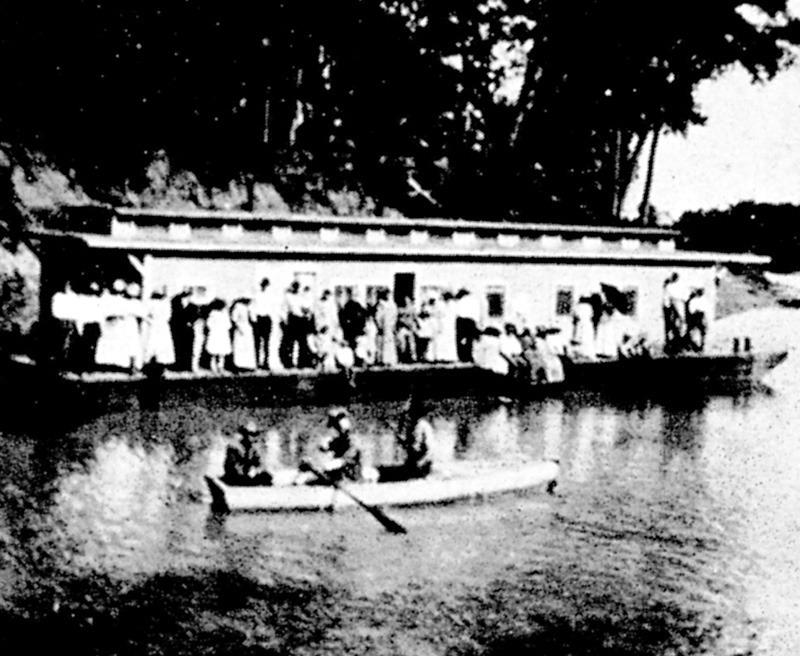
Everybody in Scurry and Rosser went to “meet the train,” but they had to “wave it down” at Parvin. (*their note* “That is the community where I live.”) Food was cooked on a wood-burning stove. People crossed the Trinity River on a ferry. The MEN and BOYS came to the home of Great-Grandfather Levi Lasater on Sunday mornings for a free haircut.
Taffy pullings and square dances were held in the homes. Picnic dinners were spread at the closing of the school year, and a play was performed on the porch of the school.
Saturday night baths in the wash-tub were common practice. Boys and girls played “hookey” on April Fool’s Day, and had to memorize the Constitution of the United States or take “10 licks” with a hickory limb.
OH, for the GOOD OLD DAYS!
***The HELLUMS were a “family of teachers” in the Scurry-Rosser School District after its consolidation in 1929. One was Betty Ruth Hellums (Cade), a home-economics teacher (Future Homemakers of America Sponsor) and past student (early 1950s) at Scurry-Rosser, where she was editor-in-chief of the Annual, Most Popular Girl, a basketball player, and “Future Farmers of America” Sweetheart, held box suppers, style shows, banquets, and dinner parties as she sponsored the Junior Class.
*I, Themer, am now going to say an extra “thankyou” for all the modern conveniences I enjoy!*
- Log in or Subscribe to post comments.