
Pets in Danger, Coyotes May Attack Humans
Headlines, such as the above, have periodically been seen in large and small publications in past years and continue to show up now! And coyotes have at times been considered bad enough problems that counties have implemented bounties for the proof of those that have been eliminated, usually the presenting of ears of the dead animals. As a boy, I found out that my cousins in rural Oklahoma had earned enough bounty money by hunting coyotes that they were able to finance their summer sodas and swimming outings and baseball fees by setting traps and/or hunting with rifles.
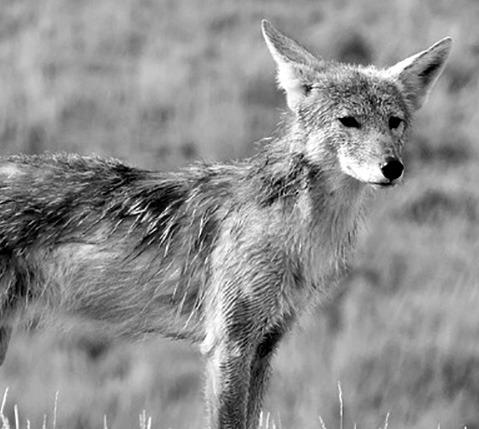
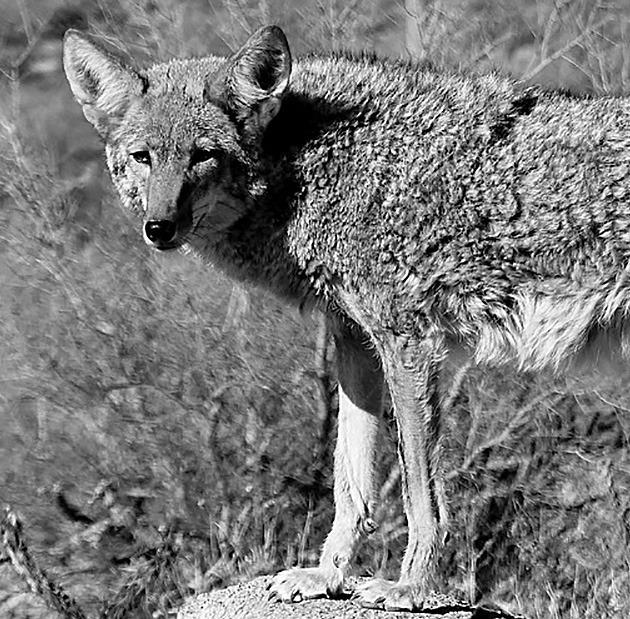
And during the years we have lived out here on Old Military Trail, we have had quite a few of the animals saunter up into and across our back yard to other neighborhood yards, especially on rainy days or early in the morning hours before total sunups. Many were small to medium sized, but a few looked as big and old and scraggly as the cartoon character, “Wile E. Coyote!” And many “cat losses” have been, correctly or not, attributed to the COYOTES! (Canus latrans) So, as our modern landscapes are changing and coyotes seem to be adapting, just what are the details about these animals, and what is fact and what fiction?
These mammals are members of what we all probably call the “dog family” and are omnivores, which means they eat just about anything—meat or plant or even indescribable refuse that is mixed in! They live about 8—10 years on the average but can make it to 15—20, and their habitat range extends to all parts of the United States and Canada. (more common in the Great Plains and northeastern areas) They communicate by yaps and howls that are not as clear and pretty as the howls of wolves, which are also much larger, powerful, and aggressive and much more dangerous to humans!
Common lengths are about 3 feet when mature but can be a little more, and add about 16 or 18 inches if the tail has not been all or partially lost in a skirmish. At the shoulder, they are about 2 feet tall but appear much taller when the head is erect. They travel in small to large “packs” usually, though are sometimes seen alone, and usually weigh in at 25 to as much as 50 pounds if there is plenty of food available. While they are effective predators, they more often rely upon senses of smell and hearing while hunting or foraging.
Their fur is usually rather long, coarse, grizzled, and grayish brown/ reddish with interspersed white areas. Often the end of the tail is rather dark to black. The mating season is late winter and early spring and usually produces 4-7 “pups,” which at first stay in a burrow or den on a hillside or protected area until they are fully mature around 6-9 months. For the most part, coyotes are territorial.
Coyotes are extremely intelligent and cunning and can take down livestock as large as calves, sheep, and fowl—and they also make raids on melons, fruits, and PETS! In the wild, they can bring down and eat animals as large as deer and also eat berries and fruit and scavenge for food left by other hunting animals. Humans are responsible for most of their deaths, either intentionally or accidentally, and coyotes sometimes attack humans who threaten them, or especially their young. From what I have read, human deaths from coyote attacks are extremely rare but do happen.
Also, coyotes will often breed with wolves and dogs and produce what some folks call “eastern coyotes” or “coywolves.”
Where my wife and I live, there is an open field behind us and a small creek in it, and coyotes are quite common. Especially do we notice them when a train travels between Terrell and Forney, and then the yapping and semihowling sounds as if there are at least 100 of the coyotes just in the acreage to the north and east of our house!
Concluding thought: I read not long ago about this coyote(s) encounter with a human. A person was walking a dog and found the two of them being approached by several coyotes that did not back down or run away but instead surrounded the scared owner and dog. The evening stand-off continued until the police arrived and began flashing lights, including those from their cruisers, until the “at least nine” coyotes decided to retreat. So, although dangerous situations from coyotes are not widespread, they are real threats and should be taken seriously for humans and pets.
- Log in or Subscribe to post comments.