
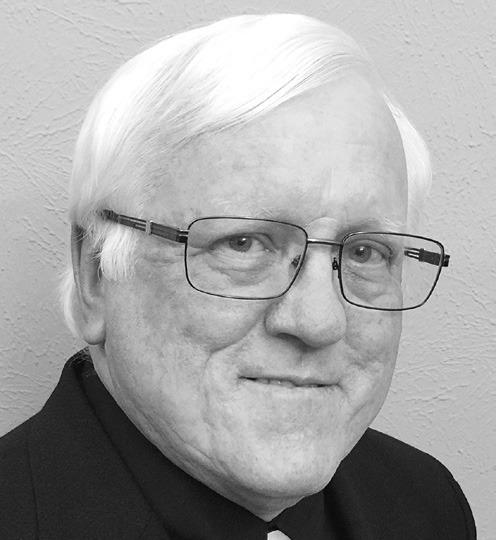
Lone Oak Can Learn from Forney’s Growth
As I said last week, Forney knew for years that growth was coming. However, Dallas seemed to grow every direction except toward Forney and even to Rockwall for that matter. The Trinity River and Lake Ray Hubbard seemed to be an obstacle that was hard to overcome. Then a few years ago Rockwall began to boom, and Forney followed a few years later, along with Heath, Fate, and Royse City. It’s like water going over a levy. Once water starts going over the levy, it becomes hard to control and soon you have an erosion problem. In the same way, when growth is at a manageable rate you have some control, but you begin to lose a lot of that control as people start moving to a community in the thousands. An important lesson I learned in Forney is that the best chance to shape what a community will be in the future is to do the work and take the time to shape it when growth is in its infancy.
When Lori and I moved to Forney from Garland in the early 1980s, we fell in love with the little town. There were only about 2500 people, and Forney High School was a little 2-A school. We fell in love with the town and the culture and wanted to be a part of it, that is we wanted to adapt to Forney’s culture not the other way around. Almost everyone in Forney was friendly toward us. There were a handful of soreheads that didn’t want Forney to grow and resented newcomers. The irony is that most of those people were not raised in Forney and were newcomers themselves at one time. For one reason or other, those people fell into obscurity or died out long ago. The lesson I learned is that when a town is still small, that is the time to build what it will be in the future. I have adopted a motto: “You either shape the future or it will shape you.” It is best to welcome newcomers, especially those who want to preserve the culture of the town they moved to. Find out what their talents are and utilize them. Include them in the community every chance you get.
Some similarities between ForneyandLoneOak:Forney started as an informal community called Lone Elm in the 1840s. Though the names are similar, Lone Oak has always been Lone Oak, named for a long forgotten single Oak tree on the ridge above the Sabine River Valley. Forney was established on the ridge above the Trinity River Valley. By 1860, Forney transitioned from a community to a formal town called Brooklyn. Lone Oak became a town ten years earlier in 1850. In the 1870s, Brooklyn changed its name to Forney when the railroad was looking for routes for the new steel rails. As it would happen, the man who would influence where the railroad would go was named Forney. The trains still run through Forney (especially when you are in a hurry to get to the other side of town). After almost a century of being a railroad town, the sound of trains through Lone oak ended about half a century ago.
By 1920 Lone Oak’s population had grown to 1,100, just 200 less than the 1920 population of Forney. But two events in history caused a sharp decline in population in Lone Oak: the Great Depression and the closing of the railroad. While Forney’s population grew, Lone Oak’s dwindled to the 400s for over half a century.
The last few years, Lone Oak has seen a steady increase in population. It is now about 621. However Lone Oak has recently seen an improvement that will surely cause a boom in population in the future. The addition of high-speed internet. The reason is that a lot of people no longer have to commute to work; they can work from home and do it anywhere. Remember I was in the middle of growth in Forney for decades serving as a County Commissioner, City Councilman, Economic Development Corporation President, and President of the North Central Texas Housing Finance Corporation. If there is one piece of advice I can pass along to our new neighbors in Lone Oak, “You can either shape growth or it will shape you.”
- Log in or Subscribe to post comments.