
Nashville is screamingly busy today. This swollen town almost looks like New York, or L.A. Except for all the out-of-towners in cowboy hats and tennis shoes.
I come from cow-people. We had an expression for folks like this: All hat and no cattle.
I meet a young man from Cleveland, wearing a huge Stetson. He is half tight, enjoying the scenery.
He says, “Everyone’s a cowboy in Nashville, man.”
I am standing on Fifth Avenue. At the Ryman Auditorium. Home of the Opry.
I’m here to pay my respects to an old friend. I drove a long way to be here.
The brick and stone tabernacle is the mother church of country music. And when I say “country,” I mean old country. Not the modern sewage of today. The stuff on the radio today is pure-T carrion. And you can quote me.
The Grand Ole Opry began on November 28, 1925. It was a holy day. Radio host George Hay took the mic. He introduced the maiden broadcast by announcing to the world, off the cuff: “Ladies and gentlemen, for the past hour we’ve been listening to music from the Grand Opera, in New York City, but we now present the Grand Ole Opry.”
And the world was never the same.
Those days are gone, however. The Opry is dead. They still do the Opry broadcast at Opryland. But it’s not the same. Think: Disney World with fiddles.
Beside the Ryman, on the sidewalk, is a bronze statue of Loretta Lynn. She’s not far from the statue of Bill Monroe, father of bluegrass. They both played here.
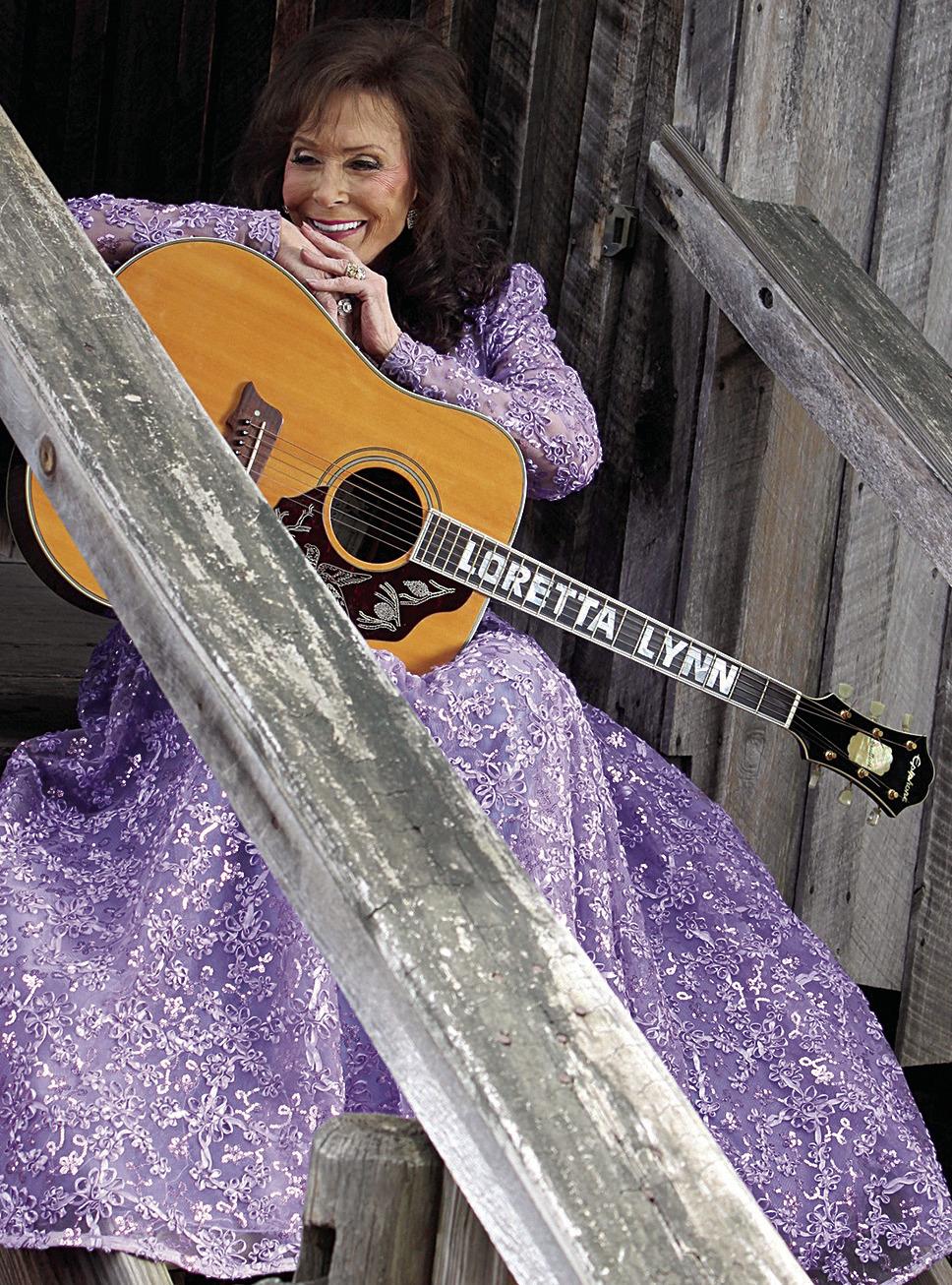
Loretta is posing with her Epiphone Excellente. She’s wearing her Western fringe.
She died a few days ago. And country music lost its matriarch.
She got her first guitar when she was 18. Which sounds young, except it wasn’t. Not for her.
Not when you consider that Loretta was married to an Army man at age 13. She was a mother by age 14. She was a grandmother by age 29.
Loretta Lynn’s story was the story of my grandmother. And her grandmother before her. I guess what I’m getting at is: She was us.
She started recording music in 1960. She was 28. Her music was well-written. The lyrics were clever. She
sang about love. Drinking. Heartbreak. Jesus. Sex.
Because that was country music in the ‘60s. It was uncivil. It was untamed. It was raw. It was the truth, is what it was.
Her voice had a breathy quality, like she’d smoked too many Old Golds. Although she didn’t smoke. Her voice was genuine. Tinged with experience. Not like the fake accents you hear on the radio today.
I first saw Loretta Lynn in concert when I was 9 years old. She sang “Don’t come home a’drinkin’ with lovin’ on your mind...”
My father sang along. “Who is that?” I asked my old man.
“That is the mother of country music,” he said.
And he was right, in a way. Yes, experts would say that Maybelle Carter is the official Queen Mother. Others would argue that Patsy Cline is the entitled Dowager.
But for my money, it’s Loretta.
I still listen to her music often. Because it reminds me of ancestors I’ve lost.
Her lyrics remind me of the common language my grandmother once used. Her rural accent harkens to an older age. An age before iPhones and worldwide broadband connectivity ruined our regionalism. She was beautiful. She was true. She was Loretta Lynn, for crying out loud. Today, Lorretta’s statue is ornamented with hundreds of colorful bouquets. There are roses, carnations, baby’s-breath, and lots of lilies. I place my own bouquet beside her feet.
I bought the flowers at Publix. Preuvian lilies. White.
A young man in a cowboy hat sees me positioning the flowers before her bronze carving. The young man says, “Who is that lady statue supposed to be?”
“That’s Loretta Lynn,” says another onlooker.
“Loretta WHO?” says the young cowboy hat.
“Never mind,” says a nearby man. “If you don’t know her, then you shouldn’t be wearing that hat.”
And somehow, I think Loretta would’ve liked that.
- Log in or Subscribe to post comments.