
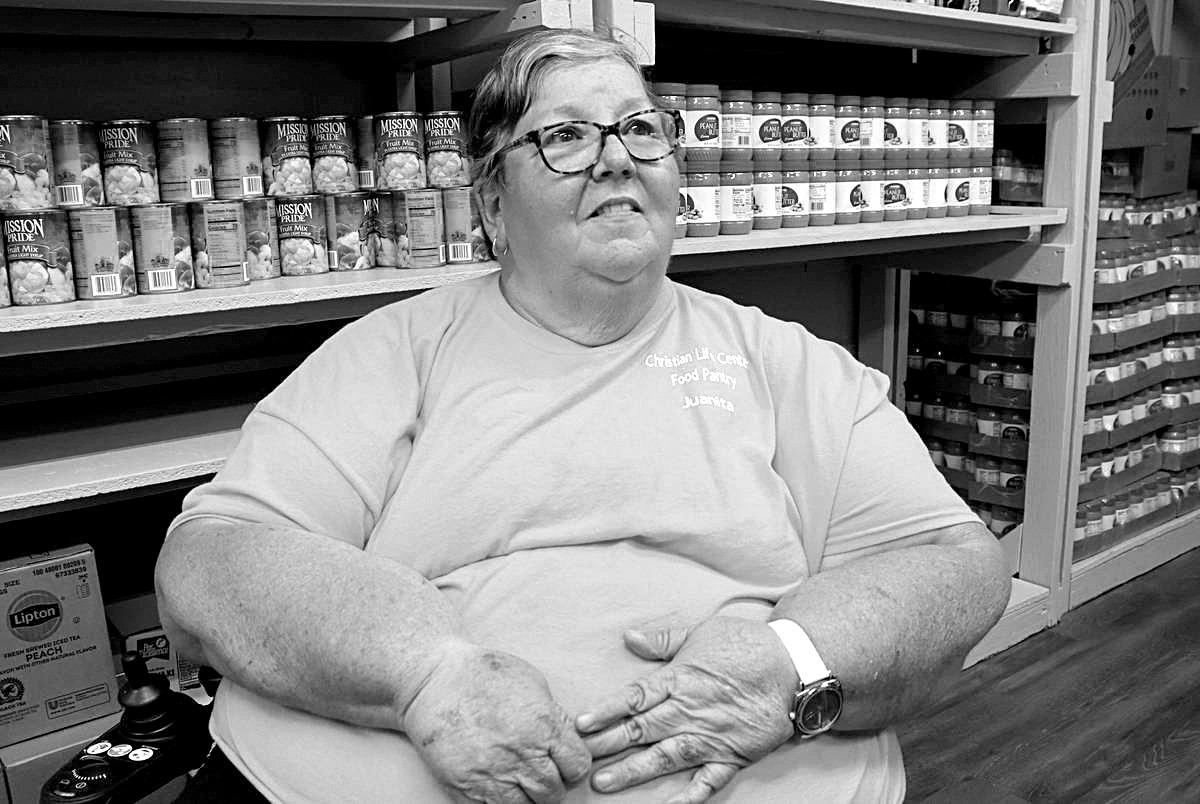
Juanita Franklin was driving through the East Texas town of Gun Barrel City a couple of years ago when she saw a new sign down the road from the Christian Life Center food pantry where she volunteers. It promised something she desperately needed: “Healthcare Access for All!”
Franklin, whose left leg is amputated below the knee and who has chronic high blood pressure and thyroid problems, is among the 18% of Texans who are trying to survive without health insurance. That’s the highest state rate in the country by far and more than double the national average. The rate is even higher — nearly 30% — among the 6,400 residents of Gun Barrel City.
The sign Franklin saw that day — staked in front of a former office building — announced an effort by two local doctors to bring relief to some of those struggling Texans.
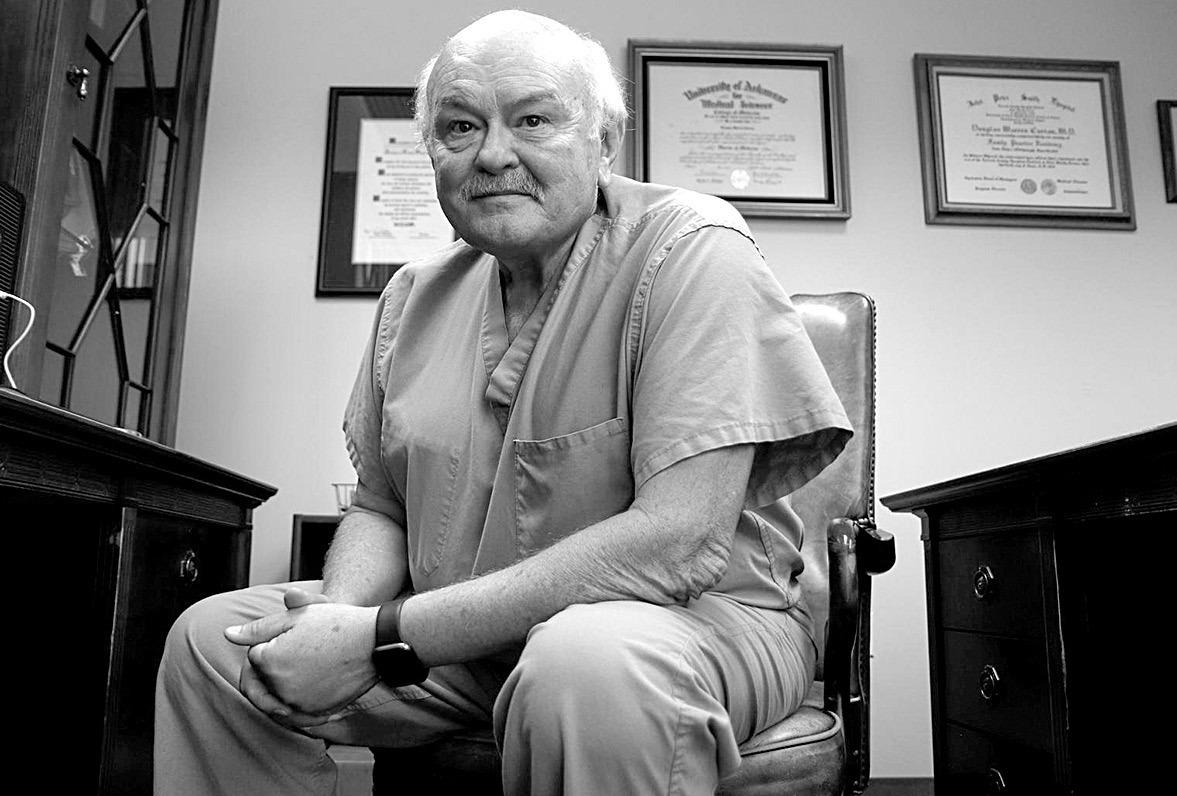
Doug Curran and Ted Mettetal have practiced medicine for 80-plus years combined, most of it in a thriving private practice in the town of Athens, about 20 miles east of Gun Barrel City. In 2019, at an age when most physicians are ready to retire, the longtime friends set out on a new venture: opening a safety- net clinic that would treat anyone, regardless of their ability to pay.
Such clinics are urgently needed because low-income Texans have less access to health care than residents of any other state.
Eligibility for Texas Medicaid — the federal-state partnership that provides health insurance to lowincome Americans — is so restrictive that a family of three is denied coverage if it earns more than $4,000 a year. Those who do qualify may not be able to find doctors who accept the public insurance because the state’s reimbursement rates are so low. A 2017 survey found that a third of Texas doctors refuse to accept new Medicaid patients.
Curran has tried for years to persuade the Republicandominated state Legislature to address these problems. When he served as president of the Texas Medical Association from 2018 to 2019, he made it his mission to get Gov. Greg Abbott’s signature on a bill to expand Medicaid coverage, a position 69% of Texans now support, according to a 2020 poll by the Episcopal Health Foundation. But Texas remains among 12 states that have refused expansion, even though the federal government would pay at least 90% of the cost.
“I basically spent a year of my life trying to convince Texas legislators that they really ought to value our people more, they ought to provide better access for all our people, especially our working poor,” said Curran, who leans conservative but has grown increasingly progressive. “But our state has not had the wisdom of engaging that.”
If Texas expanded Medicaid as envisioned in the 2010 Affordable Care Act, a family of three could qualify for health care coverage if it earned as much as $31,000.
In 2019, Curran and Mettetal — along with Athens native Glen Robison, who had managed their private practice — began planning to close at least a sliver of the health care gap themselves.
The idea was to build a network of safety-net clinics to serve a mostly rural area east of Dallas, beginning with the clinic in Gun Barrel City. They’d combine the clinics with a medical residency program to bring desperately needed new doctors into the region.
To launch the East Texas Community Clinic, or ETCC, they persuaded two local organizations to put up $200,000 in seed money. For long-term funding they set out to apply to a federal agency, the U.S. Health Resources and Services Administration, which offers millions of dollars in grants and enhanced Medicaid and Medicare reimbursements to qualified clinics in poorly served areas.
In a series of interviews with Public Health Watch over the past 13 months, Curran, Mettetal and Robison laid out what has happened in the three years since they launched their grand plan.
Much of what they had envisioned has gone as expected. The need for the clinics is certainly there. If anything, it’s greater than they had imagined. And their residency program, a collaboration with the University of Texas Health Science Center in Tyler, has been even more successful than they had hoped.
Where they went wrong, Curran said, was in underestimating how hard it would be “to get a good thing done.”
They had hoped to receive the federal funding relatively quickly — by the end of 2021 — because to them the health care needs in Texas seemed so obvious and urgent. But the bureaucracy has moved at a glacial pace.
“I thought, we’re gonna do this thing and everyone will recognize the need and say ‘let’s absolutely help you,’ but that’s not what happened,” Curran said.
To calm his frustrations, Curran, who is 73, likes to reflect on the story of Roald Amundsen, the Norwegian explorer who led the first successful trek to the South Pole. Amundsen succeeded because he persisted in pushing forward 20 miles each day, Curran points out, no matter how harsh the conditions.
“That’s kind of how we’ve done this,” he said.
The Gun Barrel City clinic opened at 8 a.m. on May 20, 2020. As Curran waited for the first patients to arrive, he wondered — for a moment — what he had gotten himself into.
“Here I am, 70 years old, starting a new adventure,” he said. “You kind of ask yourself, what in God’s name am I doing?”
His friend Mettetal was 69. And Robison, then 45, had left a steady job and taken a pay cut to join them. The plan may have seemed crazily ambitious to an outsider, but the three men had seen firsthand the consequences of people having to forgo care because they couldn’t afford it. They felt compelled to help.
Continued next week, in the October 6th issue.
- Log in or Subscribe to post comments.