
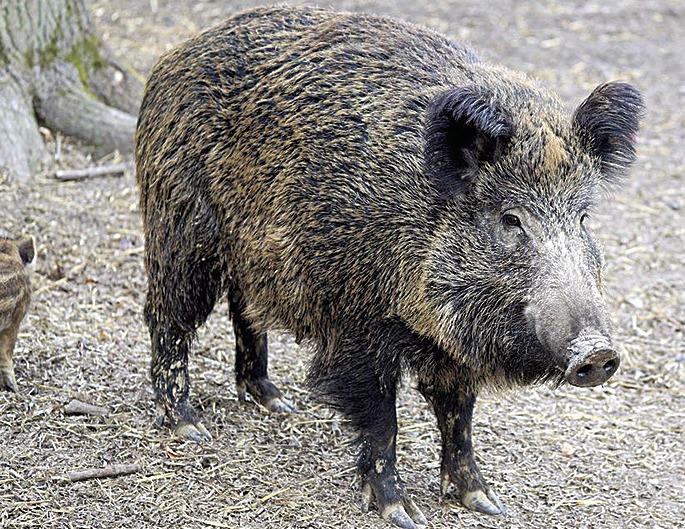
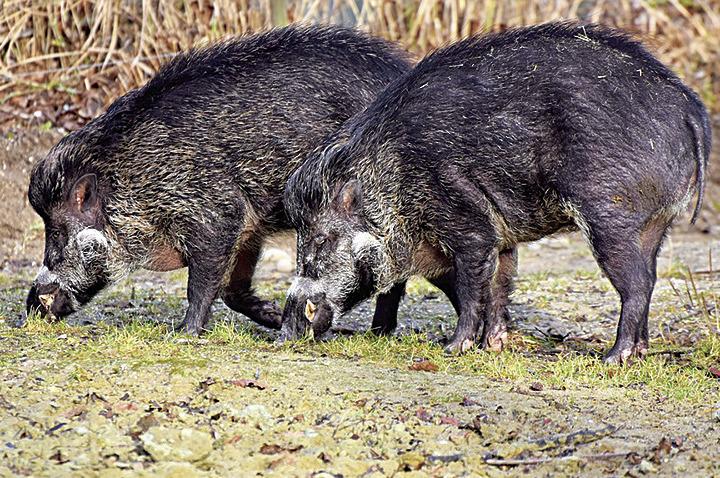
“FERAL HOGS are the #1 nuisance animal in Texas,” according to the Texas Parks and Wildlife Department. Why are they branded with that label? Answer: They cause around 125 million dollars ($125,000,000.00) in damage agriculturally each year, not to mention all the disruption, uprooting, scattering, hole-digging, fence destroying, and wallowing they do to yards and lawns of “regular ol’ people” and the properties of schools, parks, airports, golf courses, country roadways, and so many other planted areas that we take for granted will be left relatively in good shape day-to-day.
One estimate I found said that every year wild hogs do more than 1 billion dollars in damages to the United States!
They also cause wrecks of vehicles and disruptions of traffic. (My nephew-inlaw ran over a pretty large hog on a rural roadway on his way to work and found himself straddling atop an animal that could not squirm its way from under the bottom of the vehicle. A tow truck had to be called to the rescue!)
Swine were early-on domesticated from the wild, most likely in Europe and/ or Asia, hundreds and hundreds of years ago.
These feral hogs that most of us revile today probably mostly got their starts here as long ago as the 1500s when explorers from Spain brought domestic pigs for food and trade— and some of them managed to escape into remote areas, where they scavenged and bred and bred some more until they needed more room and food and began to spread out…..and spread out they have!
And, back then, much livestock was not “fenced or penned in,” so many freeranging pigs/hogs managed to make the transition to wild. Some estimates say that Texas alone has about 2.6 million of the boogers and that there are probably close to 5 million in the U. S. Also, during the past many years, more than likely some hogs being used on hunting camps also have escaped, adding to the problems.
FERAL means “returning to the wild, natural, untamed state from which they once originated.” Not only do their habits become wild, but also their physical body structures. I read that today, feral hogs can be found in 40 states. Most articles and most “experts” predict that the “wild” forces of the once domestic hogs will never be completely brought under control. And the most promising program of which I have heard/read is for the Government to open or fund processing plants and pay hog hunters to trap and bring them in alive to provide food for pork-hungry folks. That would be a win-win situation!
There are full-time professional hunters/trappers out there, and they allow that these wild hogs are at least as smart/clever as a “1st grader”— but many, many times more destructive! And they believe that the “mature” hogs have learned and then manage to communicate to and teach their offspring.
I have also read that many “shooters” of trapped hogs feel that killing hogs and then not immediately and properly disposing of them allows a “scent” to be scattered that will set off a sense of warning to other hogs in the area—and that makes them avoid traps, even those camouflaged!
One piece of anecdotal evidence of the proliferation of hogs stated that a family, who owned 400+ acres in Comal County, hired a professional trapper, who removed about 150 of the “ferals” the 1st year he worked for them, and the land- owner feels sure some hogs will still be there after he is deceased!
Metal and wire traps with mechanized doors, monitored by remote controls, cameras, and sound systems, seem to work pretty well, but the service is not cheap! And then comes the question of what to do with the animals. (Some trappers/hunters donate the meat to charities, sell the live animals to “hunting camps,” process them for themselves, relatives, and friends of the families, or pay to have them incinerated or made part of the “landfill.” But, remember, killing them and leaving them where they lie causes many, many safety, health, and sanitation problems!
I also would be remiss to not disclose that some who have studied the problem, feel that hunting is making things worse, because when one or two of a group (sounder) are shot, the rest of them disperse and start many new groups. One state (Tennessee) supposedly had hogs in 6 counties when it began opening a hunting season in 1999. By 2011, they were common in 70 counties!
A FEW FACTS TO CLOSE 1) Feral hogs are omnivores, eating plant and animal life. 2) Females are reproductive able, beginning at 7-10 months of age, and gestation is about 4 months. 3) Females are at times capable of producing litters of 10-12 piglets and sometimes 2 litters per year. 4) Boars quite often travel independently of the females and young and farther, seeking reproductive opportunities. 5) Ferals can be many colors, but more are black than any other color. 6) Feral hogs carry diseases and parasites and threaten native wildlife, plants, water sources, and eco-systems. 7) A 300 pounds feral hog is BIG, but some do grow larger, up to 500 pounds reported. 8) They can run 30 miles per hour and can climb well. 9) They will attack your pets! 10) At most times they are fearless! 11) They are becoming more and more common in this area each year!
And now you know “what difference it makes.”
- Log in or Subscribe to post comments.